


To use our advanced search functionality (to search for terms in specific content), please use syntax such as the following examples:
- Armageddon Magazine Article
- Apology Commentary
- Europe News & Prophecy
- Christmas Telecast
- Baptism Booklet
- Sabbath Roderick C. Meredith
- Abortion Gerald Weston
DON’T Follow Your Heart!
Whiteboard: DON’T Follow Your Heart!
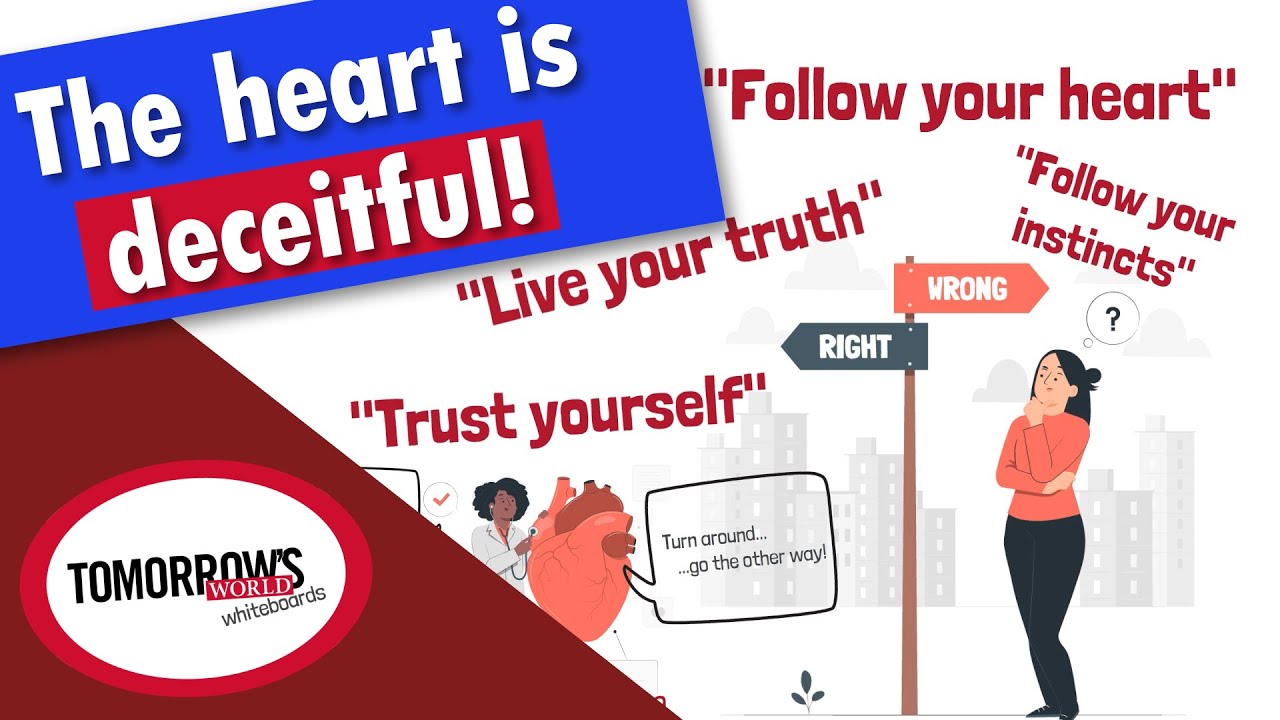
What does Proverbs 3:5-6 mean? Rather than trusting your heart, God wants you to “trust in the Lord with all your heart, and lean not on your own understanding; in all your ways acknowledge Him, and He shall direct your paths.” Here’s why.
The text below represents an edited version of this Tomorrow’s World whiteboard.
What’s in Your Heart? (According to the Bible)
There are a lot of mantras out there today encouraging people to simply do what their heart is telling them.
- “Follow your heart,” they say.
- “Trust yourself.”
- “Live your truth.”
- “Follow your instincts.”
These are quippy sayings, but how do they align with what Jesus and the Bible teach?
- The modern “follow your heart” attitude was prophesied long ago.
Society today encourages us to trust in ourselves, but notice how God condemned this type of attitude through the words of the prophet Isaiah.
Isaiah 30 describes the state of society in the end-times. God says:
This is a rebellious people… children who will not hear the law of the LORD; who say to the seers, “Do not see,” and to the prophets, “Do not prophesy to us right things; speak to us smooth things, prophesy deceits” (Isaiah 30:9–10).
Today, many are afraid of or deny counsel, direction, or help from those who have more experience. This is especially true concerning what the Bible teaches. Many chalk up its wisdom to antiquated rules, rather than the book that teaches the best way to live.
And instead of following what the Bible teaches, or listening to those who know better, many trust in their own heart and only listen to the advice they want to hear.
The Heart Is Deceitful | Jeremiah 17:9
- What does the Bible say about following our heart?
Jeremiah 17:9 explains that:
The heart is deceitful above all things, and desperately wicked; who can know it?
The Bible shows that trusting in ourselves is dangerous, because our heart is deceptive and naturally inclined toward sinful behavior.
This verse warns against trusting in our own moods, feelings, and intuition because these can be uncertain, confusing, and often misleading.
It says the heart is wicked, because by nature the carnal mind (or the natural human mind) is “enmity against God; for it is not subject to the law of God, nor indeed can be” (Romans 8:7).
The human mind, apart from God’s Holy Spirit, does not naturally lead us in the way of righteousness, outgoing concern, mercy, and truth. Therefore, determining right from wrong by our own feelings and intuition is dangerous and will lead us down the wrong path.
The Bible says that we should not just trust in ourselves.
There is a way that seems right to a man, but its end is the way of death (Proverbs 14:12).
Trust in the Lord (Not in Yourself) | Proverbs 3:5
Instead, we are told to:
Trust in the LORD with all your heart, and lean not on your own understanding (Proverbs 3:5).
Proverbs 28:26 says:
He who trusts in his own heart is a fool, but whoever walks wisely will be delivered.
According to the Bible, trusting in our heart is both foolish and destructive.
However, there is safety in walking wisely which implies that there is something much more profound than our own thoughts and emotions.
More on that in a bit.
The Foolish Heart | Proverbs 28:26
- What did Jesus have to say about following our heart?
Jesus emptied Himself to become a human being (Philippians 2:7). Though He lived a perfect life, one without sin, He knew firsthand how weak flesh and blood is (Hebrews 4:15). And so He also warned of the perils of trusting in the human heart.
In His parable of the Pharisee and the tax collector, we see a warning about trusting in ourselves.
Luke 18:9 says:
[Jesus] spoke this parable to some who trusted in themselves that they were righteous, and despised others.
He then went on to compare two men who went up to pray, one a Pharisee and the other a tax collector. He ended the parable by saying:
“For everyone who exalts himself will be humbled, and he who humbles himself will be exalted” (Luke 18:14).
The parable teaches us that trusting in our own heart can blind us from our own faults and misguided ideas. It can lead to pride, self-righteousness, and judgmentalism when instead we should humble ourselves before God, accept His correction and learn from the Divine Being who is all-wise and all-knowing.
Now remember Proverbs 28:26, which encouraged us to walk wisely.
The Way of Wisdom
The implication is that we need to follow something other than our own heart.
So what is that something?
Recall the one who came to Jesus saying:
“Good Teacher, what good thing shall I do that I may have eternal life?”
So Jesus said to him, “Why do you call Me good? No one is good but One, that is, God. But if you want to enter into life, keep the commandments” (Matthew 19:16–17).
If we desire eternal life, then Jesus tells us to keep the commandments found in your Bible.
Jesus wants us to enjoy the abundant life that is found in keeping God’s commandments (John 10:10).
The world would try to tell you God's commandments are antiquated and burdensome.
The Bible tells us something different.
For this is the love of God, that we keep His commandments. And His commandments are not burdensome (1 John 5:3).
If you are interested in more of what Jesus taught about the commandments, check out our whiteboard “This is what Jesus actually taught about the Ten Commandments.”
And if you enjoyed this video, please like, leave a comment, and subscribe to our channel for more videos on Bible topics.
Thanks for watching!