


To use our advanced search functionality (to search for terms in specific content), please use syntax such as the following examples:
- Armageddon Magazine Article
- Apology Commentary
- Europe News & Prophecy
- Christmas Telecast
- Baptism Booklet
- Sabbath Roderick C. Meredith
- Abortion Gerald Weston
What Is the Last Great Day?
What Is the Last Great Day?
What happens after death to the billions who never knew Jesus Christ? God’s plan includes a future judgment day—even for Sodom and Gomorrah. See how one overlooked Holy Day reveals this incredible dimension of God’s mercy.
[The text below represents an edited transcript of this Tomorrow’s World telecast.]
What Happens After Death for Unbelievers?
Acts 4:12 says besides Jesus Christ there is “no other name under heaven given among men by which we must be saved.”
This foundational principle presents a problem for mainstream Christianity. What do you do with millions—even billions—of people who lived and died before Jesus Christ? What about those people who never knew anything about Him even after His life and death, much less accepted His shed blood for their sins? Are they lost forever?
This is a vital question, and one which causes great confusion and doubt in the minds of many. For some, it even causes them to question their faith.
There is an answer. And it comes straight from your Bible. It begins with understanding the biblical Holy Days, also called feast days.
One of those feasts—the Feast of Tabernacles—occurs around late September or early October each year. It foreshadows the 1,000-year reign of Christ on earth. But what comes after this 1,000-year period, this “Millennium”? The eighth day—what we call the Last Great Day (referring to John 7:37). It comes after the Feast of Tabernacles and is the final Holy Day in the yearly cycle of biblical Holy Days.
So, what is the significance of the Last Great Day? It unlocks the wonderful truth of a real future for the unsaved masses of humanity. It prophesies of the time when they will have their first genuine opportunity at salvation.
How can we say this?
Today we’re diving into one of the most perplexing questions faced by professing Christians. That is, what will happen to the billions who’ve lived and died and never accepted Jesus Christ as their personal Savior?
Another way to ask this question is, “Is God really fair?” The Bible says He is, as Paul wrote in Romans 2:11.
For there is no partiality with God.
So God’s very reputation—His character, His integrity—is at stake.
God’s Holy Days and Feasts in the Bible Reveal the Answer
The answer to these questions lies in the biblical Holy Days. If you haven’t learned about the Holy Days, get ready for a surprise. Most professing Christians today keep days that are just renamed pagan festivals. Some of the more popular ones are Christmas, Easter, and Halloween. But more and more discerning and God-fearing men and women all over the world are discovering the true, biblical Holy Days. And they’re finding out that these Holy Days were kept by the early New Testament Christians.
Why Jesus Kept the Feast of Tabernacles | John 7:14
Jesus Christ kept the Holy Days. He taught during them. We find this in John 7:14:
Now about the middle of the feast Jesus went up into the temple and taught.
The “feast” referred to here is the Feast of Tabernacles. Now, some will say, “Sure, Jesus kept the Feast of Tabernacles because He was a Jew. Since WE are living after His crucifixion, we don’t have to do that anymore.” But where does it say that? If we call ourselves Christians, aren’t we supposed to “walk as He walked?” Aren’t we supposed to follow His teachings and do everything He commanded?
John 7:14 says that Jesus taught the people during the Feast of Tabernacles. Some of the Jewish leaders that witnessed what He was saying questioned his training, since He had not been educated in their schools by their rabbis. Notice how He responded in John 7:16:
Jesus answered them and said, “My doctrine is not Mine, but His who sent Me. If anyone wills to do His will, he shall know concerning the doctrine, whether it is from God or whether I speak on My own authority.”
So Jesus was teaching on the Feast of Tabernacles something that came from His Father. He and His Father were in complete agreement. Put another way, why would our Father in Heaven, whom we pray to, send Jesus, who is our personal Savior, to teach during the Feast of Tabernacles? If the Feast of Tabernacles is to mean nothing to us, why would He do that? And why shouldn’t this feast—and all the Holy Days, actually—pertain to us today if we are striving to learn from and follow our Father in Heaven and Jesus Christ?
Jesus Also Kept the Last Great Day | John 7:37–39
Earlier in the program I mentioned that the final Holy Day on the annual Holy Day calendar is the Last Great Day. That comes after the Feast of Tabernacles. And sure enough, later in this chapter, we find Jesus observing and teaching on that very day. Notice John 7:37:
On the last day, that great day of the feast, Jesus stood and cried out….
Where do we get the name Last Great Day? Right here. It was the great day of the Feast, the last day. In Leviticus 23 we find that the Feast of Tabernacles was a seven-day feast, and then the eighth day, what we call the Last Great Day, followed right after it. This is the day John is referring to.
What was Jesus teaching on this day? Notice again John 7:37:
On the last day, that great day of the feast, Jesus stood and cried out, saying, “If anyone thirsts, let him come to Me and drink. He who believes in Me, as the Scripture has said, out of his heart will flow rivers of living water.” But this He spoke concerning the Spirit, whom those believing in Him would receive; for the Holy Spirit was not yet given, because Jesus was not yet glorified (John 7:37–39).
So, the Last Great Day had something to do with the outpouring of the Holy Spirit. Doesn’t that sound like a New Testament doctrine? And remember, Jesus received His doctrine from the Father—He already said that. So this teaching about the Holy Spirit being poured out, which Jesus taught on the Last Great Day, He received from His Father in Heaven.
The Last Great Day Is for the Unsaved | Revelation 20 Explained
It sounds like whatever the Last Great Day is about, it’s important. And it should be important to us. Our Savior taught about it. He received the doctrine from His Father, OUR Father in Heaven. And it has to do with God’s Spirit being poured out.
Why don’t we hear more about this Last Great Day?
Let’s go to the Book of Revelation for the answers. Pick it up in Revelation 20:4:
And I saw thrones, and they sat on them, and judgment was committed to them….
This is talking about the faithful servants of Christ, through the centuries, who lived and died. Some were even martyred for their faith. They will be rewarded at the resurrection. But keep on reading;
And they lived and reigned with Christ for a thousand years. But the rest of the dead did not live again until the thousand years were finished. This is the first resurrection (Revelation 20:4).
The statement—“the rest of the dead did not live again until the thousand years were finished”—is a parenthetical phrase. To get a better understanding of what this means, let’s read this section again with that sentence omitted.
And they lived and reigned with Christ for a thousand years…. This is the first resurrection. Blessed and holy is he who has part in the first resurrection. Over such the second death has no power, but they shall be priests of God and of Christ, and shall reign with Him a thousand years (Revelation 20:4).
The first resurrection occurs at Christ’s return at the last trumpet. We find that in 1 Corinthians 15:52 and 1 Thessalonians 4:16. But then we’re left with an intriguing question.
The Rest of the Dead Arise After 1,000 Years
If only the elect will rise in the first resurrection, what about this phrase “the rest of the dead?”
Well, John answers that question. Let’s read that statement by itself.
But the rest of the dead did not live again until the thousand years were finished (Revelation 20:5).
Very simple. The Bible tells us that all those who are not the elect will still live again at the end of the thousand years.
Stop and let that sink in. The “rest of the dead” must be a huge number of people. It would include most of humanity in countless civilizations throughout history that have come and gone.
You see, most of humanity throughout history has been simply cut off from God. This, of course, is the result of Adam and Eve sinning in the Garden of Eden. We find that back in Genesis 3.
Then the Lord God said, “Behold, the man has become like one of Us, to know good and evil. And now, lest he put out his hand and take also of the tree of life, and eat, and live forever”—therefore the Lord God sent him out of the garden of Eden to till the ground from which he was taken. So He drove out the man; and He placed cherubim at the east of the garden of Eden, and a flaming sword which turned every way, to guard the way to the tree of life (Genesis 3:22–24).
Mankind in general was cut off from contact with God when Adam and Eve were cast out of the garden. Of course, there were some few individuals like Abraham, Moses, and David whom God specifically called. But by and large, mankind has been cut off from God and has been deceived by Satan throughout most of man’s history. Satan the devil is the “god of this age” (that’s in 2 Corinthians 4:4). He is the “spirit who now works in the sons of disobedience” (that’s in Ephesians 2:2). And Revelation 12:9 says he has “deceived the whole world.”
So think about the massive number of people who’ve lived and died through the millennia without knowing Christ. The “rest of the dead” could be tens of billions of people. In fact, do an Internet search to find out an estimate of how many people have ever lived on this planet. Some estimates are as many as 120 billion people. That’s a truly staggering number.
The Great White Throne Judgment | Revelation 20:11–12
So John said, under the inspiration of Jesus Christ, that they will all live again after the thousand years are over. Later on in the chapter, in Revelation 20, we find out more.
Then I saw a great white throne and Him who sat on it, from whose face the earth and the heaven fled away. And there was found no place for them. And I saw the dead, small and great, standing before God (Revelation 20:11).
This is “the rest of the dead.” And it describes them “standing before God.” Well, if you’re dead, the only way you can stand up is if you’re resurrected back to life (Revelation 20:12).
And books were opened.
What could that mean? Well, as explained before, the vast majority of humanity has been cut off from God from the time of the Garden of Eden. But during this period after the Millennium, also called the great white throne judgment, these people are finally, for the first time, given an understanding of the Scriptures. Going on in Revelation 20:12,
And another book was opened, which is the Book of Life.
This means being given the opportunity to repent of your sins and have them covered by the blood of Christ. And the potential to be granted life in God’s Kingdom forever.
And the dead were judged according to their works, by the things which were written in the books. The sea gave up the dead who were in it, and Death and Hades [or the grave] delivered up the dead who were in them. And they were judged, each one according to his works (Revelation 20:12).
What does this mean? Is this a sentencing? Is it a courtroom scene in Heaven where they will find out their reward or punishment based on their former life? Or is this something entirely different?
Two Judgment Periods
The First Resurrection for Faithful Christians | 1 Peter 4:17 Explained
For the time has come for judgment to begin at the house of God (1 Peter 4:17).
Judgment is on the true followers of Christ now. In other words, if we have been called by God and He has opened our understanding, then we are under judgment. Meaning, He is working with us, teaching us, even correcting us, as we live our lives. He is teaching us how to repent and how to overcome our sins. In other words, judgment is a time period. We are in the time period now when judgment is on the Church.
Valley of Dry Bones (Second Resurrection) | Ezekiel 37
The Great White Throne Judgment will be a time period as well. This vast bulk of humanity who’ve never known the name of Christ will be taught God’s ways. They will have time to amend their conduct. To adjust their lives to conform to what God commands. They will have the Bible to give them insight and understanding on what is expected.
You see, this judgment is not a courtroom scene. It’s a time period on earth, when people will learn to live differently than their former lives.
There are other passages make this abundantly clear. One of them is Ezekiel 37. Let’s go there to Ezekiel 37:1.
The hand of the Lord came upon me and brought me out in the Spirit of the Lord, and set me down in the midst of the valley; and it was full of bones.
This is the famous prophecy of the valley of dry bones. Let’s look at it closely (Ezekiel 37:5).
Thus says the Lord God to these bones: “Surely I will cause breath to enter into you, and you shall live. I will put sinews on you and bring flesh upon you, cover you with skin and put breath in you; and you shall live. Then you shall know that I am the Lord.”
If we take it at face value, it’s clear that this is a resurrection to physical life. Look at the words used.
- Bones
- Breath
- Tendons
- Flesh
- Skin
How could it be anything other than physical life? Just like we were reading in Revelation 20.
Now, who is this talking about? Well, we find out in Ezekiel 37:10–11.
So I prophesied as He commanded me, and breath came into them, and they lived, and stood upon their feet, an exceedingly great army. Then He said to me, “Son of man, these bones are the whole house of Israel.”
This prophecy is talking about the descendants of Jacob—whose name was changed to Israel—throughout history. Those who lived before Jesus Christ and, frankly, those who have lived in the last two thousand years but have never yet been given their first genuine opportunity for salvation. God will give them that opportunity during this period of judgment.
Going further, notice what Ezekiel writes in Ezekiel 37:14:
“I will put My Spirit in you, and you shall live, and I will place you in your own land. Then you shall know that I, the Lord, have spoken it and performed it,” says the Lord.
Even though God called Jacob, and Moses, and David, and a few other individuals along the way, most of the ancient Israelites were cut off from God in their lifetime. This physical resurrection after the Millennium will be their first genuine opportunity to be forgiven of sin and receive the Holy Spirit. Going on in Ezekiel 37:24,
David My servant shall be king over them, and they shall all have one shepherd.
David is dead and in his grave. So this can only be referring to a time in the future, when David will have been resurrected with the saints and will be ruling with Christ. We saw in Revelation 20 that is the first resurrection. And then, when all these millions—and even billions—of people are raised, that’s the second resurrection.
God will give all the unsaved Israelites the chance to live again. That’s foreshadowed by the Last Great Day, which is observed after the Feast of Tabernacles.
“The Day of Judgment” for the Unsaved—and Repentance
But it has tremendous meaning for all of humanity as well, not just the Israelites. We find that in Matthew 11:20.
Then He began to rebuke the cities in which most of His mighty works had been done, because they did not repent: “Woe to you, Chorazin! Woe to you, Bethsaida! For if the mighty works which were done in you had been done in Tyre and Sidon, they would have repented long ago in sackcloth and ashes. But I say to you, it will be more tolerable for Tyre and Sidon in the day of judgment than for you.
Christ is talking about the Great White Throne Judgment. And He’s talking about the wicked men of Tyre and Sidon. But He said they will probably do a better job of repenting during that time than the hypocritical Pharisees. That’s quite a strong correction. But He doesn’t stop there. Notice Matthew 11:23.
And you, Capernaum, who are exalted to heaven, will be brought down to Hades; for if the mighty works which were done in you had been done in Sodom, it would have remained until this day. But I say to you that it shall be more tolerable for the land of Sodom in the day of judgment than for you.”
Again, the day of judgment is a day when the men of Sodom will be raised to physical life, temporarily, and their slate will be wiped clean. Their past sins will be forgotten. They will be given their first genuine opportunity to really know God. And Jesus was saying the men of Sodom were more likely to humble themselves and repent and change during the day of judgment than the men of Capernaum. That’s a stinging rebuke.
What an astounding truth. The unsaved dead are not lost forever. They will have the chance to live again, in physical, temporary bodies. They will come to know God. They will be given the chance to have their sins forgiven and be granted His Spirit.
And if they are willing to come under His authority, they’ll be granted eternal life in His Kingdom. Their names will be written in the Book of Life.
God Is Not Willing That Any Should Perish | 2 Peter 3:9 Explained
Jesus called the last day “that great day of the Feast,” in John 7:37. And it IS a great day. Because it gives the true answer to the question, what will happen to the unsaved dead? Are they lost forever? And the answer from the Bible is an emphatic NO.
That’s not God’s desire or will for anyone.
The Lord is not slack concerning His promise, as some count slackness, but is longsuffering toward us, not willing that any should perish but that all should come to repentance (2 Peter 3:9).
Every single human being who has ever lived will have the opportunity to repent and accept God’s way of life—after the Great White Throne Judgment, pictured by the Last Great Day.
But even then, will some choose to reject salvation? Apparently so.
There is a lake of fire, called the second death in Revelation 20:14, but as this next video explains, it is not an ever-burning hell fire that torments people forever. It’s simply the end for those who voluntarily refuse what God is offering—after the judgment period.
You see, this world is filled with philosophies and ideas that give no hope, including versions of hell that are just not what the Bible teaches.
Watch this next video as we unravel this concept of hell, using scriptures to explain the lake of fire, when the second death happens, and the tremendous future that God has planned AFTER those things are finished.
This Week's Free Telecast Offer
The Holy Days: God’s Master Plan
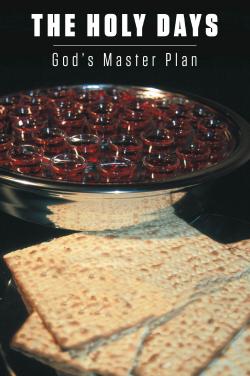
The Holy Days that Jesus Christ observed picture, in sequence, the destiny God has planned for all humanity.