


To use our advanced search functionality (to search for terms in specific content), please use syntax such as the following examples:
- Armageddon Magazine Article
- Apology Commentary
- Europe News & Prophecy
- Christmas Telecast
- Baptism Booklet
- Sabbath Roderick C. Meredith
- Abortion Gerald Weston
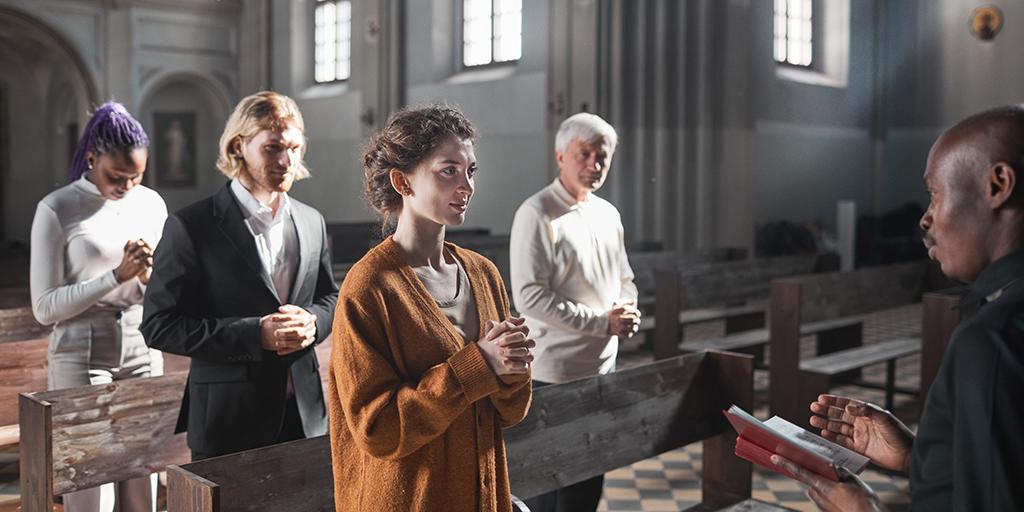
Is Religious Interest Increasing or Decreasing?
Gallup reports that the percentage of American adults who consider organized religion to be important in their daily lives dropped 17 points in the last ten years (November 13, 2025). This is one of the sharpest declines Gallup recorded in any country over any similar period. Only a few wealthy nations—such as Greece, Italy, and Poland—had larger declines, and the key word is “wealthy.” As countries become more economically secure, it seems that their people tend to rely less on religion in their daily lives. Yet, even narrowing the field to such nations, the United States’ decline of 17 points in a decade is exceptionally rapid. Interestingly, the Bible records a similar pattern for the ancient Israelites: Before they entered the Promised Land, they were warned, “When you have eaten and are full… beware that you do not forget the Lord your God” (Deuteronomy 8:10–11).
In an interesting twist, a different study shows spirituality on the increase (Christianity Today, February 26, 2025). “More than 40 percent [of those surveyed] say they’ve gotten more spiritual as they’ve grown older. The people who’ve gotten more spiritual report feeling a strong sense of gratitude or thankfulness with increased frequency. They find themselves praying more often and say that they regularly experience ‘the presence of something from beyond this world.’”
For 6,000 years of history, man has sought to make his own rules. In recent years, religious systems with formal doctrines, leadership hierarchies, and submission to authority have been seen as stifling personal faith and spiritual freedom. Such tendencies fit well the end-time mindset the Apostle Paul warns of, in which people “heap up” teachers of their own choice, “according to their own desires” (2 Timothy 4:3). Yet a time is coming when a religion claiming the name of Jesus Christ will make a powerful comeback all over the world. That religion will be a counterfeit Christianity—one countless “Christians” already follow. It preaches a “gospel,” to be sure, but not the true Gospel that Christ taught (2 Corinthians 11:4). To learn more, you can read or listen to our free study guide Do You Believe the True Gospel?