


To use our advanced search functionality (to search for terms in specific content), please use syntax such as the following examples:
- Armageddon Magazine Article
- Apology Commentary
- Europe News & Prophecy
- Christmas Telecast
- Baptism Booklet
- Sabbath Roderick C. Meredith
- Abortion Gerald Weston
A Bird Challenges Darwin
A Bird Challenges Darwin
These facts about hummingbirds stump evolutionists: flying speed, hovering abilities, multidirectional movement—even upside down. And that's just the beginning. Here’s why watching a hummingbird is like witnessing a small miracle.
[The text below represents an edited transcript of this Tomorrow’s World program.]
Hummingbirds: A Tiny Challenge to Evolution
When was the last time you took a trip to the zoo? What about an afternoon at a marine park to be entertained by dolphins and seals? The late fellow evangelist and Tomorrow’s World telecast presenter Richard Ames and his wife once paid us a visit when we lived near Toronto, Canada. While there, we stopped at a butterfly conservatory near Niagara Falls and I must confess I had driven by it numerous times without feeling a tug on the steering wheel to turn in. However, we all found it more interesting than I expected, especially the butterfly that liked sitting on my shoulder.
It doesn’t matter where you look. Our world is filled with beautiful, amazing, strange, and fascinating life forms: giant elephants, long-necked giraffes, or sure-footed mountain goats. Each one is uniquely and marvelously designed. There is simply no end to the variety of birds: eagles, vultures, ducks and geese, parrots, and doves. Then there are reptiles such as snakes, lizards, crocodiles, and turtles, just to name a few. What about amphibians? And we haven’t even considered the incredible variety of fish and other sea creatures.
This program doesn’t give me enough time to mention all the varied life forms seen in the air, on land, and in the waters. There is also the huge subject of plant life. Some maintain that all living flora and fauna are the result of blind chance through evolutionary processes, but the more we learn about life, the more scientists and laymen are coming to conclude that it is mathematically and logically impossible for life to be the result of chance.
But none of this would be possible without the dirt beneath our feet. Or to put it in grander terms, how did the universe get here? Astronomers and cosmologists have been forced to conclude that matter had a beginning. So, whether one refers to it as the big bang, the cosmic expansion, or something else, a beginning means there was a time when matter did not exist. How then did the universe come to be?
The Bible tells us:
For since the creation of the world His invisible attributes are clearly seen, being understood by the things that are made, even His eternal power and Godhead, so that they are without excuse (Romans 1:20).
We should not have to study microbiology to see that life is not an accident.
One common example found only in North and South America is the hummingbird, affectionately referred to as a hummer. They fascinate not only those who see them for the first time, but even those who see them daily. That is no doubt why my wife and millions of others put feeders out to attract these amazing birds.
How Hummingbirds Defy Ordinary Flight
There are at least 300 species of hummingbirds—varying in size from the bee hummingbird, weighing in at 2 grams, to the giant hummingbird which measures 8.5 inches. One characteristic they share is speed. According to Hummingbird101.com, they can reach:
- Forward cruising speed of 25–30 mph
- Burst speed (short duration): 30–50 mph
- Maximum dive speed: 60 mph
In addition to speed, they can hover in place, go forward, backward, up, down, or even fly upside down. What gives them this unique ability? According to Earth of Birds:
Hummingbirds rotate their wings in a figure-eight pattern by twisting their shoulder joints, allowing them to generate lift on both the upstroke and downstroke. This motion is unlike any other bird’s flight. Their delicate bodies hang in the air, wings a blur, as if they are defying gravity’s rules. To truly understand how hummingbirds achieve this, it’s important to look at their anatomy, the mechanics of their flight, and the hidden advantages of their unique wing motion (“How Do Hummingbirds Rotate Their Wings in a Figure-Eight Pattern,” earthofbirds.com).
They beat their wings in this figure-eight motion an incredible 50 to 80 times per second. Now let me put that in perspective. Your car probably cruises between 2000 and 3000 RPMs—Revolutions Per Minute. That is how many times a crankshaft makes a full turn. Using that larger figure, the crankshaft is making a full turn 50 times per second—the same number of times a hummingbird’s wings rotate at cruising speed, but their wings turn in a complicated figure-eight pattern. No wonder this same source says:
Watching a hummingbird hover feels like witnessing a small miracle (ibid.).
Scientists often speak of something engineered, designed, mechanical, or miraculous, but then they go on to attribute the engineering, the designing, the mechanics, and the miraculous as the result of evolutionary forces. Note how this source that uses the term miracle then attributes the hummingbird’s miraculous abilities to blind chance.
Hummingbirds have evolved to fly in a way no other bird can (ibid.).
But how? How did this tiny bird evolve these abilities? You likely have heard a variety of “just so” stories—this happened, then that happened, etc., etc., etc.—but wanting something, needing something, and having it show up one tiny step at a time does not make it happen.
Built for Speed: Wings, Bones, and Muscle
Note how complicated the design is.
The secret starts with their shoulder joint. While most birds flap wings up and down, a hummingbird’s shoulder allows for a full rotation of the wing. This joint acts almost like a ball-and-socket, similar to the human shoulder, but with even greater range (ibid.).
One must wonder how and when this unique, perfectly designed joint structure, came to be. What gradual steps could bring it about? Evolutionists often neglect the how when confronted by something truly miraculous, claiming “it is,” so it had to happen, but no one is arguing the end result—that is, that it exists. The real question is how did it come to exist? And in the case of this shoulder joint, it is difficult to see how small steps could realistically bring it about. But there is more required to give hummers their unique flying abilities. The article goes on to explain:
Their bones are also built for this task.
Now let us stop right here, because this is another statement by evolutionists that people hear but fail to catch the significance of. How and when were they built—in other words, specifically designed, for this task? I understand natural selection, but how many small steps did it take to bring about a wing structure perfectly suited to the hummingbird’s unique shoulder structure—creating an entirely different means of propulsion from other birds. The article then continues to elaborate on what is required for hummers to flap their wings 50 to 80 times a second in a figure eight pattern.
The humerus (upper arm bone) is short and strong, while the radius and ulna (forearm bones) are longer, supporting precise movements. Muscles at the base of the wing are incredibly powerful—about 30% of the hummingbird’s total body weight is muscle, with most of that focused on flight (ibid.).
How convenient is it for a bird that feeds on nectar to have a specially designed shoulder, wing bones, and muscular strength to move in a figure eight pattern at lightning speed?
Remarkably Engineered: A Hummingbird’s Tongue
But didn’t Darwin show that the environment changes the size and shapes of bird beaks? The answer is yes, but no. In times of drought, finches with stronger stubbier beaks can break open harder shelled seeds and survive better than finches with less stout beaks. But here’s the rub. Droughts are not the origin of stout beaks. Weather only selects. It does not design. Just as humans have different colored eyes, so finches possess a variety of beaks. At the end of the day, they are still finches. Darwin correctly stated the survival of the fittest, but failed to adequately explain the arrival of the fittest.
While the 300 different species of hummingbirds have many different characteristics, including the length and shape of their beaks, all have beaks designed to enter small openings to drink nectar. But none could survive unless they were given a very long specialized tongue—not just any tongue, but one that is a marvel of design to match the hummer’s diet. From Hummingbirds: A Life-size Guide to Every Species, we read:
Hummingbirds have an extendible tongue, up to twice as long as the bill, with a forked, fringed tip. Early naturalists, finding only insects in the birds’ stomachs, thought that hummingbirds caught them in flowers, spearing or entangling them with the tip of their tongue. An alternative theory supposed that the tongue was sticky…. Later, once it was realized that nectar was the real objective, it was thought that the tongue functioned like a drinking straw…. The way a hummingbird’s tongue really works has remained a source of controversy for many years. In the 1970s it was determined that hummingbirds lap up nectar rather than suck it through a tube. At that time it was shown that the end of the tongue has two longitudinal channels and it was thought that nectar flowed into the channels by capillary action. Then after being carried into the bill, the nectar was squeezed out of the tongue (Hummingbirds: A Life-size Guide to Every Species, p. 18).
Now listen to this next part and think about how this could come to be by chance and how this tongue is uniquely engineered. Also, consider the speed with which the tongue works.
Recently, however, high-speed photography has revealed that the longitudinal channels open and close trapping a volume of nectar. In real time, the tongue flicks in and out of the flower up to a dozen times a second, supplying the hummingbird with a steady stream of nectar.
What can you do a dozen times a second? “Just so” stories would have us believe that birds with longer tongues had a survival advantage, which could have merit, but what was the cause of such long tongues with a unique design in the first place? Which came first—the long narrow tongue? Or the specially designed channels in the tongue to bring a steady stream of nectar to the bird?
How did they learn to open and close two long channels in the tongue a dozen times a second?
Who taught hummingbird how to flap its wings in a figure-eight pattern?
A Heart Beating 1,260 Times a Minute
Everything about the hummingbird happens with speed and this energy requires large amounts of oxygen. Inside the little bird is a heart that fills the need by beating up to 1,260 times per minute—that’s an incredible 21 times a second!
Would you not be correct to think that with specially designed shoulder and wings, designed precisely to allow the wings to move in a figure eight pattern 50 to 80 times a second, a heart that supplies the needed oxygen by beating 21 times a second, and a unique bill and tongue configuration, that these birds are perfectly engineered to drink nectar from flowers? No wonder Francis Crick had to reluctantly admit:
Biologists must constantly keep in mind that what they see was not designed, but rather evolved (What Mad Pursuit, 1988, p. 138).
In other words, disregard the facts and hang on to your theory.
Failing the Evolutionary Test
In another less often quoted remark from Crick, he explained that for a good scientific theory, there must be of necessity an acceptance of alternative theories.
A good theory should have at least two characteristics: It should be in sharp contrast to at least one alternative idea and it should make predictions which are testable (Life Itself: Its Origin and Nature, 1982, p. 181).
But when it comes to the possibility of a Creator who designed life, Crick rejects out of hand that “sharp contrast alternative.”
Who was this Francis Crick?
He is best known for his work with James Watson, which led to the Identification of the structure of DNA in 1953, drawing on the work of Maurice Wilkins, Rosalind Franklin, and others. This discovery:
… earned Crick, Watson and Wilkins the Nobel Prize in Physiology or Medicine in 1962 the Nobel Prize in Physiology or Medicine in 1962 (The Francis Crick Institute).
DNA: The Code Behind Life
DNA is coding of the highest magnitude. His rejection of God is amazing, considering his work with DNA, which is literally an instruction book to build all life forms. From Science News Today, we read:
From the sweeping branches of redwood trees to the smallest hummingbird and the complexity of the human brain, every living organism shares a common molecular thread: DNA… it’s a living archive, a self-copying code, a biochemical instruction manual billions of years in the making. It’s the software of life (“How DNA Works: The Code of Life Decoded,” ScienceNewsToday.org, May 18, 2025).
The DNA double-helix is a challenge to evolution. It is easy to say an “instructional manual billions of years in the making,” but how could that happen? Companies pay highly intelligent men and women to write code that is nowhere nearly as powerful as DNA. Are we really to believe that it happened by chance over billions of years? The fact that life exists—whether that of a hummingbird or human—is not proof of evolution. The question is: How did such complex life come to exist?
Did Life Come From Outer Space?
Recognizing the seeming impossibility of life evolving, Crick and some others turn to panspermia as an alternate theory, but is that an answer to the question of life, or merely a distraction?
It now seems unlikely that extraterrestrial living organisms could have reached the earth either as spores driven by the radiation pressure from another star or as living organisms imbedded in a meteorite. As an alternative to these nineteenth-century mechanisms, we have considered Directed Panspermia, the theory that organisms were deliberately transmitted to the earth by intelligent beings on another planet. We conclude that it is possible that life reached the earth in this way, but that the scientific evidence is inadequate at the present time to say anything about the probability (Icarus, vol. 19, 3. July 1973, pp. 341–346).
The theory of Panspermia, whether by accident or directed, has one critical flaw. If life came from elsewhere, how did it come to be at that location? Panspermia merely shifts the problem of how life came to be from here on earth to some unknown location light years away.
Creation Points to a Creator—Now What?
The hummingbird, with the DNA that gave instructions on how it was to be designed and engineered, is a huge challenge to Darwin and evolution.
The hummingbird is only one of tens of thousands, yea, millions of perfectly engineered life forms on Earth—powerfully proving to anyone with an open mind that there is an intelligent Designer of life. As the Apostle Paul wrote to the Romans:
For since the creation of the world His invisible attributes are clearly seen, being understood by the things that are made, even His eternal power and Godhead, so that they are without excuse.... Professing to be wise, they became fools (Romans 1:20–22).
And, as we read in Psalm 14:1:
The fool has said in his heart, “There is no God.”
Now my assumption is that most of you watching this program already believe that God exists and that He is Creator of life on planet Earth. Therefore, the question must be asked: What are you personally doing about it?
In this light, Jesus gave two parables with a similar message. In the parable of the nobleman who went into a far country to return with a kingdom, the nobleman (an obvious reference to Christ) called His servants, gave each a unit of money, and instructed them to do business until He returned. Here is what happened when the nobleman returns.
Then came the first, saying, “Master, your mina has earned ten minas.” And he said to him, “Well done, good servant; because you were faithful in a very little, have authority over ten cities” (Luke 19:16–17).
The nobleman is likewise pleased with the second servant, even though he only gained five minas. But he is not pleased with the servant who did nothing with what he was given. Calling him a wicked servant, he commanded those who stood by:
“Take the mina from him, and give it to him who has ten minas” (Luke 19:24).
In the parable of the talents, he gave his servants differing amounts based on their innate abilities but expected them to do something with the talents. We’ll pick up the parable in Matthew 25:19.
After a long time the lord of those servants came and settled accounts with them. So he who had received five talents came and brought five other talents, saying, “Lord, you delivered to me five talents; look, I have gained five more talents besides them.” His lord said to him, “Well done, good and faithful servant; you were faithful over a few things, I will make you ruler over many things. Enter into the joy of your lord” (Matthew 25:19–21).
But again, what happens to the individual who does nothing with what he is given?
Then he who had received the one talent came and said… “I was afraid, and went and hid your talent in the ground. Look, there you have what is yours.” But his lord answered and said to him, “You wicked and lazy servant…. You ought to have deposited my money with the bankers, and at my coming I would have received back my own with interest. So take the talent from him, and give it to him who has ten talents…. And cast the unprofitable servant into the outer darkness. There will be weeping and gnashing of teeth” (Matthew 25:24–30).
If you truly believe God exists, that Jesus Christ came to give His life for your sins, God expects something of you. And what does He expect? In this next video, you’ll see that Jesus Christ gave us the answer—and a challenge.
Are you ready to put effort into examining your life? And to see if you are measuring up to what your Savior wants you to do?
God created us with amazing ability to think, to reason, and to do marvelous things—but for a very special purpose. Watch and find out what Christ said must come first—and whether you are up to the challenge.
The choice is yours.
This Week's Free Telecast Offer
Evolution and Creation: What Both Sides Miss
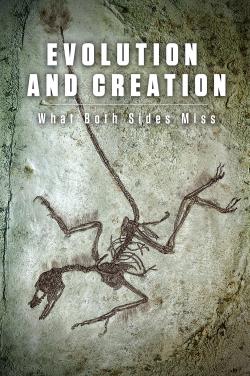
Has life evolved through blind forces of nature? Was the whole universe created 6,000 years ago? What are the facts that both sides fail to see?


