


To use our advanced search functionality (to search for terms in specific content), please use syntax such as the following examples:
- Armageddon Magazine Article
- Apology Commentary
- Europe News & Prophecy
- Christmas Telecast
- Baptism Booklet
- Sabbath Roderick C. Meredith
- Abortion Gerald Weston
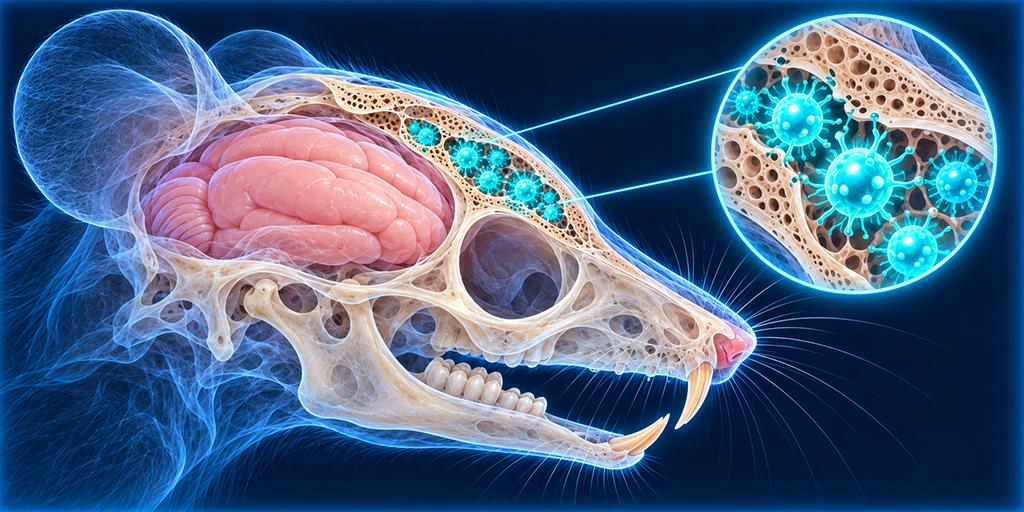
Lymph Nodes in the Skull?
For centuries, the skull was viewed as a hard, simple structure protecting the fragile brain. And, for nearly 100 years, scientists thought the brain was protected from immune activity that could damage it (Deutsche Welle, August 24, 2026). However, the historic view of immunity and the brain is rapidly changing!
A recent study from Washington University School of Medicine in St. Louis revealed that skull bones of mice contain immune clusters “resembling lymph nodes.” Mouse models are used for initial research because of the similarities between human and mouse anatomy. In order to understand the function of these “lymph node-like structures,” researchers suppressed their function “in mice with glioblastoma, an aggressive brain cancer.” As a result, “the tumors grew faster and the animals died sooner.” Then researchers used immune-boosting proteins to stimulate the immune clusters in the bone marrow, with the result that the “animals rejected tumors more effectively and survived longer.”
While scientists caution that the recently discovered lymph node-like immune structures in mice skulls might not exist in humans and more studies are yet to be completed, this finding reveals that the immune systems of even small mammals are more complex and effective than previously thought. If a less complex mammal like a mouse has such an advanced immune system, why wouldn’t a human? As one researcher observed, “We have never seen such structures in healthy bone marrow before…. It is an exciting discovery that points out that a complex brain requires its own specialized immune structures to defend it.”
The human body is a remarkably designed organism that even twenty-first-century science is only beginning to understand. Discoveries and advances in scientific understanding continue to speak to the need for a highly intelligent Creator. To learn more about this Creator, watch “Evolution’s Dirty Little Secrets.”