


To use our advanced search functionality (to search for terms in specific content), please use syntax such as the following examples:
- Armageddon Magazine Article
- Apology Commentary
- Europe News & Prophecy
- Christmas Telecast
- Baptism Booklet
- Sabbath Roderick C. Meredith
- Abortion Gerald Weston
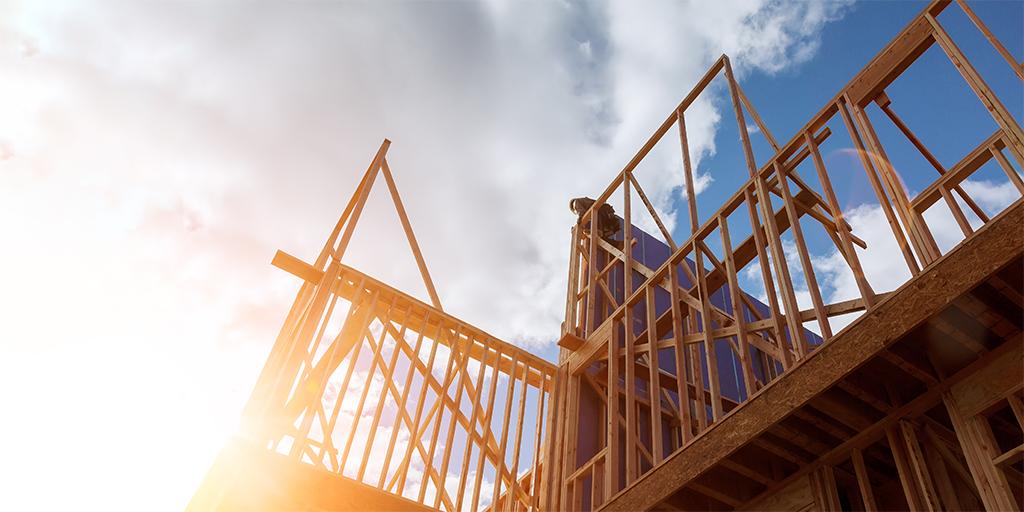
The Consequences of an Unfinished House
I often drive through an established residential neighborhood to avoid a highway frequently choked with traffic. It is a more pleasant way to get to my destination. Some time ago, as I made my way through the neighborhood, I noticed a vacant lot being cleared for a new dwelling to be built. I didn’t know then, but this somewhat common scene would prove a poignant spiritual reminder.
A few weeks later, I passed by that same construction site and saw that footings had been dug, and concrete had been poured for the foundation. Months later, I passed that way again and realized that concrete blocks were on the site for the foundation walls but not yet installed. It seemed that the construction process was happening at a snail’s pace. I concluded that the builder was probably an individual doing the work in his spare time or on weekends.
Seasons changed with little progress. Finally, the foundational walls were in place and ready for the floor structure. Weeks passed with no sign of progress. Then, as I made my usual rounds, I saw that steel beams for the floor structure had been unloaded on the site and I thought, “Now there will be some rapid progress after long delays.”
I was wrong again.
As months passed, the steel beams rusted and grass and weeds grew up around the materials. Construction was at a standstill. The project may have been delayed by a divorce, or bankruptcy, or the loss of a job, or a death in the family, but whatever the reason, the building of a single-family house in a nice neighborhood had stalled. The abandoned house under construction had become an eyesore in the neighborhood.
This sad tale illustrates a vital life lesson recorded in the Bible. The story is found in Luke 14:29–30. Jesus explained to those who said they wanted to follow Him that the cost or commitment required to be His disciple was high. He used a poignant analogy to illustrate the need to “count the cost” of discipleship. He explained, “For which of you intending to build a tower, does not sit down first and count the cost, whether he has enough to finish it—lest, after he has laid the foundation, and is not able to finish, all who see it begin to mock him, saying, ‘This man began to build and was not able to finish.’” Jesus knew that many would hear His message and desire to put it into practice, yet they would not be prepared to face the consequences of making the life changes required to become His disciple. Leaving behind cherished traditions with origins in paganism; ordering one’s work and recreation schedule to observe the weekly Sabbath and the annual Holy Days; committing a portion of one’s income to support the work of the church and to follow biblical instructions about food and drink; all of these can upset family relationships and conflict with employment and educational routines. Sometimes, these changes result in persecution from those who object to or take offence to the implementation of godly behavior.
This happened in Christ’s time. As He explained the spiritual importance of the symbols of the bread and wine at the annual Passover service Luke records, “Therefore many of His disciples, when they heard this, said, “This is a hard saying; who can understand it? … From that time many of His disciples went back and walked with Him no More” (John 6:60, 66). They had started strong, but they failed to count the cost and they faltered, not continuing in the Way.
Today, the millions of people around the world hear the good news of the coming Kingdom of God and a clarion call to make the life changes necessary to become a part of the Church of God. Yet only a few respond and actually put into practice the biblical principles presented on our Tomorrow’s World television programs and in all of our literature.
To further illustrate this Christ used another building analogy, found in Matthew 7:24–28, “Therefore whoever hears these sayings of Mine, and does them, I will liken him to a wise man who built his house on the rock: and the rain descended, the floods came, and the winds blew and beat on that house; and it did not fall, for it was founded on the rock. But everyone who hears these sayings of Mine, and does not do them, will be like a foolish man who built his house on the sand: and the rain descended, the floods came, and the winds blew and beat on that house, and it fell. And great was its fall.”
The Apostle James, the Lord’s brother, gave this straightforward admonition, “But be doers of the word, and not hearers only, deceiving yourselves.” He further said, “Therefore to him who knows to do good and does not do it, to him it is sin” (James 1:22; 4:17).
Will you count the cost and avoid the consequences of neglecting to finish your spiritual house?
TomorrowsWorld.org provides materials to aid you in doing so free of any charge.
Stay up to date with our Weekly Digest Email!
Tomorrow's World ComMentary Podcast
Subscribe to Tomorrow's World Commentary podcasts on iTunes and Google Play!