Standard Broadcast

The Problem with Christmas!

Christmas goes to the heart of our emotions and appeals to all our senses. We love the smell of freshly cut trees and other greenery. Our taste buds look forward to eggnog and other holiday favorites. However, there are problems with Christmas, and the problems go beyond “putting Christ back in it,” and every professing Christian ought to sit up and take notice. As difficult as it is to admit, and as hard as it is to believe, the problem with Christmas is that it conflicts with the Bible.

[The text below represents an edited transcript of this Tomorrow’s World program.]

The Problem With Christmas!

Christmas goes to the heart of our emotions and it appeals to all of our senses. We love the smell of freshly cut trees and other greenery. Our taste buds look forward to eggnog and other holiday favorites. Our eyes delight at displays of colored lights. Traditional songs blare over department store speakers, and who doesn’t want to get his or her hands on a decorated box with a surprise inside?

However, there are problems with Christmas, and the problems go beyond “putting Christ back in it,” and every professing Christian ought to sit up and take notice. As difficult as it is to admit, and as hard as it is to believe, the problem with Christmas is that it conflicts with the Biblical record and therefore undermines the true meaning of Jesus’ birth. That may shock you, but on today’s Tomorrow’s World program I’ll give indisputable proofs that demonstrate how the popular story of Christmas, with all its customs and traditions distort the true story. I’ll also be offering a free booklet on the subject, titled, “Is Christmas Christian?

Do you, my friends, want to know the problems with Christmas? Stay tuned!

Christmas: NOT A Bible Story!

Welcome to Tomorrow’s World, and I especially want to welcome any first-time viewers. I’ll be discussing on today’s program four serious problems with Christmas, problems every sincere Christian should be concerned with. And I’ll be offering a free resource titled Is Christmas Christian? There’s no cost to it. All you have to do is call our toll-free number that will be shown on the screen at various times during this program.

So, what are these problems with Christmas?

Problem #1: The traditional Christmas story is not found in the Bible

That’s right. The story you hear each December is not the same as found in the Bible. Now don’t misunderstand; Jesus is the Son of God and His birth is recorded in the Bible, but not as most people assume.

For example, do you realize that the wise men did not come on the night in which Jesus was born? He was not in a stable when they came. They did not come to bring birthday gifts. And contrary to the song, the Bible nowhere tells us that there were three kings. The story of the wise men didn’t happen as it is commonly told today. Not according to your Bible! It’s a myth that distorts and perverts the truth of scripture. Notice what the Bible actually reveals.

The timing of the wise men’s visit was weeks or even months after the birth of Jesus, and when they did visit Him, He was not in a stable, but in a house with His mother. No mention of shepherds and sheep, not even of Joseph.

But let’s not get ahead of the story. When the wise men came to Jerusalem, reporting that they had seen an unusual star in the sky and were inquiring about a child who was born to be king of the Jews, no small stir was created among the inhabitants of the city, including the king. Matthew 2, verses 3 & 4.

“When Herod the king heard this, he was troubled, and all Jerusalem with him. And when he had gathered all the chief priests and scribes of the people together, he inquired of them where the Christ was to be born.”  

The answer from these religious leaders was that the Messiah was to be born in Bethlehem. 

Herod then dispatched these visitors to Bethlehem, to find the child and to report on where he was found so that he could worship Him. Of course, this was a ruse. Herod had no intention of worshiping another king, but wanted to know where He was so that he could kill Him. 

While Bethlehem is only a little over 6 miles away, not a great distance, it should be obvious from what we’ve already read that all this did not happen in one night, but notice this clear statement found in verse 11: 

“And when they had come into the house, they saw the young Child with Mary His mother, and fell down and worshiped Him.”  

Note that it refers to Christ as a young child, not as an infant or babe, but we don’t have to rely on the nuances of Greek words to know that the wise men did not show up on the night in which Jesus was born. And here’s why.

After what was no doubt a few days, Herod realized the wise men were not going to report back to him. We pick up the story in verse 16:

“Then Herod, when he saw that he was deceived by the wise men, was exceedingly angry; and he sent forth and put to death all the male children who were in Bethlehem and in all its districts, from two years old and under….” 

Why up to the age of two? After all, there’s a huge difference between a newborn infant and a two-year-old. The remainder of verse 16 explains.

“...from two years old and under, according to the time which he had determined from the wise men.”  

Certainly, Jesus was younger than two, but He was more than a newborn. At a bare minimum, He was several weeks old. As we read in Luke, He was circumcised on the 8th day and after 40 days from His birth, He was brought to the temple. 

“Now when the days of her [that is, Mary’s] purification according to the law of Moses were completed [that is, 40 days], they brought Him to Jerusalem to present Him to the Lord…” (Luke 2:22).

These events had to happen prior to the visit by the wise men. Joseph was warned in a dream shortly after their visit to flee with the child to Egypt, as Herod would kill all children up to the age of two in the region.

 I’m showing today that the traditional Christmas story is not the story you’ve been led to believe. So far, we’ve seen that the wise men, or Magi, did not show up on the night Jesus was born. This is not the only example of tradition trumping truth. It’s a symptom of a much greater problem, a problem that we’ll explore in the remainder of this program, but first I want to tell you about a resource that covers this subject in greater detail. Is Christmas Christian? gives details that I don’t have time to cover in this short program. And it answers a question that few professing Christians are willing to ask—Is Christmas really ChristianAnd this booklet can be yours free for the asking, just click the link in the description to get your free copy. It’s that simple. And I’ll be right back to show you another problem with Christmas.

Not The Right Time OR Season!

On today’s Tomorrow’s World program, we’re discussing the problem with Christmas and seeing how truth is subverted by tradition. But you may be thinking, does any of this matter? Yes, it does! If you as a parent lie to your children, you undermine your own integrity. What credibility do you have instructing them to always tell the truth, if you are less than honest? And what about the fact that in the name of religion you violate the tenants of your religion? Note this sobering warning found in Revelation 21:8:

“But the cowardly, unbelieving, abominable, murderers, sexually immoral, sorcerers, idolaters, and all liars shall have their part in the lake which burns with fire and brimstone, which is the second death.”  

Yes, liars are lumped in with murderers and the sexually immoral. Note too that the cowardly are listed here. How many professing Christians have the courage to step out and do what they know is right? Most often, the fear of family, friends, and co-workers keeps them from acting on truth. 

In the previous portion of this program I introduced Problem #1: 

The traditional Christmas story is not found in the Bible

In addition to the fact that the Bible clearly shows that the wise men did not visit Christ on the night He was born, we also saw that Jesus was in a house with His mother when they arrived. Further, nowhere in scripture do we read of three kings or wise men. They presented three kinds of presents (gold, frankincense, and myrrh), but these are categories of gifts, not an indication of how many Magi there were. And if they didn’t show up on His birthday, why did they bring gifts? I was told that we give gifts at Christmas because that is what the wise men did. But wait a minute! Didn’t they give their gifts to Jesus, not each other? 

Truth is important. They were not celebrating his birthday, but were presenting gifts to a king, something that is lost in modern traditions and customs. Jesus was born to be a very real King. Notice how Jesus answered Pilate’s question: 

“‘Are you a king then?’ Jesus answered, ‘You say rightly that I am a king. For this cause I was born…’” (John 18:37).

While the term king is used in the traditional Christmas story, somehow the reality of what this means is lost. For example, Zechariah 14 gives a prophecy of the Messiah’s future role. Verse 9 declares:

         “And the LORD shall be King over all the earth.” 

Read Zechariah 14 for yourself and you will see that this is speaking of a real kingdom to be set up on the earth at Jesus’ second coming.

This brings up our second problem with Christmas:

Problem #2: Jesus was not born on December 25th

That this is a fabrication is attested to by a multitude of sources. You will often see this fact in books about Christmas, as well as newspaper articles coming out each December. No one knows for sure the exact date of His birth, but one thing we know for sure is that He was not born on December 25th. Luke 2, verse 8 tells us: 

“Now there were in the same country shepherds living out in the fields, keeping watch over their flock by night.” 

The relevance of this statement is explained in The Interpreter’s Bible:

“The implication of Luke’s story is that Jesus was born at a time when sheep could still be kept in the field—sometime between April and November” 

But December is the cold rainy season. Ezra 10:9 confirms this. 

“It was the ninth month, on the twentieth of the month; and all the people sat in the open square of the house of God, trembling because of this matter and because of heavy rain.” 

The twentieth day of the ninth month of the Hebrew calendar falls between late November and late-December, depending on the year. Then in verse 13 it says, 

“But there are many people; it is the season for heavy rain, and we are not able to stand outside.”  

The Interpreter’s Bible comments on these verses as follows: 

“The month usually marks the beginning of the great rain of Palestine, when the heavy rain... saturates the earth and fills the cisterns. It was... ‘the onset of winter storms,’ for the rains, often icy cold, reached the peak of intensity during December and January...” 

Some authorities vainly try to hang onto the 25thof December as the date of Christ’s birth, but the facts are not on their side, and this leads to our third problem with Christmas and I’ll give that to you shortly, but I want to remind you of today’s free offer. Our resource Is Christmas Christian? answers a very important question. As we’re seeing, the Christmas story is filled with one falsehood after another, and so far, we’ve only scratched the surface, as the true facts of the Bible prove. What really happened? What are the facts concerning the birth of the Messiah, Jesus Christ? Chapter two of Is Christmas Christian? is titled, “When Was Jesus Born?” Think about it. Why would anyone claiming to be a Christian, perpetuate a lie when he or she knows it’s a lie? With so many falsehoods, one must ask the question: Is Christmas Christian? You need this resource, so click the link in the description or the information button in the top right of your screen and next, I’ll show you the real source of Christian traditions.

Whose Birthday Is It, Really?

Today, we’re looking at the problem with Christmas. People bemoan the commercialization, the incessant music, and trying to figure out what to give Aunt Suzie, but none of this gets to the heart and core of the problem with Christmas. So far we’ve looked at two problems. The first one?

Problem #1 The traditional Christmas story is not found in the Bible

Actually, this problem is an accumulation of a series of falsehoods that contradict the Biblical account, and there is much more than I’ve covered on this program. Our second problem is widely recognized.

Problem #2: Jesus was not born on December 25th 

Now if the traditional Christmas story is not found in the Bible, and Jesus was not born on the 25thof December, why do people celebrate the birth of Jesus on that day? The answer is found in our third problem: 

Problem #3: Christmas did not originate with the birth of Christ

We often hear the call to “Put Christ back in Christmas.” The problem is that He never was in Christmas. Professing Christianity simply took over pagan customs and traditions, and placed Christ’s name on them. To learn more about these traditions and where they came from, you need our resource Is Christmas Christian?Chapter 4 is titled, “Santa Claus, or ‘Ho, Ho, Hoax’?” And chapter 5 covers the subject of, “Evergreens and other Christmas traditions.”

While the true history of Jesus Christ’s birth is given in the Bible, there’s absolutely no record of an annual celebration of His birth—zero, nada! It was centuries later before His birth became attached to already extant pagan celebrations. No less an authority than the eleventh edition of the Encyclopedia Britannica states:

“As late as [A.D.] 245 Origen, in his eighth homily on Leviticus, repudiates as sinful the very idea of keeping the birthday of Christ ‘as if he were a king Pharaoh.’ The first certain mention of Dec. 25 is in a Latin chronographer of A.D. 354...”  

It is evident from Origen’s statement that the celebration of Jesus’ birthday was beginning to creep into the Church at that time, and this is supported by a note in The Interpreter’s Bible:

“Early in the third century A.D. some parts of the church celebrated January 6 as the birthday of Jesus. In the fourth century that date was displaced by December 25—a day that had long been the occasion of a pagan festival associated with the rebirth of various solar deities. It was the date of the winter solstice according to the Julian calendar” 

In Tom Flynn’s, The Trouble with Christmas, he quotes conservative religion writer George W. Cornell as acknowledging,

“For more than 300 years after Jesus’ time, Christians didn’t celebrate his birth. The observance began in fourth century Rome, timed to coincide with a mid-winter pagan festival honoring the pagan gods Mithra and Saturn. The December date was simply taken over to commemorate Jesus' birth, since its exact date isn't known. Consequently, the fusion of the sacred and the profane characterized the celebration from the start”. 

Many understand that the 25th of December is not the day of Jesus’ birth. And many understand the so-called Christmas tree, kissing under mistletoe, the Yule log, Santa Claus, and many other customs all originate in pagan tradition. So it all comes down to the question, “Does any of this matter as long as we celebrate Jesus?” I’ll answer that question from the pages of the Bible, that book that so many claim to be the source of their beliefs and behaviors. But I want to remind you of today’s resource: Is Christmas Christian? I think by now you probably know the answer to that question, but this resource gives more information than I have time to give in this short program, and it can be yours free for the asking. All you have to do is call the number on your screen or click the link in the description. Is Christmas Christian? is a must-read for those who put God first in their lives. Next I’m going to explain from the Bible why all of this matters, but before I do, be sure to click the like button and subscribe to our channel so you don’t miss another Tomorrow’s World video.

Holiday, Or Holy Day? Which Celebration Matters To God?

Today we’re looking at the problem with Christmas. To put it kindly, the real problem of Christmas is that it is built upon a foundation of lies. But does any of this matter? As I’ve shown: 

Problem #1 is: The traditional Christmas story is not found in the Bible

Problem #2 is: Jesus was not born on December 25th

Problem #3 is: Christmas did not originate with the birth of Christ 

For some of you, this may be a revelation. For others, you’ve known these things for a long time. So, the crux of the matter is this: “Does any of this matter as long as we observe the day to celebrate Jesus’ birth?” It’s now time to look at:

Problem #4 God is not pleased with us celebrating His Son’s birth.

Tom Flynn’s book The Trouble with Christmas is admittedly written from an atheistic viewpoint, and this is not where we’re coming from here at Tomorrow’s World. Nevertheless, what he writes in the chapter entitled “The Babe and the Bathwater” is true. 

“Even devout Christians must admit—as mainstream and liberal Christian clergy do—that much of what we know as the ‘story of Christmas’ is simply the result of a process of literary accretion [that’s the process of growth or enlargement]. Its elements are inspired by, or just appropriated from, the legends of earlier holy ‘personages.’ Even if Christianity is true, the story of Christmas is unworthy of it.”

 Let’s go straight to the Bible to learn what IT tells us. After all, isn’t that the source that really matters?

In Luke 6:46, Jesus chided the people of His day who called Him their Lord, meaning Master, but they didn’t obey His teachings. 

“But why do you call Me “Lord, Lord,” and not do the things which I say?” 

Furthermore, He rebuked the Pharisees for putting their hand washing tradition above the law of God. The issue may have been different, but the principle is the same—putting tradition over God’s commands. Mark 7:9:

“All too well you reject the commandment of God, that you may keep your tradition.”

So is God pleased with Christmas traditions? Is He pleased with those who celebrate the birthday of His Son, as long as they “do it for Him?” Isn’t it time to put human reason aside and let the Bible answer this question? What does GOD think about mixing heathen practices with the worship of Jesus? Deuteronomy 12:29–32 states: 

“When the LORD your God cuts off from before you the nations which you go to dispossess… take heed to yourself that you are not ensnared to follow them... and that you do not inquire after their gods, saying, “How did these nations serve their gods? I also will do likewise.” You shall not worship the LORD your God in that way; for every abomination to the LORD which He hates they have done to their gods; for they burn even their sons and daughters in the fire to their gods. Whatever I command you, be careful to observe it; you shall not add to it nor take away from it.” 

There was a time in ancient Israel where people mixed the worship of the true God with the worship of the heathen deity Baal. The prophet Elijah challenged them in 1 Kings 18:21 with this simple question:

And Elijah came to all the people, and said,“How long will you falter between two opinions? If the LORD is God, follow Him; but if Baal, [then] follow him.” 

Notice their reaction to his question:

“But the people answered him not a word.”

As with so many people today, they wanted to have it both ways. They wanted to worship God and a pagan deity at the same time. The New Bible Commentary Revised makes this astute observation regarding this verse:

“The sin of the people had been not in rejecting the worship of Yahweh, but in trying to combine it with the worship of Baal. Such syncretism [that is, combining religious ideas] is always considered to be broad-minded, whereas the other is narrow-minded. But Yahweh of Israel left no room for other gods.” 

This has been the challenge down through history, and our day is no different. People want to worship God their own way. When Stephen, the newly ordained deacon, confronted the Jews in the first century, he pointed out how time and again they turned back to heathenism. Then he cried out: 

“You stiff-necked and uncircumcised in heart and ears! You always resist the Holy Spirit; as your fathers did, so do you” (Acts 7:51). 

Yes, my friends, there IS a problem with Christmas, and God is NOT pleased with mixing heathen and pagan practices in the worship of His Son. As He spoke through the prophet Isaiah, 

“Just as they have chosen their own ways, and their soul delights in their abominations, so will I choose their delusions, and bring their fears on them; because, when I called, no one answered, when I spoke they did not hear; but they did evil before My eyes, and chose that in which I do not delight” (Isaiah 66:3–4).

 On today’s Tomorrow’s World program, we have briefly explored the problem with Christmas. This is more than an academic exercise. It cuts to the heart of our relationship with our Creator, but few have the courage to change in the face of the facts. I urge you to call or go to our website to receive your free copy of Is Christmas Christian?

I also invite you to join us every week on Tomorrow’s World. You need the solid guidance that comes from your Bible. Richard Ames, Wallace Smith, and I, along with guest presenter Rod McNair, will continue to share with you the teachings of Jesus Christ, the good news of the coming Kingdom of God, and the exciting end-time prophecies and their meaning. So, be sure to join us again next week, right here, at this same time! 


Do You Have an Immortal Soul?

What happens when you die? Is there an afterlife? Do you have an immortal soul that wafts off to heaven or descends into an ever-burning hell fire? More fundamentally, WHY do you believe what you do regarding life after death? Where did your ideas come from? Are you sure? Common views about heaven, hell, and purgatory do not come from the Bible, watch to find out what the Bible REALLY says about life after death.

[The text below represents an edited transcript of this Tomorrow’s World program.]

Do You Have An Immortal Soul?

What happens when you die? Is there an afterlife? Do you have an immortal soul that wafts off to heaven or descends into an ever-burning hellfire? More fundamentally, why do you believe what you do regarding life after death? Where did your ideas come from? You may think you know, but don’t be too sure.

Common views about heaven, hell, and purgatory do not come from the Bible and I’ll give proof on today’s Tomorrow’s World program. I’ll also be offering you a free resource that explains in detail the origin of many commonly held assumptions that people have regarding the Bible, so keep watching.

Death Is The End Of Life—Period!

On today’s Tomorrow’s World program, I’m asking and answering questions regarding life after death. Will you live again? And if so, where might that be? Where did your ideas about heaven and hell come from? Try as you might to escape it, your death is certain, and avoiding the subject won’t solve your problem.

A common assumption is that humans have something often referred to as a soul, and that soul, whatever it is, is immortal. It cannot die but lives forever. Now if true, when you die that soul must go somewhere—usually thought of as heaven or hell. This idea supposedly comes from the Bible, but does it? What does the Bible say? You may be surprised.

According to Jesus, the soul can be destroyed.

“And do not fear those who kill the body but cannot kill the soul. But rather fear Him who is able to destroy both soul and body in hell” (Matthew 10:28)

The highly respected New Bible Commentary Revised makes this comment about Matthew 10:28:

The soul in biblical thought is not immortal…

The concept of the soul burning up is found in John the Baptist’s prediction of the Messiah to come. Notice what he says the Christ would do. Matthew 3:12:

His winnowing fan is in His hand, and He will thoroughly clean out His threshing floor, and gather His wheat into the barn; but He will burn up the chaff with unquenchable fire (Matthew 3:12)

The wheat and chaff are clearly referring in this passage to saved and unsaved human beings. Nothing here indicates immortality. In fact, this passage clearly states the opposite.

Perhaps the most famous passage of scripture is John 3:16, but how many stop to think what it says? Notice it carefully, beginning in verse 14:

And as Moses lifted up the serpent in the wilderness, even so must the Son of Man be lifted up, that whoever believes in Him should not perish but have eternal life (John 3:14–15).

Notice that it contrasts “perish” with “eternal life.” These are opposites. Now we come to that famous verse that many know, but few seem to understand—verse 16:

For God so loved the world that He gave His only begotten Son, that whoever believes in Him should not perish but have everlasting life (John 3:16).

Do we understand what perish means? Or are we going to change the meaning of it to fit traditions handed down to us? The Bible is consistent on this matter. The Apostle Paul shows this same contrast in Romans 6:23:

For the wages of sin is death, but the gift of God is eternal life in Christ Jesus our Lord (Romans 6:23).

What a powerful statement that is! Think about it. “The wages of sin is death,” not eternal life in some kind of ever-burning hell. These are only a few of the scriptures that contradict popular traditions, but there is more, much more. But let me first tell you about one of the most profound resources we publish on why traditions so often conflict with the Bible This problem is explained in our short book, Satan’s Counterfeit Christianity. I cannot express enough how important this book is. It can open your eyes to the greatest deception of the ages. Just click the link in the description, or call the number below.

A Nearly Immortal Falsehood The Soul Can Die

Whatever one may think, the soul is not immortal, but can die. If you have a Bible handy, open it up to the book of Ezekiel, chapter 18. If you don’t have a Bible in front of you, or if you don’t know where to find the book of Ezekiel, write it down and look it up later. Here it is—Ezekiel 18:4:

Behold, all souls are Mine; the soul of the father as well as the soul of the son is Mine; the soul who sins shall die (Ezekiel 18:4).

My dear friends, this is not difficult to understand, IF we are willing to lay aside myths taught to us from childhood and read the Bible for ourselves. This is the message from the beginning to the end of this marvelous Book. Going back to the beginning chapters of the Bible, we read in Genesis 2, verse 7, that man IS a soul.

And the LORD God formed man of the dust of the ground, and breathed into his nostrils the breath of life; and man became a living soul (Genesis 2:7 KJV).

This is from the King James Version. The New King James Version says,

            . . . and man became a living being.

The Old Testament books of the Bible were mostly written in the Hebrew language and wherever the word soul is found in the English translations, it comes from the Hebrew nephesh. So it says that man became a living soul—a living nephesh.

Now I don’t know where you went to school, but simple logic would tell you that when you have the modifying word living attached to soul, it follows that you could have a dead soul. And that is exactly what the passage says. Notice it again. Man only became a living soul after he received the breath of life.

And the LORD God formed man of the dust of the ground, and breathed into his nostrils the breath of life; and man became a living soul (Genesis 2:7 KJV).

All one has to do is follow where the Hebrew word nephesh is used in the Bible to understand its meaning. For example, in Genesis 1 verse 21 we see that nephesh refers to living creatures other than man.

So God created great sea creatures and every living thing [every living nephesh, that is] that moves, with which the waters abounded, according to their kind, and every winged bird according to its kind (Genesis 1:21)

There are so many scriptures we could turn to. The high priests of Israel were given special instructions on how they were to conduct their lives and one regulation was that they were not to touch a dead body. Notice it in Leviticus 21:11,

…. nor shall he [the high priest] go near any dead body [nephesh], nor defile himself for his father or his mother. …. (Leviticus 21:11)

According to the Bible, the state of the dead is that of absolute unconsciousness. Sorry folks, but your Aunt Mary or Uncle Henry is NOT right now looking down from heaven and any minister that tells you otherwise is NOT getting his ideas on the subject from the Bible! I know that may be shocking, but it’s true. As we’ve already seen, whatever a soul is, it can be alive OR dead, and the fate of the unsaved is death. Both Jesus and Paul affirm this. So now let’s look at some scriptures that explain the state of the dead. We’ll start with Ecclesiastes 9 and verse 5:

For the living know that they will die; but the dead know nothing… (Ecclesiastes 9:5).

As a former friend used to say, “When you consider how little the living know, it’s not difficult to believe that the dead know nothing!” However, all jokes aside, the Bible says, “the dead know nothing.” Verse 10 doubles down on the point and gives valuable advice.

Whatever your hand finds to do, do it with your might; for there is no work or device or knowledge or wisdom in the grave where you are going. (Ecclesiastes 9:10)

This is confirmed in Psalm 146, verses 3 & 4:

Do not put your trust in princes, nor in a son of man, in whom there is no help. His spirit [Hebrew: wind or breath] departs, he returns to his earth; in that very day his plans perish. (Psalm 146:3–4)

This is from the New King James Version and the word spirit might confuse some. This is not the Hebrew word nephesh and it merely means his wind or breath. The King James Version reads:

His breath goeth forth, he returneth to his earth; in that very day his thoughts perish (Psalm 146:4 KJV). [845]

Contrary to what you hear at funerals, there is no such thing as an immortal soul. But, does that mean there is no hope, no life after death? I’ll answer that question shortly, but as we’re seeing, there is a difference between what the Bible says and what people think the Bible says. Why? Satan’s Counterfeit Christianity answers that question. The greatest deception of all involves that which is right before our very eyes. The Christianity of Christ was transformed into a religion that early Christians would never recognize. They would shocked to learn that modern Christianity places the name of a pagan fertility goddess on a holy day that celebrates the resurrection of Christ. They would be shocked to learn that Christ’s birth is celebrated, and done so on the day that celebrates the birth of the sun god Mithra. And, they would be shocked that so-called followers of Christ believe in an immortal soul. Satan’s Counterfeit Christianity explains a vital truth that you need to know. Don’t pass over this opportunity to receive your free copy of this valuable resource. All you have to do is call, or click the link.

True Doctrines About the Soul, Replaced by Pagan Philosophy

Jesus and Paul described death as a sleep and that is consistent with what we read from Ecclesiastes and Psalms. Let me give you those references before showing you how ideas totally contrary to scripture came to take over the thinking of millions of Christians and non-Christians alike.

Notice this account from John the 11th chapter, beginning in verse 11:

“Our friend Lazarus sleeps, but I go that I may wake him up.” Then His disciples said, “Lord, if he sleeps he will get well.” However, Jesus spoke of his death…. Then Jesus said to them plainly, “Lazarus is dead” (John 11:11–14).

And in one of the very passages that is often read at funerals, the Apostle Paul likens death to being asleep. Here it is in 1 Corinthians 15:51:

Behold, I tell you a mystery: We shall not all sleep, but we shall all be changed… (1 Corinthians 15:51).

In the face of such evidence that we do not have an immortal soul, and believe me, there is far more evidence than I’m covering in this program, how is it that modern Christianity came to accept this doctrine?

It all started long ago. Heathen and Greek philosophers believed the soul to be immortal, and it was through these pagan philosophers that the doctrine infiltrated the thinking of some of the greatest names among early church theologians.

Let’s look at them and see where history records how they got their ideas. The highly respected Eerdman’s Handbook to the History of Christianity tells us on page 107:

The early Christian writers believed that the orthodox faith was transmitted full-grown to the churches by the apostles. … But the preaching and teaching of the apostles was not the same as the orthodoxy about which the theologians wrote (Eerdman’s, p. 107).

So, while they claimed Jesus and the Apostles gave us complete doctrine, they introduced ideas that did not come from them. Eerdman’s gives us this statement revealing the source of their ideas.

The ancient world had a great respect for tradition and precedent, especially in religion. Christianity seemed to be quite new; this set a serious stumbling-block. Christian writers tried to overcome this problem by demonstrating that the faith had centuries-old roots in Israel and in the wisdom of the Greek philosophers (Eerdman’s, p. 106).

That statement should cause people to take notice. Few Sunday morning church-goers have any idea how many their beliefs come from Greek philosophy rather than the Bible. Continuing with the quote from Eerdman’s on page 106:

Justin Martyr wrote: ‘Christ is the Logos in whom every race of men shared. Those who lived in accordance with Logos, true reason, are Christians, even though they were regarded as atheists; for example, Socrates and Heraclitus among the Greeks.’ (Eerdman’s, p. 106)

My friends, do you get it? Here we have one of the most famous theologians of mainstream Christianity telling us that it is not what one believes, but how one believes, that determines a real Christian. In other words, it’s not the answer, not the conclusion, but the process by which you arrive at an answer. Modern education is not so modern! Wake up! According to Justyn Martyr, if one uses “true reason,” he is a Christian, even atheists!

But it doesn’t stop there. Origen is another early influential theologian.

Origen [185–254 A.D.] tried to express the Christian faith in terms of the prevailing Platonic philosophical ideas of his time. Some of his speculations, for example about the pre-existence of souls and universal salvation, were repudiated by the church, and helped bring about his later condemnation. But Greek Christian theology continued to be concerned with the problem which Origen tackled—the relationship of philosophy and the Christian tradition (Eerdman’s, p 104).

Tertullian wrote a work titled On the Soul sometime between 196 and 212 A.D., but what influenced his thinking?

But his well-known question, “What has Athens to do with Jerusalem?” expressed a rejection of philosophy that was not true of his own work, since he demonstrated how pagan intellectual achievements could be made to serve Christianity” (Eerdman’s, p. 111)

In other words, he criticized others for using Greek philosophy, but used it in his own writings.

There’s more, much more. From the Encyclopedia Britannica,

Augustine [354–430 C.E.] adopts a Platonic thought [that which comes from Plato] when he teaches that the immortality of the soul follows from its participation in the eternal truths. … The belief in human immortality in some form is almost universal… (Encyclopedia Britannica, 11th ed., “Immortality,” page 336) [744]

Honest theologians know that today’s professing Christianity is not the same as that of Christ and His apostles. We’ve only scratched the surface of pagan intrusions into what people think is the religion of the Bible. Satan’s Counterfeit Christianity documents how the religion that Jesus brought was co-opted and counterfeited, but there is hope. I want to give you another opportunity to order this well-researched and documented work that exposes modern Christianity for what it is. If you really want to obey God, and frankly, that’s not very many who are watching this program, you need this resource. So call or click the link to receive your free copy of Satan’s Counterfeit Christianity. There is no cost or follow-up if you call, and if you follow the link, you can either read it on our website, or you can order a free copy for yourself.

The Soul Can Join With God Forever

On this program we’ve seen that the immortal soul doctrine is not found in the Bible. We’ve also seen how pagan philosophy was the means by which that doctrine entered mainstream Christianity. So what does the Bible say is the hope of man?

Job asked this relevant question:

            If a man dies, shall he live again? (Job 14:14)

Now that may not be important to you if you’re 25 years old and in good health. You know academically that someday you will die, but that’s way off in the future. You have plenty of time to consider that eventuality at a later time. But no one knows how long he will live and at some moment, Job’s question becomes overwhelmingly important. Job answered his own question.

All the days of my hard service I will wait, till my change comes. You shall call, and I will answer You; You shall desire the work of Your hands (Job 14:14–15).

But when, and how? Man is more than an intelligent ape. While the bible makes it crystal clear that man does not have an immortal soul, it explains that man is given a spirit that empowers his brain, makes it possible to have a genuine relationship with his Creator, and records his life’s experiences.

Job 32:8 tells us,

But there is a spirit in man, and the breath of the Almighty gives him understanding (Job 32:8).

What this spirit does for us is partly explained in 1 Corinthians the second chapter. We read there of two spirits: the spirit in man and the Holy Spirit. Each spirit imparts to man different degrees of understanding. Let’s begin in verse 9:

… “Eye has not seen, nor ear heard, nor have entered into the heart of man the things which God has prepared for those who love Him.” But God has revealed them to us through His Spirit. … For what man knows the things of a man except the spirit of man which is in him? Even so no one knows the things of God except the Spirit of God.

Through the spirit in man, we are off the chart in intelligence. Animals with larger brains cannot begin to compete. But this spirit in man has a second purpose. It combines with the Spirit of God to give us an understanding of godly things. This is why intelligent people without God’s Spirit cannot undwerstand spiritual knowledge. But the spirit in man can combine with God’s Spirit, and when it does, it makes us children of God. Romans 8:16–17 explains,

            The Spirit Himself [that is, God’s Spirit] bears witness with our spirit that we are children of God, and if children, then heirs—heirs of God and joint heirs with Christ…

So this Spirit gives us mind power, and makes it possible for us to have an intimate relationship with God. But it does one more thing: it records who and what we are, and at a future time, God will plant that spirit into a new resurrected body.

Paul addressed the subject of death with the Church at Thessalonica.Some members had died in the faith, discouraging others, so Paul explained that death is like a sleep, but there’s coming a future resurrection to life:

But I do not want you to be ignorant, brethren, concerning those who have fallen asleep, lest you sorrow as others who have no hope (1 Thessalonians 4:13).

For lack of time I won’t read every verse in this passage, but I encourage you to do so. As we often say on Tomorrow’s World, don’t believe us just because we say it. Prove it for yourself. Paul continues by explaining WHEN the resurrection will take place. Verse 16:

For the Lord Himself will descend from heaven with a shout, with the voice of an archangel, and with the trumpet of God. And the dead in Christ will rise first. Then we who are alive and remain shall be caught up together with them in the clouds to meet the Lord in the air (1 Thessalonians 4:16–17).

It’s only at the return of Jesus Christ that the dead come back to life. Notice this passage from 1 Corinthians 15 where Paul explains that we are mortal and must put on immortality. And he shows exactly when that takes place, beginning in verse 50:

Now this I say, brethren, that flesh and blood cannot inherit the kingdom of God; nor does corruption inherit incorruption. Behold, I tell you a mystery: We shall not all sleep, but we shall all be changed—in a moment, in the twinkling of an eye, at the last trumpet. For the trumpet will sound, and the dead will be raised incorruptible, and we shall be changed. For this corruptible must put on incorruption, and this mortal must put on immortality (1 Corinthians 15:50–53).

We were made to form a relationship with our creator. This subject requires more time than I have on this program, and I’ll have to save a greater explanation for another day, but in the meantime, why is it that the true message of the Bible is obscured by the ideas of Plato and other Greek philosophers? Why is the so-called Christian holy day that celebrates the resurrection of Jesus Christ named after the pagan goddess Ishtar, and celebrated with eggs, rabbits, and other fertility symbols? Why is the birth of Christ celebrated on the birthday of the sun god Mithra? These are only a few of the questions you ought to be asking.

The astounding answer is found in our booklet Satan’s Counterfeit Christianity. Be sure to order your free copy today. And if you don’t want to miss another tomorrow’s World program, hit the subscribe button and the notification bell. Until then, may the peace of God the Father and Jesus Christ be with you!


Will Civilization Collapse?

The world is at a crossroads. Some predict we have only decades to go before society falls to pieces. They say environmental disasters, depletion of resources, and economic inequalities may lead to the end of civilization. Will civilization collapse? Is there really a source we can turn to really know?

The world is at a crossroads. Some predict we have only decades to go before society falls to pieces. They say environmental disasters, depletion of resources, and economic inequalities may lead to the end of civilization. In an article for the BBC website, Rachel Nuwer noted, “It should come as no surprise that humanity is currently on an unsustainable and uncertain path – but just how close are we to reaching the point of no return?”

That’s a good question. Truly, world conditions are more precarious than they’ve been for decades. Consider the Bulletin of the Atomic Scientists from January 24, 2019, which assessed the world’s nearness to nuclear Armageddon as only “two minutes to midnight”.

We should be concerned about the future. And we're all in the same boat. We all live on this planet and if calamity comes, it’s going to affect all of us.

So, will civilization collapse? Is there really a source we can turn to, to really know?

And how have we gotten here in the first place? Why are we even talking about something as horrifying as societal collapse?

We’ll examine these questions today on Tomorrow’s World. And we’ll be offering a free DVD entitled, “A Culture in Crisis,” later in the program. So get ready to write down the information! You don’t want to miss this DVD.

So, will civilization collapse? I’ll be right back with the answer.

[short intro music]

Welcome to Tomorrow’s World. When it comes to daily life, everyone’s got an opinion about everything. And most are eager to share it. From what car to drive, to where to shop, to how we feel about the issues of the day. The people we’re around help form our opinions and perspectives about these things. So who do you listen to? Most likely, it’s family, friends, and co-workers. Or maybe celebrities or opinion-makers in the media. Or possibly successful people in business and government. But we all listen to people who influence how we think.

The problem is when we let others around us frame our thoughts on more important matters. On questions like, will our civilization collapse? This question is far too important to just entrust to the opinion of a best friend or a radio talk show host. 

No, we really must look elsewhere… and there's only one source that speaks with authority about the future. It’s the Bible. You can trust the Bible. It’s full of prophecies that already happened. And it speaks of things yet to occur. So, what does the Bible say about what will happen in our day? Go get a Bible, and read along with me. We make no apology on Tomorrow’s World that we uphold and we live by the Holy Bible to the best of our ability. Let others insult the Bible and tear it apart. It doesn’t change the fact it’s God’s inspired word. And it always will be.

So what does the Bible say about our day? In Matthew chapter 24, Jesus Christ said some remarkable things to His disciples. They had asked Him, “What will be the sign of Your coming, and of the end of the age?” [Matthew 24:3]. And then He described a number of things that would happen. Wars and rumors of wars. Famines and pestilence. Lawlessness and love growing cold. It sounds like civilization coming apart. And then He said in Matthew 24:21, “For then there will be great tribulation, such as has not been since the beginning of the world until this time, no, nor ever shall be.”

Now stop for a moment and think about this. Some people look at prophecy as rants by crazy people and religious fanatics. But who is giving this warning? The Savior of all mankind. It’s a message straight from Jesus Christ, as preserved by His faithful disciples. And notice what He said next, in verse 22: “And unless those days were shortened, no flesh would be saved; but for the elect’s sake those days will be shortened.” [Matthew 24:22]

Jesus said humanity is going to the very brink of utter destruction. Now think again: was it ever possible for man to wipe out all mankind, before the nuclear age? No way. That’s one of the proofs that we are living in the prophesied last days today. Because total annihilation is possible. And as I said before, the Bulletin of the Atomic Scientists concluded we’re closer to that happening than we’ve been for decades.

Mankind will take the world to the edge of annihilation. Your Bible predicts that it will happen. But it will be stopped before all life is destroyed. Jesus Christ will come back to earth, just as He left after His resurrection. And this time He’ll return as a king. All nations will fall in line and obey Him. They'll have no choice.

But we’re getting ahead of ourselves in the story. The Bible says in the mouth of two or three witnesses a matter is established. So, let’s see if there’s another reference in the Bible to an end-time collapse of society.

Turn in your Bible to Jeremiah 30:5, “For thus says the LORD: ‘We have heard a voice of trembling, of fear, and not of peace. Ask now, and see, whether a man is ever in labor with child? So why do I see every man with his hands on his loins like a woman in labor, and all faces turned pale? Alas! For that day is great, so that none is like it; and it is the time of Jacob’s trouble, but he shall be saved out of it.” 

Ok, so let’s think this through. Jesus said at the end of the age, there will be a time like no other in history. And Jeremiah said the same thing. Could there be two times that are the worst in history? Of course not. So, it has to be referring to the same event. Both Matthew 24 and Jeremiah 30 are referring to the prophesied Great Tribulation at the end of this age. These are two voices prophesying of the same upcoming event.

But notice an additional fact here that we didn’t have in Matthew. Jeremiah says it is the time of Jacob’s trouble. But who is Jacob? Jacob was one of the patriarchs in the book of Genesis, in the Bible. He was the son of Isaac and grandson of Abraham. He was originally called Jacob but then God changed His name to Israel. His descendants, the children of Israel, became a nation, and, over time, a number of different nations. So, what we’re reading here is that the Tribulation is going to be especially difficult for the modern descendants of Jacob, or Israel.

But who are the descendants of Jacob and Israel? The people who came out of Western Europe and the British Isles, including many English-speaking people all over the globe today. Those people who’ve had such wonderful blessings over the last two or three centuries, and have risen to incredible power. Those people who’ve enjoyed material wealth and prosperity like no others on earth.

Could America, Britain, Canada, and other Western nations collapse? Absolutely. Frankly, when we look at history, we see rise and fall is a normal pattern of every civilization. In an article for the BBC website, entitled “Are we on the road to civilisation collapse?” Luke Kemp analyzed the rise and fall of civilizations over a period of more than 3,000 years. His conclusion was that the average lifespan of a civilization or empire is about 336 years. Are any civilizations immune from decline and fall? He would argue no. He wrote this: “Collapse can be defined as a rapid and enduring loss of population, identity and socio-economic complexity. Public services crumble and disorder ensues… Virtually all past civilisations have faced this fate. Some recovered or transformed, such as the Chinese and Egyptian. Other collapses were permanent...”

We in the western world are not immune to the possibility of collapse. And when we look at Bible prophecy, what we find is we're going to bear the brunt of the tribulation. That’s what Jeremiah 30 is saying. But the whole world will also go through great difficulty. The book of Revelation speaks of warfare and plagues like the world has never known.

But why will it happen? That’s a vital question, which we’ll answer in this program. But before that, let me offer you our free DVD, “A Culture in Crisis.” It’s a compilation of three Tomorrow’s World programs, and it discusses major changes going on in our societies right now. Prophesied events are going to take many by surprise. You need to understand what’s happening and why. So give us a call, or order one by clicking the link in the description. Also, remember to click the "like" button. And if you don't want to miss another Tomorrow's World video, be sure to subscribe to our channel and hit the notification bell.

So we've asked the question, will civilization collapse? And we went to the only source there is to know the future, the Bible. In two different places, it referred to a global upheaval that will take place in the end-times. But why is this calamity coming?

To answer that question, let’s go back to another of the Old Testament prophets. The prophet Ezekiel was among the second wave of captives taken by the Babylonians around 597BC. Ezekiel began prophesying from Babylon in the sixth year of that captivity. Jerusalem fell in 586BC. Ezekiel foretold the fall of Jerusalem. Look at what he said, as recorded in Ezekiel 5, verse 5, “Thus says the Lord GOD: ‘This is Jerusalem; I have set her in the midst of the nations and the countries all around her. She has rebelled against My judgments by doing wickedness more than the nations, and against My statutes more than the countries that are all around her.’” [Ezekiel 5:5-6]

God, through Ezekiel, told the people why they were going to be overthrown. They were supposed to be a model nation. They were supposed to show the rest of the world how to keep God’s law, and how to be moral and upright. Other nations were supposed to see their example and look up to them and want to emulate them. But instead of that, by Ezekiel’s time, he said: “you are worse than the people around you.” What a tragedy. 

Are there any parallels for our day? Western civilization was built on a Judeo-Christian foundation. It’s based on principles found in this book, the Bible. Many of our laws are based on moral principles found in the Bible as well. But are we turning our backs on that foundation? Are we casting aside basic principles that preserve society and ensure a certain level of stability? Do we pass laws that directly contradict principles found in the Bible? Who gives us the right to say it’s lawful to take the life of unborn children when God created life? Who gives us the right to proclaim marriage is any arrangement whatsoever, instead of what God created between a man and a woman? And how come this is so confusing when we have it so plainly spelled out in our foundational moral book, the Bible? And what kind of example do we set to the world?

Ezekiel told the people of Jerusalem they had corrupted themselves even further than the people around them. Today, Western nations have the benefit of a foundation of principles found in the Bible. But we are casting them aside, and for what? What are we losing in the process?

This hits even closer to home than you might think. Because Ezekiel didn’t just prophesy to the people of his day in Jerusalem. He’s prophesying to us. Let me explain.

Let’s back up a little bit to Ezekiel’s time and before. Back in the 10th century BC, Israel was a unified nation. Under the reign of Rehoboam, however, it split into two: a northern house, still called Israel, and the southern house, now called Judah. In 721BC, the northern house of Israel was attacked, overcome and deported by the armies of Assyria. This northern house was taken captive and never returned. Many people today think this house of Israel just sort of disappeared.

But Ezekiel warned the house of Israel of impending destruction over 100 years after they were taken into captivity. How could he prophesy to them when they were already overtaken and gone? It must be a dual prophecy and be referring to a yet future time.

Notice what he specifically predicts about the house of Israel, in Ezekiel 6, and verse 2, “Son of man, set your face toward the mountains of Israel, and prophesy against them, and say, ‘O mountains of Israel, hear the word of the Lord GOD!’ Thus says the Lord GOD to the mountains, to the hills, to the ravines, and to the valleys: ‘Indeed I, even I, will bring a sword against you, and I will destroy your high places… In all your dwelling places the cities shall be laid waste, and the high places shall be desolate....’” [Ezekiel 6:2-3, 6]

Ezekiel predicted that Israel’s cities would be destroyed. But Israel was already in captivity over 100 years earlier! And, in that captivity, Israel’s cities weren’t destroyed, they were repossessed by other groups of people brought in by the Assyrians. So Ezekiel was prophesying of a time yet future when the land of Israel will be so devastated that its cities are leveled.

Who is the modern house of Israel? Well, nations coming from the British Isles and Western Europe, and comprising much of the English-speaking people around the world. So Ezekiel was describing a shocking and horrifying collapse for these people, yet to come. When you see the writing on the wall, and the direction of our morals, it’s chilling.

And this is why we’re presenting this program today. Our anti-God, anti-Bible culture is going the wrong way. And is surely headed for disaster. Our culture is tossing aside the Biblical morality that is the strength of any people that hold to it. The principles found in the Bible regulate relationships and enable strong and stable families. They provide for a strong home life for raising healthy and happy children. It’s God’s way of life, that brings happiness, and blessings, and good things.

You need this special DVD “A Culture in Crisis.” It’s a compilation of three Tomorrow’s World telecasts. It outlines in detail where our society is going wrong, and it reveals the origins of the sea changes that are going on today. It will help you understand why things are happening as they are. You and your family need this DVD. We’ll send it to you free of charge. Just call the number on the screen or click the link below for our DVD, “A Culture in Crisis”.

We've examined why God predicts calamity to come on a people. And we've asked the question, could that be ahead for us? 

Now let’s take an even closer look. The message Ezekiel was to deliver to the house of Israel contained a very heartfelt and compassionate appeal from God. When God said He would allow the house of Israel to be militarily overthrown and taken captive, notice what else He added. We read in Ezekiel, chapter 6, “Yet I will leave a remnant, so that you may have some who escape the sword among the nations, when you are scattered through the countries. Then those of you who escape will remember Me among the nations where they are carried captive, because I was crushed by their adulterous heart which has departed from Me…” [Ezekiel 6:8-9]

Many portray God as scary, vindictive, and monstrous. But look at God’s reaction to the disobedience and obstinance of Israel. It says He was “crushed.” He was greatly distressed. God doesn’t want our blind obedience. He wants a relationship. He showed us His love by sending His Son as a sacrifice. He wants loyalty in return. And when He does so much for a people, it hurts Him and it grieves Him to see those people reject Him and in turn self-destruct.

The point is, we as a people are coming to the point in our history, where we’re not only redefining morality and godly behavior, but are full-scale rejecting the God of the Bible Himself.

But where is God today? Have we cast Him off like an old shoe? When people, by and large, reject the idea that there is a sovereign God in Heaven who fashioned us all, and governs over all, calamity is inevitable. A godless society will not stand.

Notice what the prophet Isaiah said, in Isaiah chapter 1. “Alas, sinful nation, a people laden with iniquity, a brood of evildoers, children who are corrupters! They have forsaken the LORD, they have provoked to anger the Holy One of Israel, they have turned away backward… Your country is desolate, your cities are burned with fire; strangers devour your land in your presence; and it is desolate, as overthrown by strangers.” [Isaiah 1:4, 7]

What was God saying? When a people reject God as their sovereign head, they're headed for trouble. And their civilization is headed for disaster. He will no longer protect their land or guard their cities. They're on their own.

Again, we want you to understand why our civilization is in decline, and yes, why it will fall. It’s not a mystery. We all need to get our house in order, and understand how God wants us to conduct our lives. So order our special DVD offer, “A Culture in Crisis.” It will open your eyes to what’s happening in the world, and why. And also don't forget to "like" this video and subscribe to our channel.

So what should we do? How should we approach the future?

The Bible reveals cataclysmic events will happen to the generation leading up to Christ’s return. But what should you and I do? What can we do? Daniel 12 provides insight. The timing is the time of the end. Notice what is says, in Daniel chapter 12, “At that time Michael shall stand up, the great prince who stands watch over the sons of your people; and there shall be a time of trouble, such as never was since there was a nation, even to that time. And at that time your people shall be delivered, every one who is found written in the book.” [Daniel 12:1]

Remember, earlier in the program we read of two Scriptures that speak of the worst time of trouble ever. Here now is a third. They can only be speaking of the same event: the worst time of trouble—The Great Tribulation in the end-times. But is there hope? Of course there is! For those who are walking with God, faithful to Him, and have their names written in the Book of Life.

Going further, there’s further proof that this is at Christ’s return because he speaks of the resurrection of the saints. Read in Daniel 12:2; “And many of those who sleep in the dust of the earth shall awake… Those who are wise shall shine like the brightness of the firmament, and those who turn many to righteousness like the stars forever and ever.”

The time we’re entering isn’t all bleak and hopeless. It’s a time of great opportunity for those who catch the vision to be faithful to God and stand for His way of life. And, to get involved in backing and supporting the work of preaching the true Gospel of the Kingdom to the world. As he said, those who turn many to righteousness will shine like the sun forever. What calling could be more important than being a beacon of light to an ever-darkening world? That’s why we’re doing this Work. To preach and publish the gospel of the kingdom while we draw breath.

Thanks for joining us. Whether you watch us on network TV, YouTube, or some other platform, we are doing this because we want you to know the truth. Our hope and prayer is it changes your life. And even inspires you to take steps in your life to a closer walk with God, in every possible way.

Be sure to join us again next week, as Gerald Weston, Richard Ames, Wallace Smith, and I will continue to share this Good News with you of the coming Kingdom of God, of Christ’s reign on earth, and the powerful prophecies your Bible holds.

See you next time!


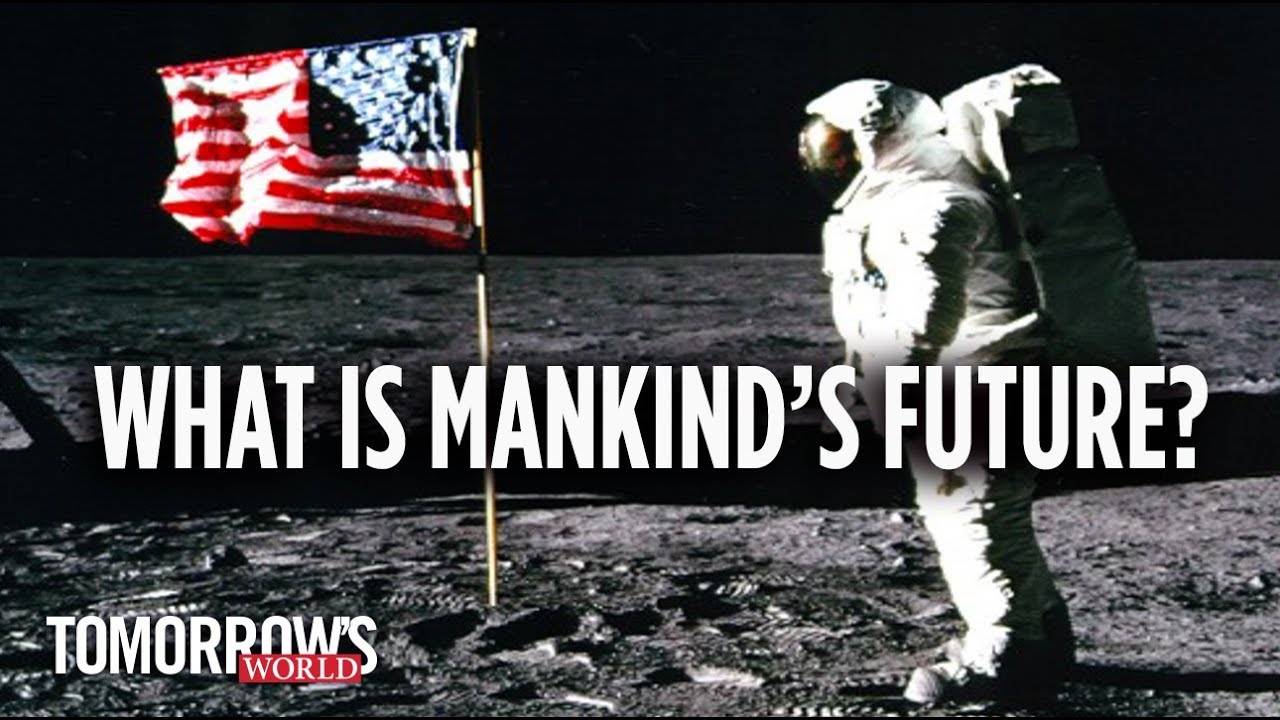
Apollo 11: 50 Years Later

July 16, 1969 was a day for the history books as three men blasted off from the Kennedy Space Center at Cape Canaveral, Florida. Destination...the moon. How is it that we can explore the moon, but cannot understand WHY we are here on Earth?

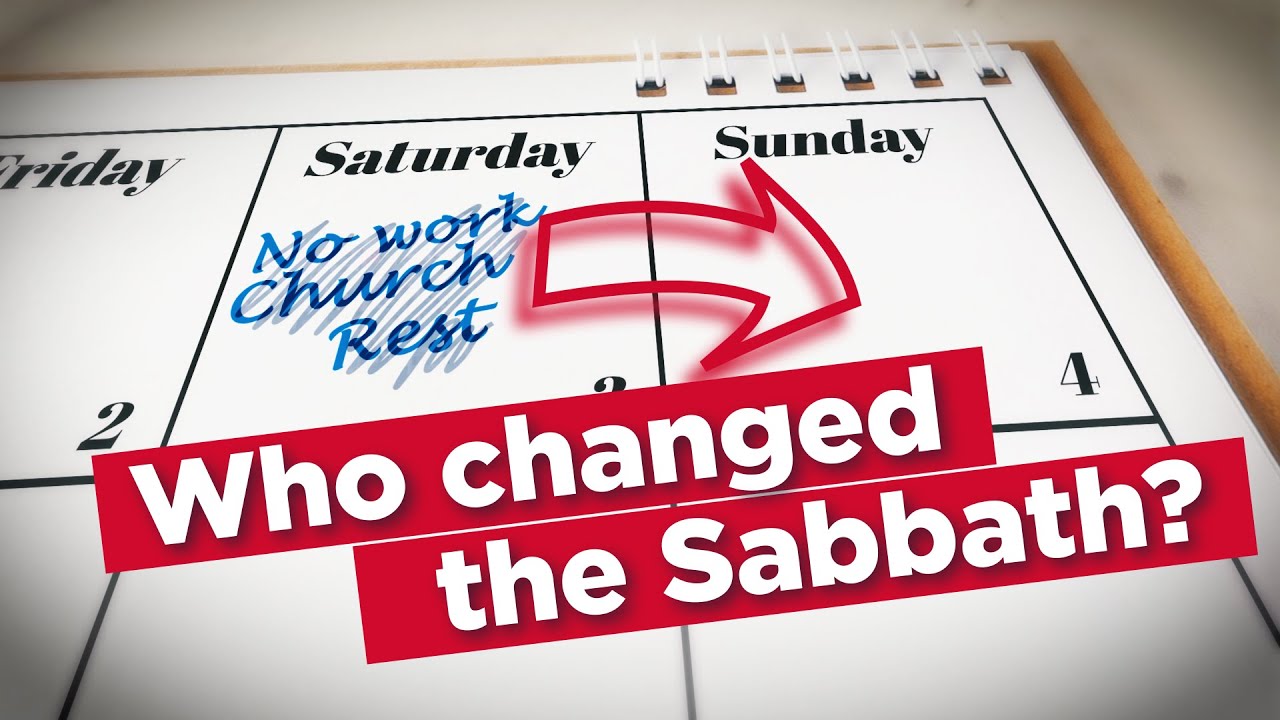
Who Changed the Sabbath to Sunday?

What happened to the Fourth Commandment, which states that God’s people should keep the seventh day holy? How did that major change take place? Which day should Christians keep holy? And WHO changed the Sabbath to Sunday?

[The text below represents an edited transcript of this Tomorrow’s World program.]

Sunday Or Saturday: Who Changed The Lord's Sabbath?

The original Christian followers of the Messiah, Jesus Christ, believed in keeping the Fourth Commandment, “Remember the Sabbath day.” Jesus Himself observed the seventh-day Sabbath in Nazareth where He grew up. As an adult, He preached in the synagogues on the Sabbath, as it tells us in Luke 4:16.

In the first century AD, after Jesus’ death, burial, and resurrection, the Apostle Paul preached on the Sabbath to Gentile congregations.

Now, two thousand years later, most professing Christians keep the first day of the week, Sunday, as the Lord’s Day. What happened to the Fourth Commandment, which states that God’s people should keep the seventh day holy? How did that major change take place? Which day should Christians keep holy? And WHO changed the Sabbath to Sunday?

Your Bible and history give the answer! Don’t go away!

DOES THE SABBATH MATTER?

Warm greetings to all our friends around the world!

Most professing Christians observe Sunday as a day of worship. And yet the Ten Commandments include instructions to observe the seventh day, Saturday. Perhaps you grew up as a young child learning the Ten Commandments. The Fourth Commandment gives us this very plain instruction: “Remember the Sabbath day, to keep it holy. Six days you shall labor and do all your work, but the seventh day is the Sabbath of the LORD your God...” (Exodus 20:8–10) Yet most professing Christians observe Sunday, even though first-century Christians observed the same seventh-day Sabbath that Jesus observed!

So, WHO changed the Sabbath to Sunday? On today’s program, we’ll answer that question. And we’ll be offering you an inspiring free booklet that gives you the biblical answers you need. It’s titled: WHICH DAY IS THE CHRISTIAN SABBATH? Just call the number on your screen, or order it online at TOMORROWSWORLD.ORG. Just ask for the Christian Sabbath booklet.

Various religions set aside holidays or holy days. Muslims gather to worship on Friday. Jews around the world have worshipped for thousands of years on the Sabbath, the day that begins at sunset every Friday evening, and continues through to sunset on Saturday. Professing Christians meet for Sunday church services, proclaiming theirs is the true day for worship. 

My friends, which day should Christians keep holy? The first day of the week? Or the seventh? Throughout world history, various civilizations have recorded their days in weeks of four days or ten days. Yet the seven-day week is ancient. Records going back to ancient Babylon show observance of a seven-day cycle. The Jewish people have preserved a calendar with a seven-day week. History faithfully documents that the day we now call Saturday is the seventh day of the week, and Sunday is the first day of the week. Even when Pope Gregory XIII revised the calendar in 1582, he did not change the seven-day cycle. The seventh-day Sabbath today is the same seventh day observed by Jesus and the first-century Christian Church. 

If you have your Bible, turn to Acts 13:42. In the first century AD, the Apostle Paul preached on the Sabbath in the Antioch synagogue. Notice that his audience included BOTH Jews and Gentiles. After the Jews left, the Gentiles made a request. Now, this was YEARS after Christ’s death, burial, and resurrection. Surely, if the Christians were to keep Sunday, these Gentiles would have met with Paul the very next day, Sunday. But did they? Acts 13:42, “So when the Jews went out of the synagogue, the Gentiles begged that these words might be preached to them….”

WHEN? The next day, Sunday? No! Verse 42: “…the Gentiles [not the Jews] begged that these words might be preached to them the next Sabbath.” Read that again in your own Bible. “…the Gentiles begged that these words might be preached to them the next Sabbath.” NOT SUNDAY!

Sure enough, Acts 13:44: “On the NEXT SABBATH almost the whole city came together to hear the word of God.” Paul met with Gentiles, not on Sunday, but on the Sabbath. New Testament Christians observed the seventh-day Sabbath.

But doesn’t the New Testament mention the first day of the week several times? It does. But is there any example of WORSHIPPING on the first day of the week? No! Dr. Roderick Meredith comments on the topic of “Sunday in the New Testament” in the free booklet we’re offering today, WHICH DAY IS THE CHRISTIAN SABBATH?: “The word ‘Sunday’ does not even appear in literal Bible translations. We do find the phrase ‘first day of the week’ in the New Testament, but this occurs just eight times. Five of those references (Matthew 28:1; Mark 16:1–2; Mark 16:9; Luke 24:1; John 20:1) describe Mary Magdalene and others coming to the tomb AFTER Christ’s resurrection. As we prove elsewhere in this booklet, Jesus was resurrected Saturday evening—NOT Sunday morning. So those references have nothing to do with observing the day of Christ’s resurrection!” (pp. 4–5). Dr. Meredith explains the other three references of the “first day,” and demonstrates that none involved a regular worship service. Be sure to request your free copy of the Christian Sabbath booklet that covers much more information than we have time for on this program.

The New Testament Scriptures and history demonstrate that original Christianity, the Christianity that Jesus Himself established in the first century, observed the seventh-day Sabbath. The Catholic Encyclopedia, on the topic of “Sunday,” agrees. Listen: “Tertullian (202 [AD]) is the first writer who expressly mentions the Sunday rest: ‘We, however (just as tradition has taught us), on the day of the Lord’s Resurrection ought to guard not only against kneeling, but every posture and office of solicitude, deferring even our businesses lest we give any place to the devil.’” (Volume XIV, p. 335). Tertullian did not write this until 202 AD, more than 170 years AFTER the beginning of the New Testament church!

Was Tertullian correct in supposing that Christ was resurrected on Sunday? We’ll answer that question in the next part of the program. But first, I’d like to offer you this exciting, well-documented, free booklet, WHICH DAY IS THE CHRISTIAN SABBATH? This inspiring booklet references the eight places in the New Testament that use the expression “first day of the week.” Were they Sunday worship services? Were they memorials of Jesus’ death? This free booklet will answer those questions, and more. Here are some of the subheads: “Christ and His Disciples—Sabbath-Breakers?” “Was Jesus Resurrected on Sunday?” “Practice of the Original Apostles.” This inspiring free booklet will also give you many biblical references and quotes we haven’t had time to include in this program. Did you know that both Roman Catholic and Protestant authorities ADMIT that the Bible itself does not support a Sunday observance? You need to read those authoritative and historic quotes. You need this free booklet for your personal benefit and Bible study. Just click the link in the description below or call the number on your screen for the booklet “Which Day Is the Christian Sabbath?”

We’ve seen that the Apostle Paul taught Gentiles on the seventh-day Sabbath. We also saw from history that Sunday worship was not affirmed until the third century AD, when the Catholic theologian Tertullian called Sunday the “day of the Lord’s Resurrection.” But, is Sunday the day of the Lord’s Resurrection, as Tertullian said? No! Listen! When Mary Magdalene came to Jesus’ tomb on Sunday morning, she found it empty. Let’s read that in John 20:1–2, “Now on the first day of the week Mary Magdalene went to the tomb early, while it was still dark, and saw that the stone had been taken away from the tomb. Then she ran and came to Simon Peter, and to the other disciple, whom Jesus loved, and said to them, “They have taken away the Lord out of the tomb, and we do not know where they have laid Him.”

She came while it was still dark! The sun had not yet risen. It was still dark and Jesus was NOT THERE Sunday morning! He was buried at sunset Wednesday evening and rose exactly three days and three nights later, just as He said. You can read that in Matthew 12:40. There are not three days and three nights from a traditional “Good Friday” to an Easter Sunday morning! So, the common reason for Sunday worship is based on human tradition, not on the Scriptures. Jesus emphasized the sign of His Messiahship. Matthew 12:39–40, “An evil and adulterous generation seeks after a sign, and no sign will be given to it except the sign of the prophet Jonah. For as Jonah was three days and three nights in the belly of the great fish, so will the Son of Man be three days and three nights in the heart of the earth.”

You can read more about the three days and three nights in our inspiring free booklet, WHICH DAY IS THE CHRISTIAN SABBATH?

The first century Christian Church worshipped on the seventh-day Sabbath, the day we now call Saturday. But when Roman emperor Constantine, a former pagan sun-worshipper, enforced his own version of Christianity on the Empire, he MANDATED Sunday worship! He gave the following edict in 321 AD, “On the venerable day of the SUN let all magistrates and people … REST” (Schaff-Herzog Encyclopedia of Religious Knowledge, article “Sunday Legislation,” Volume XI, p. 147).

Just a couple years later, the Roman church also passed a startling decree in the Council of Laodicea. They declared: “Christians shall not Judaize and be idle on Saturday, but shall work on that day; but the Lord’s day they shall especially honour, and, as being Christians, shall, if possible, do no work on that day. If, however, they are found Judaizing [or keeping the seventh-day Sabbath], they shall be shut out from Christ.” (A History of the Councils of the Church, Vol. 2, p. 316). In other words, Christian Sabbath-keepers were declared to be heretics.

But on what authority did the Roman Church make this change? The noted Catholic theologian, James Cardinal Gibbons, wrote this bold statement: “But you may read the Bible from Genesis to Revelation, and you will not find a single line authorizing the sanctification of Sunday. [Listen to this!] The Scriptures enforce the religious observance of Saturday, a day which we never sanctify.”

What Gibbons and other Catholic authorities state, is that, it is the authority of the Catholic Church that changed observance in the Christian world from Saturday to Sunday, NOT the New Testament scriptures! And that occurred in the Council of Laodicea in the middle of the fourth century!

What an amazing admission! And yet Gibbons is not alone. Order our free booklet, WHICH DAY IS THE CHRISTIAN SABBATH? and you will read similar admissions from Baptist, Presbyterian, Episcopal and other religious leaders, all admitting that the Bible nowhere authorizes Sunday as a new Sabbath day.

But does this even matter? Can’t we just worship on any day? My friends, Jesus gave a very strong warning about traditions conflicting with the commandments of God. Turn to MARK the SEVENTH CHAPTER: “‘...in vain they worship Me, teaching as doctrines the commandments of men.’ For laying aside the commandment of God, you hold the tradition of men…. All too well you REJECT THE COMMANDMENT OF GOD, that you may keep YOUR TRADITION.” (Mark 7:7–9)

That’s a warning I hope all of US will heed. Jesus said He is Lord of the Sabbath. He observed the Sabbath regularly and He did NOT break the law as some theologians say. As He said in John 15:10, “...I have kept My Father’s commandments...” My friends, should you follow the example of Jesus Christ and the instructions of your Bible? Or should you oppose them and follow the traditions of men?

You need to prove it for yourself, from your OWN BIBLE, which day is the Christian Sabbath. To help you in your study, I’d like to again offer you this exciting, well documented, free booklet: WHICH DAY IS THE CHRISTIAN SABBATH? This booklet gives you the historical and biblical evidence you need to answer the question. You need this free booklet for your personal benefit and Bible study. So, click the link in the description to read it on our website or call the number on the screen and order your own free copy.

Jesus And The Apostles Kept The Seventh-Day Sabbath, And God Expects Us To Follow Their Example!

On today’s program, we’ve seen that the early New Testament Church observed the seventh-day Sabbath. But WHEN was the seventh-day Sabbath established? Was it established at the time of Moses on Mt. Sinai? No! It was established much earlier, at the foundation of this world. Turn in your Bible to Mark the second chapter. Notice what the Founder of Christianity said in Mark 2:27. Jesus said, “...The Sabbath was made for man, and not man for the Sabbath.” Yes, the Sabbath was made for man, for ALL humanity, for every human being on earth. Again, WHEN was it made? We find the answer in Genesis 2:1–3! “Thus the heavens and the earth, and all the host of them, were finished. And on the seventh day God ended His work which He had done, and He rested on the seventh day from all His work which He had done. Then God blessed the seventh day and sanctified it, because in it He rested from all His work which God had created and made.” Yes, God established the seventh-day Sabbath at the foundation of this world, long before the time of Moses. As Jesus said, “… The Sabbath was made for man….” Yes, for all human beings around the world. Jesus did not say, “The Sabbath was made for the JEWISH people.”

Now let’s go back to MARK the second chapter. Jesus made an amazing claim. Did He say He was Lord over Sunday—that Sunday was the Lord’s day? MARK 2:27–28, “… The Sabbath was made for man, and not man for the Sabbath. Therefore the Son of Man is also Lord of the Sabbath.” If Jesus is Lord of the Sabbath, what day is the Lord’s day? Sunday? NO! The Sabbath is the Lord’s Day—Jesus Himself said so! And, as it tells us in Hebrews 13:8, “Jesus Christ is the same yesterday, today, and forever.” He is still, right now, Lord of the Sabbath! The Scriptures admonish us to follow His example, and that of the Apostles. The Apostle Paul wrote to the Church at Corinth, “Imitate me, just as I also imitate Christ” (1 Corinthians 11:1). The Apostle PETER also exhorted us to follow the example of Christ. 1 Peter 2:21, “For to this you were called, because Christ also suffered for us, leaving us an example, that you should follow His steps….” My friends, Jesus and the apostles kept the seventh-day Sabbath, and God expects us to follow their example!

Is there even more New Testament evidence regarding Sabbath observance? Turn in your Bible to HEBREWS the fourth chapter. In this chapter, the Sabbath is pictured as a type of the millennial rest, as well as a memorial of God’s rest at creation. HEBREWS 4:9, “There remains therefore a rest for the people of God.” The original Greek word for the word “rest” in verse 9 is “sabbatismos” which means “a Sabbath-keeping.” Both the Revised Version and the New International Version translate verse 9 as “a Sabbath rest.” Yes, there remains a SABBATH rest for the people of God, even to this day!

Notice this important statement in VERSE 10 of HEBREWS 4. “For he [the individual Christian] who has entered His rest [that’s God’s rest] has himself also ceased from his works [notice] AS GOD DID FROM HIS.” The context of Hebrews the fourth chapter is both symbolic and literal rest. The Greek word “katapausis” is also translated “rest” in this section. But notice what God says of those who have NOW entered into God’s REST, that is—those who are converted, those who will now follow Christ.

If we, as converted Christians, are to cease from our works just as God did from His, we simply need to ask one question: HOW did God cease from His works? VERSE 4 (of HEBREWS 4) gives us the answer: “For He has spoken in a certain place of THE SEVENTH DAY in this way: ‘And God rested on THE SEVENTH DAY from all His works….’”

The bottom line question is: WHO or WHAT is your authority? Is it the Bible? Or some church and religion APART FROM the Bible?

As we’ve seen, some religious leaders, including Roman Catholic and Protestant, claim tradition or church administration, APART FROM THE BIBLE, as their reason for keeping Sunday, rather than the Sabbath. For example, listen to this statement from Anglican Isaac Williams, DD [doctor of divinity], in his Plain Sermons on the Catechism, “[W]here are we told in Scripture that we are to keep the first day at all? [Listen to this admission!] We are commanded to keep the seventh; but we are nowhere commanded to keep the first day…. The reason why we keep the first day of the week holy instead of the seventh is for the same reason that we observe many other things, NOT because the BIBLE, but because the CHURCH, has enjoined it.

My friends, these are surprising admissions. You can read more in our free, informative booklet, WHICH DAY IS THE CHRISTIAN SABBATH? Here on pages 36 and 37 are shocking admissions, by Protestant and Catholic Church leaders, that the Bible teaches seventh-day Sabbath observance. They admit that the change to Sunday was based on supposed Church authority, not on BIBLICAL authority. This booklet will give you the historical and biblical truth that will explain why most professing Christians keep Sunday, when God’s Fourth Commandment tells us to keep the SEVENTH day of the week. You need this free booklet for your personal benefit and Bible study. So, click the link in this description to read it for yourself on our website or call the number on the screen and order your own free copy of “Which Day Is the Christian Sabbath?”
 

All Nations Will Observe The Weekly Sabbath And The Biblical Holy Days!

On today’s program, we’ve seen that the original Christian Church observed the seventh-day Sabbath, following the example of Jesus Christ and the Apostles. It was Emperor Constantine in AD 321 who proclaimed the day of the sun as THE day of worship for the Roman Empire. The fourth century AD Catholic Council of Laodicea affirmed Sunday worship and declared Christian Sabbath-keepers heretics. Even to this day, Christian Sabbath-keepers are persecuted in many countries around the world.

So, who changed the Sabbath to Sunday? The real answer is: “No one!” God Almighty established the Sabbath at the foundation of the world for ALL human beings through Jesus Christ. As it tells us in Ephesians 3:9, God “...created all things through Jesus Christ….” And Christ, to this day, is Lord of the Sabbath, as it tells us in Mark 2:28. Remember, “Jesus Christ is the same yesterday, today, and forever.” That’s in Hebrews 13:8. Yes, even today, New Testament Christians follow the example of Christ and the Apostles in observing the seventh-day Sabbath.

If you are a longtime student of Tomorrow’s World, and you would like to worship with other Christian Sabbath-keepers, we invite you to counsel with one of our representatives. Just call the number on your screen, or you can contact us through our Website at TOMORROWSWORLD.ORG.

My friends, we are living in the time of the end prophesied in your Bible. We look forward to the coming Kingdom of God, ruled by the Prince of peace—the Messiah, Jesus Christ. As King of kings and Lord of lords He will teach, govern, guide, and serve all nations. So, one last question: When Christ establishes His world-ruling kingdom on earth, ON what day will all nations worship?

Notice God’s proclamation in Isaiah 66:22–23, “‘For as the new heavens and the new earth which I will make shall remain before Me,’ says the LORD, ‘So shall your descendants and your name remain. And it shall come to pass that from one New Moon to another, and from one Sabbath to another, all flesh shall come to worship before Me,’ says the LORD.”

If you are alive at that time, will you obey your Lord and Savior and worship Him on the Sabbath along with all peoples on earth? Do you even now worship the Savior as Lord of the Sabbath? Give these questions some thought, and prayerfully decide to worship God in spirit and in truth as it tells us in John 4:24. We look forward to the day when all peoples and all nations around the world will worship Christ the King. The Messiah will establish world peace, world government, true education, and the biblical way of truth, love, and life. All nations will observe the weekly Sabbath and the biblical Holy Days! What a wonderful, peaceful, and prosperous world it will be! 

You need to study more deeply into this subject for yourself. Be sure to request our free booklet, WHICH DAY IS THE CHRISTIAN SABBATH? This free booklet will give you many biblical references and quotes we haven’t had time to include in this program.

Also, be sure to click the subscribe button and notification bell so you don’t miss another Tomorrow’s World video. In this world of growing chaos and confusion, you need the solid guidance that comes from your Bible. Gerald Weston, Wallace Smith, and I, along with guest presenter Rod McNair, will continue to share with you the teachings of Jesus Christ, the good news of the coming Kingdom of God, and the exciting end-time prophecies and their meaning. See you next time!


Pages