


To use our advanced search functionality (to search for terms in specific content), please use syntax such as the following examples:
- Armageddon Magazine Article
- Apology Commentary
- Europe News & Prophecy
- Christmas Telecast
- Baptism Booklet
- Sabbath Roderick C. Meredith
- Abortion Gerald Weston
The Seven Churches of Revelation 2 & 3 Explained
Whiteboard: The Seven Churches of Revelation 2 & 3 Explained
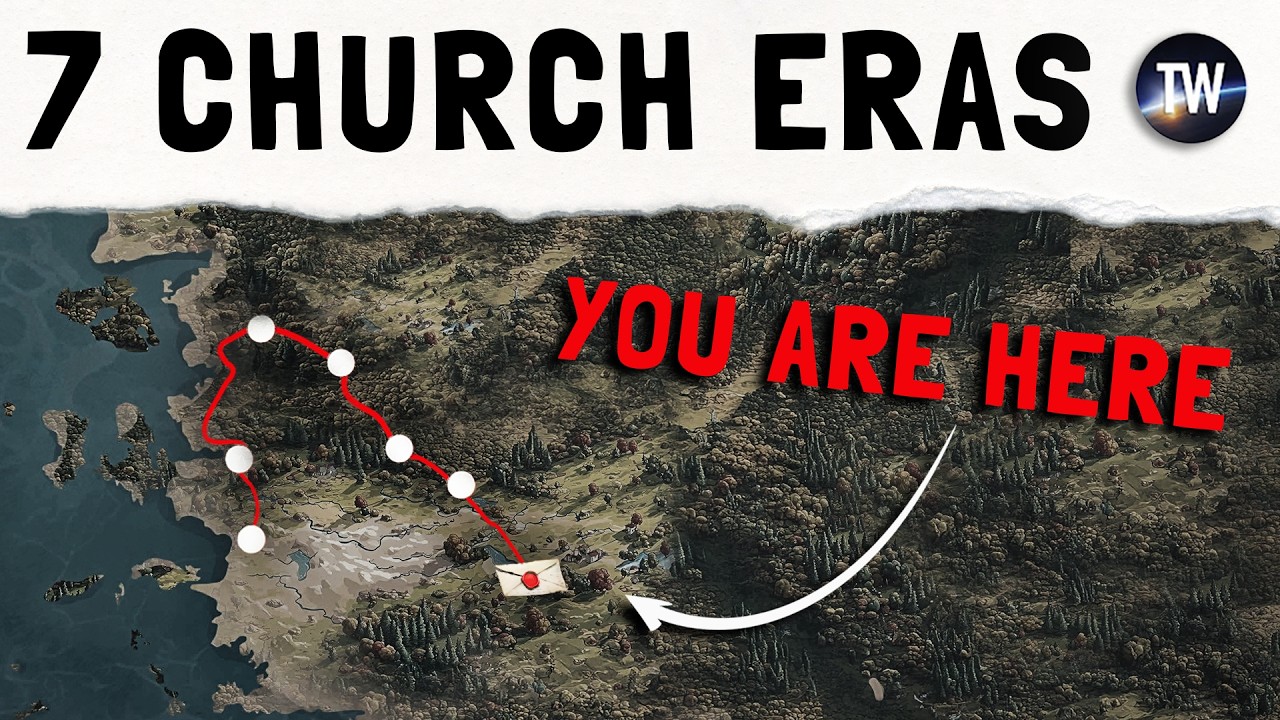
What warnings in the Book of Revelation are for you? Learn the prophetic meaning of the letters to the seven churches of Revelation—and what they reveal about following Jesus Christ, from the Apostolic Era to the last days.
[The text below represents an edited transcript of this Tomorrow’s World whiteboard.]
7 Warnings from the 7 Churches of Revelation
In the prophetic book of Revelation, Jesus told the Apostle John:
“What you see, write in a book and send [it] to the seven churches which are in Asia: to Ephesus, to Smyrna, to Pergamos, to Thyatira, to Sardis, to Philadelphia, and to Laodicea“ (Revelation 1:11).
For nearly 2,000 years, these letters have intrigued and puzzled readers of the Bible.
So why were they written to these particular churches? What prophetic significance do they hold? And what lessons did Jesus want His followers to learn from them?
The Apostle John was the last surviving apostle in the 90s AD, about 60 years after Jesus’ death. Most of the others, including Peter, Paul, and James, had been martyred many years earlier.
By this time John was an old man, nearing the end of his life, when he recorded the words of Jesus Christ in the book of Revelation.
Chapters 2 and 3 of the book record the actual letters that John sent “to the seven churches which are in Asia” (Revelation 1:4). These congregations were located along a mail route in western Asia Minor—an area that is part of modern-day Turkey.
Each letter contained an important message, highlighting specific strengths and weaknesses, along with encouragement, correction, and instruction for those congregations.
But because these messages were recorded in the book of Revelation, they would also be read by God’s Church for centuries to come.
So while the content of these letters was addressing issues and attitudes within those individual congregations, they also addressed time periods—or eras—that the Church of God would experience in the centuries ahead, along with lessons Christ wants His followers to learn from them.
Ephesus Church | Prophetic Meaning of Revelation 2:1–7
The first letter was to the church in Ephesus (Revelation 2:1–7). It “lost its first love” and represents the first era of the Church, covering the first two centuries. Revelation 2:1 says:
To the angel of the church of Ephesus write, “These things says He who holds the seven stars in His right hand, who walks in the midst of the seven golden lampstands.”
Christ begins by telling John to write His words, identifying Himself as the One who walks among the seven churches—symbolized by seven golden lampstands—and serves as their head.
Ephesus was one of the major cities in Asia Minor, though by this time it was beginning to decline.
In verses 2 and 3, Christ encourages the brethren in that city. He commends them for their labor, endurance, suffering, and their commitment to preaching the truth and discerning between false and true apostles.
But it also describes the first era of Christ’s Church—often called the Apostolic Era—which included the first century and continued into the early second century.
Now we come to the correction Christ gives. This correction applies to the physical congregation at that time, to the era it represents, and to Christians throughout history (Revelation 2:4–5).
“Nevertheless I have this against you, that you have left your first love. Remember therefore from where you have fallen; repent and do the first works, or else I will come to you quickly and remove your lampstand from its place—unless you repent.”
The main correction was that they had “left [their] first love,” and Christ told them to repent and “do the first works.”
The early Christians started with great zeal and enthusiasm. Three thousand people were baptized on Pentecost in 31 AD (Acts 2:1, 41).
But in the decades that followed, the trend in the Church was for people to lose their love for God and His commandments, for the truth of the Bible, for preaching and spreading the Gospel, and for one another.
Instead of holding to these biblical fundamentals, many began focusing on positions of authority and following incorrect doctrines taught by false teachers (1 Corinthians 1:10–13; 2 John 7–8; 3 John 9–11).
The practical lesson from the letter to the Ephesus church is to:
- “Repent and do the first works”: to love God, His commandments, His truth, preaching the gospel, and loving the brethren.
Smyrna Church | Prophetic Meaning of Revelation 2:8–11
The second letter was to the church in Smyrna (Revelation 2:8–11). It’s known for being faithful in trial and represents the second era of the Church, covering the latter half of the second century through the fourth century.
And to the angel of the church in Smyrna write, “These things says the First and the Last, who was dead, and came to life” (Revelation 2:8).
Smyrna was the next city on the mail route that contained brethren to whom Christ spoke. It was a prosperous and beautiful port city—but Christians there were being severely persecuted.
Like the Christians living in Smyrna when John wrote this letter, the Smyrna era, spanning the latter half of the second century through the fourth century, was a period when true Christians faced intense persecution from the Romans.
One specific prophecy that serves as a key milestone appears in verse 10.
You will have tribulation ten days (Revelation 2:10).
Using the day-for-a-year principle in prophecy, this fits one of the worst periods of persecution that true Christians endured under the Roman Empire—from 303 to 313 AD, under the direction of Emperor Diocletian.
And verses 9–10 commend the Smyrna brethren for being rich in faith and urge them to be “faithful until death” in order to receive the “crown of life.”
But during this same time, a counterfeit form of Christianity—already beginning in the days of the Apostles—was growing larger and more powerful. It included a counterfeit Jesus, gospel, apostles, ministers, and other doctrines (2 Corinthians 11:4, 13–15; Galatians 1:6–9).
Smyrna is one of the two churches that did not receive direct correction. But Christians can still learn vital lessons from this letter:
- Remain faithful even in trials and persecution. Never give up.
Those who do will “not be hurt by the second death” (Revelation 2:11).
Pergamos Church | Prophetic Meaning of Revelation 2:12–17
The third letter was to the church in Pergamos (Revelation 2:12–17). It’s known as the compromising church and represents the third era of the Church, covering roughly the fifth century until about 1000 AD. Revelation 2:12 says:
And to the angel of the church in Pergamos write, “These things says He who has the sharp two-edged sword.”
Verses 13–14 explain that the Pergamos church was “where Satan’s throne is,” and that some held to the “doctrine of Balaam.”
This doctrine involved putting stumbling blocks in front of believers.
Balaam was the Old Testament prophet who advised the Moabite king Balak to trick the Israelites into disobeying God (Numbers 22–25).
The phrase “Satan’s throne” alludes to Nimrod’s ancient kingdom, including the Tower of Babel (Genesis 10–11), from which the ancient Babylonian religion developed.
Pergamos was the capital of Asia Minor and was located at the center of the ancient Babylonian mystery religion. The city contained grand temples dedicated to Zeus, Apollo, Athena, and even Caesar himself.
So the church in the city of Pergamos truly lived in the middle of intense religious pressure and compromise. The Pergamos church was therefore called the compromising church.
This church represents the third era of the Church, lasting from the 400s to about 1000 AD.
During this time—often called the Dark Ages—a powerful Roman church in Europe placed spiritual stumbling blocks in front of many people. These included spreading false doctrines such as Easter, Christmas, Halloween, philosophical ideas surrounding a trinity, and the belief that human beings possess an immortal soul.
Many of these teachings were connected to the Babylonian mystery religion—ancient Babylon’s gods and religious practices.
As a result, many people were Christian in name only. The major lesson from this letter—and from this era of the Church—is clear:
- Christians must not tolerate false teachings.
Compromising on biblical truth and sound doctrine (2 Timothy 4:3) often causes brethren to stumble.
Thyatira Church | Prophetic Meaning of Revelation 2:18–29
The fourth letter was to the church in Thyatira (Revelation 2:18–29). It’s often called the corrupt church, and represents the fourth era of the Church, spanning roughly from the 11th to the 16th century.
And to the angel of the church in Thyatira write, “These things says the Son of God, who has eyes like a flame of fire, and His feet like fine brass” (Revelation 2:18).
Now notice the part of Christ’s correction.
“Nevertheless I have a few things against you, because you allow that woman Jezebel, who calls herself a prophetess, to teach and seduce My servants to commit sexual immorality and eat things sacrificed to idols” (Revelation 2:20).
Jezebel was the Sidonian wife of the wicked King Ahab in ancient Israel (1 Kings 16–21), and she strongly influenced him to worship pagan gods.
In Revelation 2:20, “Jezebel” is symbolic of a false church system that spread false religion and persecuted those who refused to follow it.
Thyatira was an inland city located on a major trade route.
It was an important commercial center with numerous trade guilds. Its patron deity was a warrior goddess. To do business in the local economy, people often had to join these guilds, which sponsored idolatrous festivals and pagan celebrations. This created enormous pressure for Christians to compromise on biblical truths, doctrines, and commandments.
This church represents the fourth era of the Church, from roughly the 11th to the 16th centuries.
This period included the Reformation and Counter-Reformation, involving both Catholic and Protestant movements.
During this time, some Christians temporarily held on to certain biblical teachings—such as the seventh-day Sabbath, the annual festivals, tithing, adult baptism, and dietary laws.
They also rejected several false teachings, including the trinity, the immortal soul, purgatory, and common misunderstandings about heaven and hell.
But over time, and under severe pressure, many drifted back into incorrect doctrines in order to avoid persecution from Counter-Reformation forces.
The lesson from this church—and this era—is clear:
- Christians must not compromise with false teachings simply for appearance or acceptance.
Do not abandon God’s truth, and do not return to the religious practices you once came out of.
Otherwise, Christ warns, tribulation will follow. In short, come out of false Christianity.
Sardis Church | Prophetic Meaning of Revelation 3:1–6
The fifth letter was to the church in Sardis (Revelation 3:1–6). It is often called the dead church. It represents the fifth era of God’s Church, spanning roughly the 1600s through the 1800s.
And to the angel of the church in Sardis write, “These things says He who has the seven Spirits of God and the seven stars: ‘I know your works, that you have a name that you are alive, but you are dead’” (Revelation 3:1).
Notice Christ’s striking assessment.
“You have a name that you are alive… but you are dead.”
Sardis was once a city famous for its arts and wealth. Likewise, during this era of God’s Church, some biblical truths were still preserved. These include keeping the seventh-day Sabbath and using the biblical name “Church of God” (Acts 20:28; 1 Corinthians 1:2, 10:32; Galatians 1:13).
But many congregations during this time—particularly in England and America—were very small and scattered. And they did little to spread the Gospel. As a result, there was very little growth and very little fruit produced. Many believers were isolated and scattered, and the Church itself was in danger of dying out.
In many ways, it truly was a dead church.
The major lesson from this era—and for Christians today:
- Don’t let the truth die and don’t simply sit on it. God’s precious truth must be used.
It must be shared. And it must be spread so that the Church can remain living and growing, made up of members who are growing spiritually.
Philadelphia Church | Prophetic Meaning of Revelation 3:7–13
But the next era of the Church would be very different. Instead of stagnation, it would be marked by growth and the powerful preaching of the Gospel.
The sixth letter was to the church in Philadelphia (Revelation 3:7–13). It describes a small but faithful church that preached the Gospel powerfully. This era took place during much of the 20th century.
And to the angel of the church in Philadelphia write… “I know your works. See, I have set before you an open door, and no one can shut it; for you have a little strength, have kept My word, and have not denied My name” (Revelation 3:7–8).
Philadelphia was not a wealthy or influential city. It was located on a hill near a major highway and served as an outpost for spreading Greek and Roman culture—and later, Christianity.
This is notable because this era of God’s Church was also a time when the Church walked through “open doors” to spread the Gospel of the kingdom of God and experienced growth like never before.
Beginning in the 1930s, with the ministry of Herbert W. Armstrong, God’s Church began using radio and television to preach the Gospel of the Kingdom of God and other biblical truths to the world. The Church diligently sought to fulfill the mission Christ gave to His followers 2,000 years ago.
In contrast to the “dead church” of the Sardis era, the Church in the Philadelphian era was alive, growing, and producing much fruit. Like Smyrna, this church did not receive correction.
So the lesson for Christians today is clear:
- Follow the example of the Philadelphian Church—be faithful, support the preaching of the Gospel, and remain committed to God’s word and His work.
Laodicea Church | Prophetic Meaning of Revelation 3:14–22
But the final letter contains a serious warning.
The seventh letter was to the church in Laodicea (Revelation 3:14–22), known as the “lukewarm church.” This era likely began in the late 20th century, continues today, and will last until Christ returns.
And to the angel of the church of the Laodiceans write, “These things says the Amen, the Faithful and True Witness, the Beginning of the creation of God: ‘I know your works, that you are neither cold nor hot. I could wish you were cold or hot. So then, because you are lukewarm, and neither cold nor hot, I will vomit you out of My mouth. Because you say, “I am rich, have become wealthy, and have need of nothing”—and do not know that you are wretched, miserable, poor, blind, and naked’” (Revelation 3:14-17).
Notice the condition Christ describes.
You are neither cold nor hot.
Instead, you are lukewarm. Laodicea itself was a study in contrasts. It was a prosperous city, yet it played only a small role in spreading Greek culture. Its strong fortifications and wealth gave its citizens a strong sense of security, yet the city had serious vulnerabilities—including its location in a valley and an exposed water supply.
The main problems with this church were a lukewarm attitude, an independent mindset, and being blind to their own faults.
Some scholars note the Greek name “Laodicea” may be interpreted as “the people’s decision” or “the people’s judgment.” This may reflect the independent attitude of people wanting to decide things for themselves—instead of looking to Christ and His ministry for leadership.
We’re living in this era today. That makes this letter especially important for Christians now. The Laodicean church’s faults actually prophesy the dominant attitudes that would exist in God’s Church in the final years before Christ returns.
In the lesson from this church, there is a powerful irony:
- Many in God’s Church will become lukewarm and complacent, just before the dramatic end-time prophecies begin unfolding in full force.
But Christ also gives the solution. In verse 19 He says:
Therefore be zealous and repent (Revelation 3:19).
This era can also learn an important lesson from the previous era of Philadelphia— which was characterized by zeal for God’s work, love for the truth, and brotherly love.
Spiritual Lessons from the 7 Churches of Revelation
So what do these letters mean for Christians today?
The letters to the seven churches symbolize seven eras of God’s Church over the past 2,000 years. Understanding this helps explain much of biblical history and prophecy.
But these letters also contain practical lessons for every Christian.
- From the church in Ephesus, we learn: Don’t lose your first love for God, His truth, and His commandments.
- From Smyrna, we learn to remain faithful, even in the face of trials and persecution.
- From Pergamos, we learn not to compromise with false teachings.
- From Thyatira, we learn to reject false religion and hold firmly to biblical truth.
- From Sardis, we learn not to let the truth die—God’s truth must be used, shared, and spread so it can produce spiritual fruit.
- From Philadelphia, we learn to be zealous for God’s work and to have love for one another.
- From Laodicea, we learn to avoid becoming lukewarm and complacent.
If Christians take these lessons to heart, they will receive the rewards Christ promises in these letters.
These rewards include:
- Eating from the Tree of Life in the Paradise of God (Revelation 2:7).
- Receiving the crown of life and not being hurt by the second death (Revelation 2:10–11).
- Having their name written in the Book of Life (Revelation 3:5).
- Receiving the name of God and Jesus Christ (Revelation 3:12).
- And even sitting with Christ on His throne (Revelation 3:21).
The end of each of these letters gives the same message to every Christian:
“He who has an ear, let him hear what the Spirit says to the churches.” (Revelation 3:22)
But an important question remains. What exactly is the Church of God?
There are over 45,000 Christian denominations. So, it’s important to know what to look for.
Well, there are five clear points from the bible that can help you identify the Church that Jesus established in the first century. To learn these points, watch this video about identifying the true Church of God today.