


To use our advanced search functionality (to search for terms in specific content), please use syntax such as the following examples:
- Armageddon Magazine Article
- Apology Commentary
- Europe News & Prophecy
- Christmas Telecast
- Baptism Booklet
- Sabbath Roderick C. Meredith
- Abortion Gerald Weston
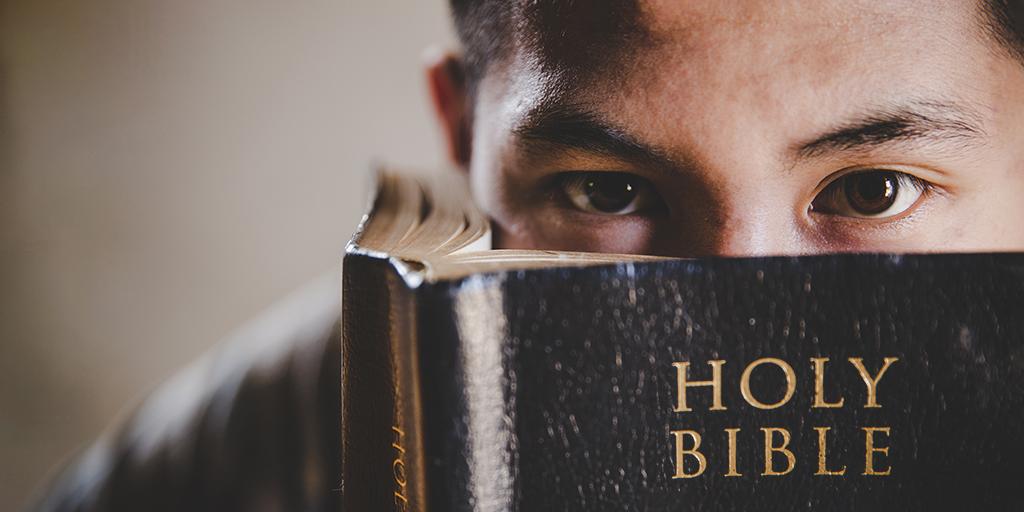
“It’s Right There in Front of You!”
I’ve always been amazed by the sense of sight—how the eye works, sending electrical signals to the visual cortex, which turns that information into a “real time” image. God built in great processing speed so we don’t have to wait for an image to be rendered. The visual cortex merges the image from both eyes and provides a gauge of spatial separation, of dimension and a sense of distance. Incredible!
But I’ve also been amazed by the “phenomenon” of not being able to see something that is right in front of us. Our eyes look right at it, but somehow, we don’t “see” it. The image failed to register in our awareness. And it makes us feel foolish when someone shows it to us, sitting right where we were looking, and they say the idiomatic expression, “If it were a snake, it would have bitten you!”
We all have a “blind spot” in our eyes where the optic nerve attaches to the retina. There are no rods or cones (photoreceptors) there, but the visual cortex in our brain decodes the electrical signals from both eyes and processes it into a single image, “erasing” the blind spot. It is truly miraculous.
We can also fail to see due to cognitive biases, sometimes called psychological “blind spots.” We may be blinded by prejudice, or just stubbornly refuse to see (understand and admit) because we don’t want to accept it. Many psychological studies have been done on cognitive biases for which social psychologists use the term “blind spot.”
So, when we read the scriptures, we have the human potential of “reading an idea into” the scripture, or of “reading out” of the scripture what we don’t want to see. Before Christ’s disciples received the Holy Spirit, the Comforter or Helper, they sometimes did not understand the scriptures until Jesus Christ opened their minds to see and understand.
When we submit to God and forsake our prejudices and yearn to understand the Scriptures, an amazing thing happens when God “opens” our understanding. We may exclaim, “Why couldn’t I see that before? I’ve read that a dozen times and never understood it!” It is very similar to that physical object right in front of us that we couldn’t see until someone drew our attention to it.
Blind spots can affect our reading and comprehension. The Sadducees were a priestly, aristocratic sect of the Jews during the intertestamental period who claimed to follow the ancient priest Zadok, high priest in king David’s time and entrusted with control of the temple by Ezekiel. But they did not believe in the resurrection of the dead and other ideas.
Matthew 22 records one of the encounters of the Sadducees with Jesus. They tried to ask Jesus a trick question concerning the resurrection: supposing a woman had seven husbands who all died, in the resurrection, whose wife would she be? Jesus answered, “You are mistaken, not knowing the Scriptures nor the power of God. For in the resurrection, they neither marry nor are given in marriage, but are like angels of God in heaven. But concerning the resurrection of the dead, have you not read what was spoken to you by God, saying, ‘I am the God of Abraham, the God of Isaac, and the God of Jacob’? God is not the God of the dead, but of the living” (vv. 29–33).
Tens of thousands die every day. What happens after they die? When are they resurrected? Have you not read about the resurrection of the dead? Do you understand what the Bible says about the resurrections of the dead and when they occur? To help you see it, watch “Heaven, Hell, and the Resurrection,” and read the booklets What Happens When You Die? and Is This the Only Day of Salvation? It is right there in front of you!
Stay up to date with our Weekly Digest Email!
Tomorrow's World ComMentary Podcast
Subscribe to Tomorrow's World Commentary podcasts on iTunes and Google Play!