


To use our advanced search functionality (to search for terms in specific content), please use syntax such as the following examples:
- Armageddon Magazine Article
- Apology Commentary
- Europe News & Prophecy
- Christmas Telecast
- Baptism Booklet
- Sabbath Roderick C. Meredith
- Abortion Gerald Weston
Will God Heal Me?
Will God Heal Me?
Jesus went through pain and suffering for our healing—spiritually and physically. What should you do when you’re sick and need healing? Here are 5 steps you can take from Bible verses about healing.
[The text below represents an edited transcript of this Tomorrow’s World program.]
Divine Healing vs. Faith Healers
There’s great emotion in the air. The organist is playing a sentimental hymn, people are looking upward, waving their arms with tears streaming down their cheeks. A blind man is escorted onto the stage by an attendant.
The popular evangelist asks him how long he has been blind, and does he believe Jesus will heal him? He answers, “From birth and yes, I believe!”
The evangelist then hits the poor man on the forehead while loudly commanding, “Be Healed!” The man falls backward in some kind of trance into the arms of an attendant, and when he awakes, he blinks a few times and shouts “Thank you Jesus—I can see.” And the crowd erupts in cries of “Praise the Lord.”
Thinking people wonder: Was this real? Or was it a show contrived by well-rehearsed actors?
This is an important question as there is reason to believe these supposed healings are, more often than not, deceptions played out on ignorant people.
However, the Bible proclaims that God does supernaturally heal, and we read of Jesus healing all manner of sickness and infirmities. Were these real, or was Jesus the first to exploit gullible people seeking relief from desperate physical circumstances?
I’ll address the subject of divine healing.
- Is it for real? Can you experience it?
- Are there requirements to obtain it and if so, what are they?
- And what does it mean if I go to God and I’m NOT divinely healed?
There are good reasons for asking these questions. Frankly, dear friends, so-called faith healers, have a checkered reputation and many have been exposed as frauds.
I first heard of this subject at an early age from a Sunday School teacher who spoke of one of the most famous faith healers of the last century. He reportedly healed the blind, the deaf, the crippled. There were even reports of raising the dead.
And as a young teenager, this was comforting. If some terrible sickness came upon me, I would go to one of his tent meetings and all would be okay. But at some point, he forsook his charismatic past to go more mainstream, and he claimed that God spoke to him to build a research center to find a cure for cancer.
I remember wondering at the time, if he could heal by simply laying hands on people, why would he turn to painful radiation, chemotherapy, and surgery? But by that time, I was older, and wiser, and knew the answer.
The 20th century saw more than its share of traveling faith healers. They would come into town, set up a tent, hand out flyers and post on billboards. Desperate people would flock to hear the preacher and get in line to be made whole. But somehow, the truly needy locals never made it to the front of the line.
Now does this mean that there is no God and that He does not intervene for those who know Him and sincerely trust in Him?
Dear friends, God does exist and you can prove it for yourself. Scientists have learned over the last 75 years that laws govern the universe and also just how complex life truly is. Biologists know that it is mathematically impossible for life to spontaneously occur but many refuse to accept God as the cause for life. The Apostle Paul called out skeptics, such as these, who should know better.
For the wrath of God is revealed from heaven against all ungodliness and unrighteousness of men, who suppress the truth in unrighteousness, because what may be known of God is manifest in them, for God has shown it to them. For since the creation of the world His invisible attributes are clearly seen, being understood by the things that are made, even His eternal power and Godhead, so that they are without excuse (Romans 1:18–20).
Long before Paul, an ancient king proclaimed:
The fool has said in his heart, “There is no God” (Psalm 14:1; 53:1).
That has never been truer than it is today for anyone who honestly looks into the marvels of life. Therefore, if God created life, does He not have the power to fix what is broken?
God’s Power and Authority Given to His True Servants
And if the Bible is the word of God, and Jesus is our Savior—as many of us believe—then we must accept that God does intervene in the lives of people and heals them supernaturally. For, as we read (in Matthew 4:23):
And Jesus went about all Galilee, teaching in their synagogues, preaching the gospel of the kingdom, and healing all kinds of sickness and all kinds of disease among the people.
But did divine healing end with Jesus’ ministry? You may be thinking, “That was then and that was Jesus. What about today and what about me?”
Part of Jesus’ ministry was that of healing the sick—but it did not stop with our Savior. He sent out twelve disciples on their own with authority to preach the good news of the Kingdom of God and to heal the sick. Notice it in Luke 9.
Then He called His twelve disciples together and gave them power and authority over all demons, and to cure diseases…. So they departed and went through the towns, preaching the gospel and healing everywhere (Luke 9:1, 6).
Many are aware of this, but do you realize that Jesus gave this power and authority to seventy others? We read of that in Luke 10:1.
After these things the Lord appointed seventy others also, and sent them two by two before His face into every city and place where He Himself was about to go…. And [to] heal the sick there, and say to them, “The kingdom of God has come near to you” (Luke 10:1, 9).
So what about now? What about you? Does Christ give that authority to His servants today? Can you therefore be healed?
Here’s the great commission given by Christ to all who genuinely believe in His name.
And He said to them, “Go into all the world and preach the gospel to every creature…. And these signs will follow those who believe: In My name they will cast out demons; they will speak with new tongues; they will take up serpents; and if they drink anything deadly, it will by no means hurt them; they will lay hands on the sick, and they will recover” (Mark 16:15, 17–18).
A clarification is needed on this passage as some think it means something entirely different from what was meant. Jesus was not promoting the misguided practice of snake handling or drinking poison. We read in 2 Kings 4:38–41:
[Now Elisha] said to his servant, “Put on the large pot, and boil stew for the sons of the prophets.” So one went out into the field to gather herbs, and found a wild vine, and gathered from it a lapful of wild gourds, and came and sliced them into the pot of stew, though they did not know what they were…. Now it happened, as they were eating the stew, that they cried out and said, “Man of God, there is death in the pot!” And they could not eat it. So he said, “Then bring some flour.” And he put it into the pot, and said, “Serve it to the people, that they may eat.” And there was nothing harmful in the pot.
We also read of the Apostle Paul shipwrecked on the Island of Malta. The natives of the island started a large fire to warm their wet and weary visitors. Paul helped gather some fuel for the fire and was bitten by a poisonous snake. Notice Acts 28:3–5.
But when Paul had gathered a bundle of sticks and laid them on the fire, a viper came out because of the heat, and fastened on his hand. So when the natives saw the creature hanging from his hand, they said to one another, “No doubt this man is a murderer, whom, though he has escaped the sea, yet justice does not allow to live.” But he shook off the creature into the fire and suffered no harm.
Any objective reader realizes that in both cases, these were not examples of showing off one’s faith in a religious service, but accidents for which God intervened.
Jesus’ command in Mark 16, to heal the sick, was obviously for His servants down through the ages, so the question remains: “If God heals today, will He heal me?”
Bible Reference on Healing: What to Do When You’re Sick
Do you realize that the Bible gives clear instructions of what to do when you are sick? Write down this passage and look it up for yourself in your own Bible: James 5:14–15.
Is anyone among you sick? Let him call for the elders of the church, and let them pray over him, anointing him with oil in the name of the Lord. And the prayer of faith will save the sick, and the Lord will raise him up. And if he has committed sins, he will be forgiven.
Follow the Instructions in James 5:14–15
So our first key to understand God’s healing is to:
- Obey the instructions given in James 5:14–15.
Now this is not the whole story. It is important to know where God is working, as He is not working in everyone who claims to be one of His servants. This is a large subject in itself, but I encourage you to read and meditate on 2 Corinthians 11. There is much contained in the instructions given by James in the fifth chapter, and this is why we hope you will avail yourself of our free resource, Does God Heal Today? But for now, key number one is obey the instructions given in James 5:14–15.
Healing Requires Faith | Hebrews 11:6
Two blind men came to Jesus requesting to receive their sight and Jesus put this straightforward question before them (Matthew 9:28–30).
And Jesus said to them, “Do you believe that I am able to do this?” They said to Him, “Yes, Lord.” Then He touched their eyes, saying, “According to your faith let it be to you.” And their eyes were opened.
Therefore, key number 2 is:
- The importance of faith.
It may come as a surprise, but even Jesus was limited in what He could do where there was no faith. We learn this when He visited His hometown of Nazareth.
Now He could do no mighty work there, except that He laid His hands on a few sick people and healed them. And He marveled because of their unbelief. Then He went about the villages in a circuit, teaching (Mark 6:5-6).
The author of Hebrews, whom we believe based on the evidence, was Paul, had this to say about the importance of faith. You can read it in chapter 11, verse 6.
But without faith it is impossible to please Him, for he who comes to God must believe that He is, and that He is a rewarder of those who diligently seek Him (Hebrews 11:6).
Healing and Obedience to God | Acts 5:32
And this brings me to our third key:
- The importance of obedience.
It is difficult for us to imagine but not everyone was happy when people were healed. God worked remarkable miracles through the early apostles, as we read in Acts 5, beginning in verse 16.
Also a multitude gathered from the surrounding cities to Jerusalem, bringing sick people and those who were tormented by unclean spirits, and they were all healed. Then the high priest rose up, and all those who were with him (which is the sect of the Sadducees), and they were filled with indignation, and laid their hands on the apostles and put them in the common prison (Acts 5:16–18).
This was not the end of the story. God sent an angel to supernaturally release them and commanded them to go right back to the temple complex in the morning and teach the words of life. This landed them once again in the hot seat before the council. And when the high priest strongly rebuked them for preaching in the name of Jesus, the apostles boldly responded.
But Peter and the other apostles answered and said: "We ought to obey God rather than men…. And we are His witnesses to these things [the healing of a crippled man], and so also is the Holy Spirit whom God has given to those who obey Him (Acts 5:29, 32).
All of us experience injury and sickness, causing discomfort, pain, and suffering. A trip to a doctor often involves jabbing, cutting, and administering chemicals that add more pain. This Tomorrow’s World program is about divine healing, and the question on many minds is, “Does God heal today, and if so, can I be healed?”
Forgiveness of Sins and God’s Healing | Isaiah 53:5
Now nothing that I say on this program should be taken as advice NOT to go to a doctor. Most doctors are well-meaning and knowledgeable about the human body. And they can certainly be helpful, but they mostly deal with the effects rather than the causes of our afflictions.
And that brings me to another key regarding God’s healing:
- Divine healing involves forgiveness of sin.
Jesus kept the Passover with His disciples on the night in which He was betrayed, and in doing so He instituted symbols of a New Covenant. Those symbols—unleavened bread and wine—were part of the traditional Passover, but He gave them new meaning.
And as they were eating, Jesus took bread, blessed and broke it, and gave it to the disciples and said, “Take, eat; this is My body.” Then He took the cup, and gave thanks, and gave it to them, saying, “Drink from it, all of you. For this is My blood of the new covenant, which is shed for many for the remission of sins” (Matthew 26:26–28).
The wine symbolized His shed blood. We’ve all sinned and the penalty for breaking God’s law—which is the definition of sin—is death. The life is in the blood, and Jesus’ blood was shed to pay for our lives. But what is the purpose of the broken bread?
The prophet Isaiah reveals this significant truth.
Surely He has borne our griefs (Isaiah 53:4).
Now the original in Hebrew is literally “sicknesses.”
And carried our sorrows (Isaiah 53:4).
And again, the literal is “pains.”
Yet we esteemed Him stricken, Smitten by God, and afflicted. But He was wounded for our transgressions, He was bruised for our iniquities; the chastisement for our peace was upon Him, and by His stripes we are healed (Isaiah 53:4–5).
The pain and suffering Jesus went through was for our healing, both spiritually and physically. He paid the consequences of our sins—not only the death penalty, but sin’s physical penalty, which is pain and suffering.
The Connection Between Sin and Sickness
There is a direct connection between sin and disease. Why is this not understood? Sexual promiscuity brings many afflictions: HPV, syphilis, gonorrhea, HIV and AIDS, just to name a few. Gluttony and overindulgence in food and drink take a toll on our bodies. Smoking, vaping, and the use of recreational drugs lead to many known afflictions. Envy, uncontrolled anger, and other harmful thought patterns negatively affect the mind and the body. This is why James added this comment when calling for an elder to pray for our healing.
And if he has committed sins, he will be forgiven. Confess your trespasses to one another, and pray for one another, that you may be healed (James 5:15-16).
Jesus upset the scribes of His day when He connected healing of a paralyzed man with His authority to forgive sin. Let’s notice Matthew 9, beginning in verse 2 and what it says there.
Then behold, they brought to Him a paralytic lying on a bed. When Jesus saw their faith, He said to the paralytic, “Son, be of good cheer; your sins are forgiven you.” And at once some of the scribes said within themselves, “This Man blasphemes!” But Jesus, knowing their thoughts, said, “Why do you think evil in your hearts? For which is easier, to say, ‘Your sins are forgiven you,’ or to say, ‘Arise and walk’?” (Matthew 9:2–5).
The connection between sin and sickness was so strong that the Pharisees assumed that any sick person or his parents must have sinned, but Jesus showed that this was not the case. Notice John 9:3.
Jesus answered, “Neither this man nor his parents sinned, but that the works of God should be revealed in him.”
However, most afflictions are caused by our sins or that of others. The drunk driver that plows into you is guilty, not you.
Repentance and Healing
But more often than not, we are the cause of our afflictions. And this brings me to my fifth key:
- The need for repentance.
Why would God heal you if you continue to do the things that brought painful penalties upon you in the first place?
Forgiveness doesn’t require perfection, but it does require an attitude of repentance—a sincere desire to change.
We may not always know specifically what we have done, or what has been done to us to cause sickness, but we need to repent of our sins, and true repentance begins with understanding what sin really is.
The world has many opinions, but the key is knowing what the Bible says, believing what Jesus Christ taught, and being willing to follow those instructions.
To understand the real meaning of sin—and why it matters so much to your life and to your future—we need to go to the true source of authority on sin and repentance, and that’s the word of God.
So watch this next video defining sin straight from the pages of the Bible.
For blessed are those who hear the word of God—and keep it (Luke 11:28).
This Week's Free Telecast Offer
Does God Heal Today?
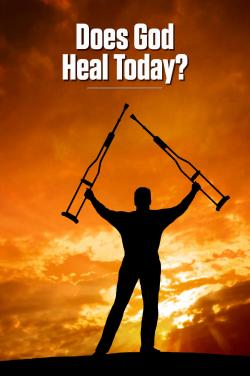
The Bible foretells massive disease epidemics. But if you learn to trust and obey God, you can be healed—perhaps more than you understand.