Standard Broadcast

2026 and Beyond

What if in 2026—Germany takes on Russia, Christian revival sweeps the world, and peace in the Middle East becomes top priority? Bible prophecy says TRUTH is the only way to survive what happens next. Here’s why.

[The text below represents an edited transcript of this Tomorrow’s World program.]

2026 Trends in Bible Prophecy

Where is our world heading in 2026? Will a lasting peace come to the Middle East? Or will it, along with the rest of the world, be plunged into a holocaust beyond anyone’s imagination? Some things we have no control over, so whether peace or war, my question for you today is: Where will you be at the end of 2026?

No one can tell the future for any one of us in precise detail. We may plan our lives, but the unexpected not only can happen, it often does. Yet, there are some things we can count on and plan for.

Do you realize that about 30 percent of the Bible is devoted to prophecy? And based on past history, if the Bible says it is going to happen, it will!

On this Tomorrow’s World program, I’ll review three trends I said to watch at the beginning of 2025 and add two more.

But first let me make it clear that I am not a prophet, nor is anyone else here at Tomorrow’s World a prophet. However, we can read the prophecies recorded in the Bible, and by looking for the signs they give, we can have a general idea of when these prophecies will take place.

At the beginning of last year, I gave three trends to watch. According to the Bible these things will happen. It is only a matter of when, not if.

Trend 1: Religious Revival of False Christianity

The first trend I gave was:

  1. Watch for a worldwide revival in counterfeit Christianity.

Now why would we say this when religion—especially Christian religion has been on the decline for decades?

We’ve been told that Bible sales and church attendance is up since the assassination of Charlie Kirk, but that is not what I’m describing here. Predictions coming from Tomorrow’s World are not based on polls or testing which way the wind blows, but on what the Bible tells us.

And what the Bible tells us is that there will be a charismatic miracle-working religious figure who will deceive hundreds of millions. Note that I said a revival of counterfeit Christianity.

False Christianity is not strictly an end-time phenomenon, as the scriptures reveal that it began very quickly in the first century.

Bible Verses About False Teachers

Jesus and His apostles warned us of this, but few take the warnings seriously. The Apostle Paul chided the church at Corinth for allowing themselves to be deceived on the most basic of doctrines (2 Corinthians 11:3-4).

But I fear, lest somehow, as the serpent deceived Eve by his craftiness, so your minds may be corrupted from the simplicity that is in Christ. For if he who comes preaches another Jesus whom we have not preached, or if you receive a different spirit which you have not received, or a different gospel which you have not accepted—you may well put up with it!

He went on to say that Satan has his ministers, and these are not those who claim to represent the devil, but those who claim to represent Christ. Notice it beginning in verse 13.

For such are false apostles, deceitful workers, transforming themselves into apostles of Christ. And no wonder! For Satan himself transforms himself into an angel of light. Therefore it is no great thing if his ministers also transform themselves into ministers of righteousness, whose end will be according to their works (2 Corinthians 11:13-15).

Jude, the half-brother of Jesus, declared that there were those who turned God’s grace into license to sin. Notice it, Jude the first chapter verse 4.

For certain men have crept in unnoticed, who long ago were marked out for this condemnation, ungodly men, who turn the grace of our God into lewdness and deny the only Lord God and our Lord Jesus Christ (Jude 1:4).

And notice this caution given by Jesus in Matthew 24, the very first sign He gave when asked about the end of the age. Notice it (verse 4).

“Take heed that no one deceives you. For many will come in My name [that is, claiming to speak for Him], saying, ‘I am the Christ,’ [in other words, admitting that Jesus is the Christ, the Messiah] and will deceive many” (Matthew 24:4).

While false Christianity has been around from the first century, this warning by Jesus explains the identity of the rider on the white horse in Revelation 6, the first of the famous four horsemen. The second, third, and fourth are easily discerned, but the first has been almost universally misunderstood. Most commentators identify it with Christ, or the church conquering for Christ. Yet when you compare Jesus’ Olivet Prophecy in Matthew 24, you will see that the first sign of the end will be false Christianity.

Trend #1: Watch for a worldwide revival in counterfeit Christianity.

Trend 2: Escalating War in the Middle East

The next trend was:

  1. There will be continuing conflict in the Middle East that will lead to Christ’s return.

There was great conflict in the Middle East last year, but you may say that 2025 also saw Hamas release the hostages and agree to a peace treaty with Israel.

As I’m preparing to record this program, I have no idea how many twists and turns may occur between when it is recorded and when it airs. There will be ups and downs, but one thing is certain—a lasting peace will not come until the Prince of Peace, Jesus Christ, returns. In fact, one reason for His return is to save the Jewish people from total destruction.

Furthermore, when peace at last appears to be here, sudden destruction will follow. Notice it in 1 Thessalonians 5, beginning in verse 1.

But concerning the times and the seasons, brethren, you have no need that I should write to you. For you yourselves know perfectly that the day of the Lord so comes as a thief in the night. For when they say, “Peace and safety!” then sudden destruction comes upon them, as labor pains upon a pregnant woman. And they shall not escape (1 Thessalonians 5:1-3).

Trend 3: Animal Sacrifices in Jerusalem

The third of last year’s trends involved a very specific event.

  1. Watch for daily sacrifices to begin in Jerusalem.

Now that’s based on a prophecy in Daniel 12:11.

End-Time Prophecy: Abomination of Desolation (Daniel 12, Matthew 24)

We read there that sacrifices will be stopped three years and seven months prior to the coming of the Messiah, and for them to stop, they must first begin.

And from the time that the daily sacrifice is taken away, and the abomination of desolation is set up, there shall be one thousand two hundred and ninety days (Daniel 12:11).

Jesus also spoke of this time as the greatest time of trouble the world has ever seen—or ever will see.

Therefore when you see the “ABOMINATION OF DESOLATION,” spoken of by Daniel the prophet, standing in the holy place (whoever reads, let him understand)…. For then there will be great tribulation, such as has not been since the beginning of the world until this time, no, nor ever shall be. And unless those days were shortened, no flesh would be saved; but for the elect's sake those days will be shortened (Matthew 24:15-22).

These three trends that I gave last year are still relevant today.

  • There will be a revival in counterfeit Christianity.
  • War will continue in the Middle East with the focus on Jerusalem, without regard to any temporary cease-fires.
  • And daily sacrifices will begin.

While the title of this program is “2026 and Beyond”, we simply cannot know the exact timing of most end-time events. However, any thinking person realizes our world is in trouble.

The Antichrist that I spoke of earlier may not show up this year, but it’s not unreasonable to think he will burst onto the scene within the next very few years.

End-Time Prophecies About Jerusalem

It was foretold 2,500 years ago that there would be a militarily powerful Jewish state in control of Jerusalem during the years leading up to Christ’s return. Notice this remarkable prophecy in Zechariah 12, beginning in verse 2.

Behold, I will make Jerusalem a cup of drunkenness to all the surrounding peoples, when they lay siege against Judah and Jerusalem. And it shall happen in that day that I will make Jerusalem a very heavy stone for all peoples; all who would heave it away will surely be cut in pieces, though all nations of the earth are gathered against it. . . . In that day I will make the governors of Judah like a firepan in the woodpile, and like a fiery torch in the sheaves; they shall devour all the surrounding peoples on the right hand and on the left, but Jerusalem shall be inhabited again in her own place—Jerusalem (Zechariah 12:2-6).

Consider—how could anyone know 2,500 years ago the following points revealed in this passage of Scripture?

  • Jerusalem would be in existence.
  • It would be the focus of trouble on the world scene.
  • There would be a Jewish state controlling Jerusalem.
  • All the nations of the earth are against the Jewish state.
  • They would be militarily powerful and overcome enemies on all sides.

Now, is that not exactly what we see today?

Furthermore, Jacob, whose name was changed to Israel, gathered all his sons together and foretold what would become of them “in the last days” (Genesis 49:1).

That was more than 3,500 years ago. And what did he foretell for his son Judah—the Jews? Notice it in verse 9.

Judah is a lion’s whelp; from the prey, my son, you have gone up. He bows down, he lies down as a lion; and as a lion, who shall rouse him? (Genesis 49:9).

Iran and their proxies Hamas and Hezbollah would have done well to read that before poking the lion.

Nevertheless, there is coming a time when Jesus will need to return to save the Jewish people from disaster, as shown in Zechariah 14:1-3.

Behold, the day of the LORD is coming, And your spoil will be divided in your midst. For I will gather all the nations to battle against Jerusalem; the city shall be taken, the houses rifled, and the women ravished. Half of the city shall go into captivity, but the remnant of the people shall not be cut off from the city. Then the LORD will go forth and fight against those nations, as He fights in the day of battle.

Trend 4: Rapid German Military Build-Up

Thus far I’ve reviewed three trends to watch, given at the beginning of last year. Now let me add to this list two more. Trend number 4:

  1. Watch for a German-led remilitarized Europe.

We here at Tomorrow’s World have for decades been warning about a military resurgence in Europe, and most especially in Germany. Even American presidents could not cajole that country—and others—to step up to the plate to take on a greater role in the defense of Europe, but Russian President Putin accomplished that in a matter of hours following the invasion of Ukraine.

Who would have thought even a year ago that Germany and other European nations would boost defense spending by a whopping 5% of GDP? Yet today, that is the trajectory on which most are committed. And the speed in which they are ramping up military spending and preparing for war is astounding.

German thinking is perhaps best summarized by General Carsten Breuer as reported by the BBC.

“We are threatened by Russia. We are threatened by Putin. We have to do whatever is needed to deter that”…. He warns that Nato should be braced for a possible attack in as little as four years…. “And the sooner we are prepared the better” (Germany decides to leave history in the past and prepare for war, BBC.com, March 31, 2025).

End-Time Prophecies About the Beast Power

The books of Daniel and Revelation reveal a ten-nation military and economic colossus to arise in Europe at the time of the end—in effect, a revived Roman Empire. Notice that only the true servants of God will see this coming (Revelation 17:8).

The beast that you saw was, and is not, and will ascend out of the bottomless pit and go to perdition. And [notice this,] those who dwell on the earth will marvel, whose names are not written in the Book of Life from the foundation of the world, when they see the beast that was, and is not, and yet is.

People have scoffed at the idea of a remilitarized Germany, but that is what we are seeing today. If the Bible says it will happen, it will. So:

Trend #4: Watch for a German-led remilitarized Europe.

And 1 Thessalonians 5 gives us a warning not to get caught up in the euphoria of a false peace. Notice it in verse 1.

But concerning the times and the seasons, brethren, you have no need that I should write to you. For you yourselves know perfectly that the day of the Lord so comes as a thief in the night. For when they say, “Peace and safety!” then sudden destruction comes upon them, as labor pains upon a pregnant woman. And they shall not escape (1 Thessalonians 5:1-3).

Trend 5: Man Would Rather Believe a Lie Than the Truth

Now let me give a fifth vitally important trend to watch:

  1. Nominal Christians will follow traditions over truth.

Jesus chided the Pharisees of His day for this very thing.

They came to Him complaining that His disciples did not wash in a ritualistic manner before eating. This was not a law of God, but a tradition of the elders. Notice Jesus’ strong response in Matthew 15:7-9.

Hypocrites! Well did Isaiah prophesy about you, saying: “These people draw near to Me with their mouth, and honor Me with their lips, but their heart is far from Me. And in vain they worship Me, teaching as doctrines the commandments of men.”

Some translations put an erroneous twist on this account by claiming that Jesus did away with the laws of clean and unclean meats—laws that go back to the time of Noah.

You can read that in Genesis 7:2. Look it up and see it for yourself—Genesis 7:2.

But Jesus left no doubt about the subject being discussed here.

For out of the heart proceed evil thoughts, murders, adulteries, fornications, thefts, false witness, blasphemies. These are the things which defile a man, but to eat with unwashed hands does not defile a man (Matthew 15:19).

Placing tradition over truth has been a perpetual problem and don’t expect that trend to stop anytime soon.

As historians Jesse Lyman Hurlbut, Edward Gibbon, Will Durant, and many others record, the Christianity of Christ, His apostles, and first-century Christianity no longer exists.

Søren Kirkegaard states bluntly:

The Christianity of the New Testament simply does not exist…. what has to be done is to throw light upon a criminal offense against Christianity, prolonged through centuries, perpetuated by millions (more or less guiltily), whereby they have cunningly, under the guise of perfecting Christianity, sought little by little to cheat God out of Christianity, and have succeeded in making Christianity exactly the opposite of what it is in the New Testament. (Kierkegaard’s Attack Upon “Christendom”, translated by Walter Lowrie, 1946, pp. 32–33).

The Truth Protects You from the Antichrist

Without realizing it, most professing Christians are already immersed in the spirit of antichrist.

How can you be certain that you will not be deceived by the Antichrist? Here are five suggestions.

#1: Order your free copy of Who or What Is the Antichrist?

It is free for the asking and you have nothing to lose and everything to gain, so do it today.

#2: Don’t be a collector—open it up and read it.

We find that many people have good intentions and order our literature, but not everyone takes the time to read it. A resource sitting on your coffee table unopened will do you no good. So open it and read it.

#3: Pray for understanding and look up the scriptures provided.

As we often say here at Tomorrow’s World, “Don’t believe us just because we say it. Open your Bible and prove it for yourself.”

#4: Ask challenging questions about traditions handed down to you.

For example:

Think about that. Does that make any sense?

  • Why was the date of the birth of the sun god Mithra selected to commemorate Jesus’ birth?
  • Further, why is the birthdate of Christ nowhere found in Scripture if God wanted us to celebrate it?

And here is another one:

That’s a long punishment for someone who never had a chance.

Most people follow family traditions and never challenge where these traditions come from. Frankly, most people don’t care, but they should!

What about you?

And finally, and most importantly,

#5: Act on what you learn.

When the Bible tells you not to worship God in the way the heathen do, do you continue following heathen customs and traditions handed down by family and friends? Or do you have the courage to go against the crowd and obey God? Perhaps your mother asked you: “Just because your friend jumps off a cliff, will you do the same?”

Good advice from Mom.

Choose to Live by the Word of God

When Jesus said in Matthew 19:17, “But if you want to enter into life, keep the commandments,” do you believe Him? Or do you believe your preacher who says you don’t have to keep the commandments? And how about what the Apostle John wrote in his first letter (1 John 2:4-6)?

He who says, “I know Him,” and does not keep His commandments, is a liar, and the truth is not in him. But whoever keeps His word, truly the love of God is perfected in him. By this we know that we are in Him. He who says he abides in Him ought himself also to walk just as He walked.

Now we understand that we are all sinners and cannot save ourselves by our works, but does that mean the law of God, which defines sin, no longer needs to be kept? Do we understand what Jude, the half-brother of Jesus, wrote in Jude 4?

For certain men have crept in unnoticed, who long ago were marked out for this condemnation, ungodly men, who turn the grace of our God into lewdness and deny the only Lord God and our Lord Jesus Christ (Jude 4).

Knowing Bible prophecy and what is coming means nothing unless you act on what you know.

So, dear friends, in the year 2026 I hope you will act on what you know. There are difficult times ahead and only those who truly put God first will find the way of escape.

Be sure to order your free copy of Who or What Is the Antichrist? And be sure to come back again next week when Wallace Smith, Rod McNair, and I will bring you more good news of the coming Kingdom of God and explain the prophecies of the Bible. See you next time.

Thanks for watching. If you found this video helpful, check out more of our content or hit subscribe to stay connected.

And if you want a free study guide related to this topic, just click the link. See you in the next video.


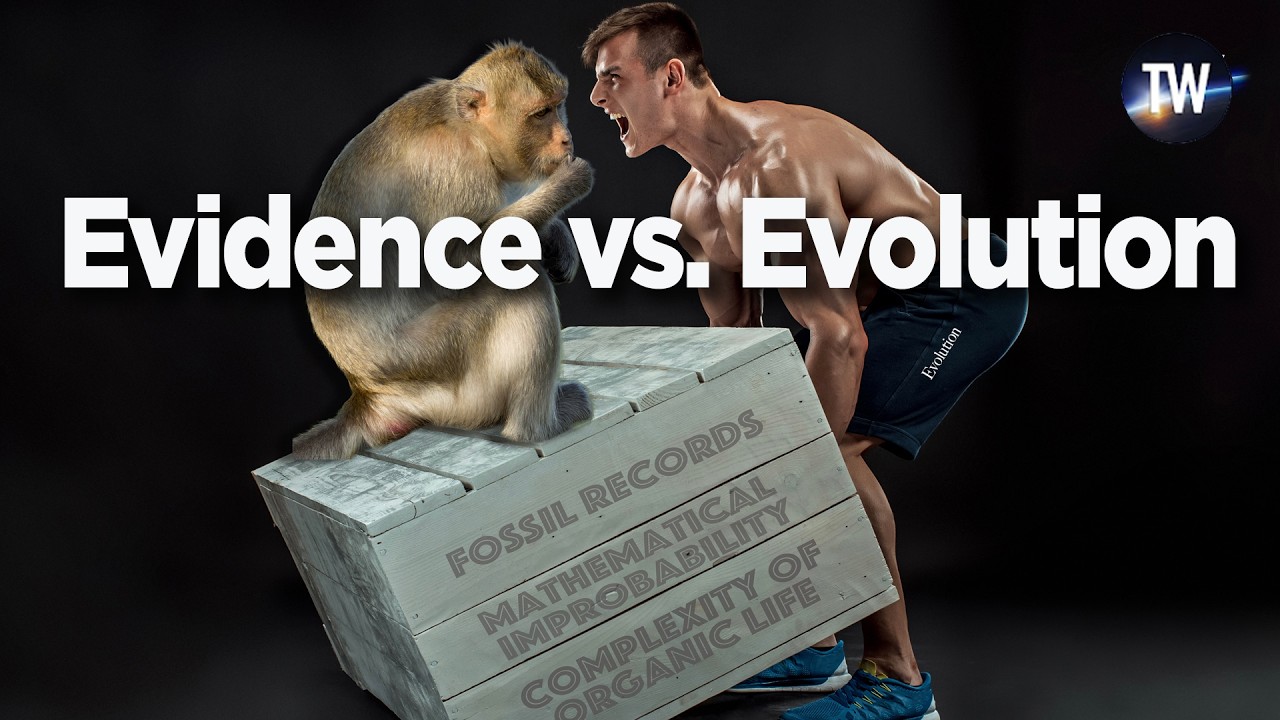
This Is How Life Began on Earth

How did life really begin? Discover three gaping holes in Darwin’s theory of evolution—the science they DON’T tell you that clearly points to the intelligent design of God’s creation.

[The text below represents an edited transcript of this Tomorrow’s World program.]

3 (Big) Cracks in Darwin’s Theory of Evolution

Do an Internet search and ask, “How did life begin on earth?” and you’ll find articles and videos pointing to some kind of evolutionary explanation. One honest NASA scientist in a video on the subject begins and ends with, “We just don’t know.” Yet, he is clearly looking for a naturalistic or evolutionary explanation.

Consider that there are only three fundamental hypotheses for the origin of life on planet Earth.

  • Life was transported to Earth (panspermia).
  • All life evolved from non-living matter.
  • An intelligent being that we might think of as God created life.

Setting aside the huge problems of even bacterial life traveling through vast distances of space, over immense times, and in an environment that is hostile to life—the idea that life was transported to Earth from somewhere else in the universe merely postpones the central question. If life was transported to planet earth by a meteor or some other unknown means, how did it begin at that original source? Was it by chance? Or was it by an infinitely great mind with unlimited power?

Since the time when Charles Darwin’s thesis, On the Origin of Species, was published more than 165 years ago, the need for God in people’s minds has been diminished. After all, if we are no more than the product of blind evolutionary chance, what need is there for a Divine Creator?

1. Fossil Evidence Does NOT Support Evolution

However, in the last half century, insurmountable cracks have appeared in Darwin’s thesis. Let’s note three of them. Crack number one:

  1. The fossil record argues against evolution.

But this may surprise you, since evolutionists often point to the fossil record as proof! However, they personally know better. The lack of fossil evidence was a problem from the beginning—and Darwin admitted this. But it was hoped that with greater fossil finds, the intermediates, the so-called missing links, would be found. But sadly, for evolutionists, that has not happened.

Every few years we hear “the missing link has been found,” but is that true? The answer is no, it is not. Part of the problem is that it is not a single link, but many thousands of links that are required—not only for man, but for every living creature.

Scientist Michael Denton pulls back the curtain on the geologic record in his insightful book Evolution: A Theory in Crisis.

The overall picture of life on Earth today is so discontinuous, the gaps between the different types so obvious, that, as Steven Stanley reminds us in his recent book Macroevolution, if our knowledge of biology was restricted to those species presently existing on earth, “we might wonder whether the doctrine of evolution would qualify as anything more than an outrageous hypothesis” (pp. 157–158).

And as Denton points out—and evolutionary scientists must admit—missing transitions (that is, intermediate forms) plagued Darwin from the beginning.

The absence of intermediates, although damaging, was not fatal in 1860, for it was reasonable to hope that many would eventually be found as geological activities increased (p. 160).

However, time and new discoveries have not been allies for evolution. Denton suggests that “probably 99.9%” of our current knowledge of the fossil record has been discovered since 1860, and:

Only a small fraction of the hundred thousand or so fossil species known today were known to Darwin. But virtually all the new fossil species discovered since Darwin’s time have either been closely related to known forms or, like the Poganophoras, strange unique types of unknown affinity (pp. 160–161).

Transitional forms simply are not there, and Denton states the obvious to any honest person who looks at the fossil record with an open mind.

Without intermediates or transitional forms to bridge the enormous gaps which separate existing species and groups of organisms, the concept of evolution could never be taken seriously as a scientific hypothesis (p. 158).

So crack number one in the evolutionary hypothesis is the fossil record argues against evolution.

2. Mathematical Evidence Is Against Evolution

And now for crack number two:

  1. It is mathematically impossible for life to rise from dead matter by chance.

Science writer and evolutionist Bill Bryson explains.

No one really knows, but there may be as many as a million [different] types of protein in the human body, and each one is a little miracle (A Short History of Nearly Everything, p. 288).

One of those million or so miracles that you have likely heard of is collagen. And regarding the odds of it self-assembling, Bryson states what all rational scientists must admit:

The chances of a 1,055-sequence molecule like collagen spontaneously self-assembling are, frankly, nil. It just isn’t going to happen (ibid).

He then went on to describe the mathematical odds against a much smaller 200-string protein self-assembling as greater than all the atoms in the universe. The larger collagen protein happening by chance is of a magnitude incomprehensibly greater, but collagen is not even close to the largest protein.

Titin gives elasticity to our muscles and much more, and it contains somewhere in the neighborhood of more than 33,000 amino acids. That’s like throwing letters of the alphabet together and by accident forming a coherent sentence made up of some 33,000 or more letters. No wonder evolutionist Bill Bryson makes this remarkable admission:

By all the laws of probability proteins shouldn’t exist (A Short History of Nearly Everything, Bill Bryson, p. 288).

Nature programs and books generally portray evolution as fact rather than theory. However, this theory is in crisis, as Michael Denton explains in Evolution: A Theory in Crisis. So far, I’ve given you two cracks in the theory.

Crack #1: The fossil record argues against evolution.

And crack #2: It is mathematically impossible for life to rise from dead matter by chance.

Life is either the result of cosmic accidents, or the result of a great intelligence with unlimited power. There’s no other choice.

3. Living Organisms Are Too Complex to Evolve

Now here is a third crack.

  1. Life is complex beyond our comprehension.

When Charles Darwin formulated his theory and published it in 1859, he had no concept about the complexity of the cell, but with the advent of modern technologies that allow us to see inside the cell, we now know that the complexity of cells staggers the mind. As Michael Denton explains:

Between a living cell and the most highly ordered non-biological system, such as a crystal or a snowflake, there is a chasm as vast and absolute as it is possible to conceive…. Although the tiniest bacterial cells are incredibly small… each is in effect a veritable microminiaturized factory containing thousands of exquisitely designed pieces of intricate molecular machinery…far more complicated than any machine built by man and absolutely without parallel in the non-living world (Evolution: A Theory in Crisis, Michael Denton, pp. 249–250).

Denton goes on to explain:

The complexity of the simplest known type of cell is so great that it is impossible to accept that such an object could have been thrown together suddenly by some kind of freakish, vastly improbable event. Such an occurrence would be indistinguishable from a miracle (p. 264).

In his 2019 book on the subject of the human body, Bill Bryson makes this thought-provoking admission:

You could call together all the brainiest people who are alive now or have ever lived and endow them with the complete sum of human knowledge, and they could not between them make a single living cell (The Body: A Guide for Occupants, Bill Bryson, p. 4).

Yet evolutionists want us to believe that something so complex happened by chance. The truth is that scientists cannot give a rational explanation how such a grand accident could occur.

Oh, they give just-so stories that sound good on the surface: This might have happened, then this may have come about, and it is not hard to imagine this change taking place, etc., etc., and etc.

All this leads us to the obvious conclusion: What is the most reasonable explanation for life?

Former Atheist Says DNA Had to Be Designed

Many scientists and philosophers are coming to the realization that evolution is found wanting and that the only rational explanation is that there is an intelligent Creator behind life. Perhaps the most striking example is that of the late Antony Flew, considered by many to be “the world’s most influential philosophical atheist.”

But early in 2004, at the age of eighty-one, he changed his mind. Flew announced his conversion to deism, launching seismic waves throughout the philosophic community.… He had become convinced that life would not be possible without the extreme fine-tuning of the universe, and this was only possible with a designer. In addition, he concluded that new discoveries about DNA made it impossible that life could be an accident. As he put it, “It now seems to me that the findings of more than fifty years of DNA research have provided materials for a new and enormously powerful argument to design” (Your Designed Body, Laufmann & Glicksman, p. 425).

When we consider how complex life truly is on every level, it brings us to another question: How could God do it? It should be obvious to anyone who knows even a little bit about the structure and operation of cells, that they cannot happen by chance. As Michael Denton rightfully stated:

The complexity of the simplest known type of cell is so great that it is impossible to accept that such an object could have been thrown together suddenly by some kind of freakish, vastly improbable, event. Such an occurrence would be indistinguishable from a miracle (Evolution: A Theory in Crisis, Michael Denton, p. 264).

A 1961 hit song tells us that God made woman out of a hundred pounds of clay, an obvious reference to the biblical account of man being made of the dust of the ground. But much is left out of this picture. My guess is that many people envision God taking clay and molding it in the form of a man, then breathing into his nostrils, and the clay suddenly became a living man. But was it that simple? Was it magic?

How Complex Is the Human Brain?

How did the circulatory system, the digestive system, the respiratory system come to be? How were all the organs—heart, liver, spleen, and pancreas—formed?

And let us not forget our brain. As Bryson says:

The most extraordinary thing in the universe is inside your head. You could travel through every inch of outer space and very possibly nowhere find anything as marvelous and complex and high functioning as the three pounds of spongy mass between your ears (The Body: A Guide for Occupants, Bill Bryson, p. 48).

How did something so marvelous and complex as the brain come to be? How did the cells that make up the organs and systems, with all their amazing organelles and protein machines, suddenly appear?

The human body and all living creatures, whether great or small, are designed from the microscopic to cause the body to function as a whole. As explained in the previous portion of this program, the complexity of life is so great that scientists readily admit it is mathematically impossible to happen by chance. Yet they refuse to entertain any alternative to their materialistic religion.

But if there is no other alternative than God, how did He do it? How did he construct the cells, the organs, and all the intricate details, all at once before it began decomposition—something that happens almost immediately? Think about it dear friends. This is no small thing.

Bible Verses About Creation

How could God do it? Well, Psalm 33:6 tells us:

By the word of the Lord the heavens were made, and all the host of them by the breath of His mouth.

Yes, “by the word of the Lord” and “the breath of His mouth.” One could argue that this is poetic and not to be taken literally, but the idea that it was by God’s command that the universe and life on this planet came to be is found throughout the Bible. Notice that this is confirmed in the very first chapter of Genesis. I won’t read it all, but let’s begin with verse 24.

Then God said, “Let the earth bring forth the living creature according to its kind: cattle and creeping thing and beast of the earth, each according to its kind”; and it was so.… Then God said, “Let Us make man in Our image, according to Our likeness.” …So God created man in His own image; in the image of God He created him; male and female He created them (Genesis 1:24–27).

This account is severely abbreviated and leaves much out, but another passage confirms that it was the voice of God by which creation took place. Breaking into a thought in Psalm 148, we read:

Praise Him, you heavens of heavens, and you waters above the heavens! Let them praise the name of the Lord, for He commanded and they were created (Psalm 148:4–5).

And then there is Hebrews 1:2–3.

[God] has in these last days spoken to us by His Son, whom He has appointed heir of all things, through whom also He made the worlds; who being the brightness of His glory and the express image of His person, and [notice this] upholding all things by the word of His power (Hebrews 1:2-3).

The debate over how life began has huge implications. The late William Provine, a professor of biology at Cornell University, explains the evolutionists’ perspective.

Let me summarize my views on what modern evolutionary biology tells us loud and clear. There is no life after death. When I die, I am absolutely certain that I am going to be dead. That’s the end of me. There is no ultimate foundation for ethics, no ultimate meaning in life, and no free will for humans, either (“Darwinism: Science or Naturalistic Philosophy?”, William B. Provine, Debate at Stanford University, April 30, 1994).

What a dark, hopeless, and purposeless state of mind, but it is one thing to believe something—quite another to prove it.

But in this last portion of our program, I want to explore one possibility of how God could bring about life on this planet. As we saw in the previous segment (Genesis 1:24):

God spoke and it was done.

And:

By the word of the Lord the heavens were made, and all the host of them by the breath of His mouth (Psalm 33:6).

And:

He upholds all things by the word of His power (Hebrews 1:3).

Compare God’s Creation and Man’s Creation (A.I.)

But exactly how did God do it? Did kidneys and lungs, spleens and hearts, magically appear without God consciously designing them?

We have a technology that may at least help us imagine what this may have been like. While it has been in the background for several years, it’s only in recent times that we, the public, have become aware of the power of artificial intelligence. And while it is a terribly weak analogy, it may help us begin to have a sense of what it was like for God to create life.

Today’s A.I. platforms seem very powerful and creative. Ask an A.I. program for a picture of diving cats, and it will generate one on your computer screen. You see different species of cats doing somersaults off a diving board into the water. The cats are, of course, not real.

Computer programmers can describe new applications, and A.I. writes the code for them. Students use A.I. to write term papers. They type in guidelines regarding the subject, the style to be written in, the word count, etc., and A.I. generates the thesis—not always accurately, and sometimes not without bias.

Yet these A.I. platforms cannot truly create anything on their own. Instead, they have been trained using vast collections of mankind’s knowledge: art, literature, scientific publications and much more. A.I. is doing the work, but A.I. is powered by the sum of human knowledge and creativity.

God’s Ways Are Above Our Ways

Yet the mind of God is far greater than all of mankind’s combined knowledge. Let me remind you of the Bill Bryson quote given earlier in this program.

You could call together all the brainiest people who are alive now or have ever lived and endow them with the complete sum of human knowledge, and they could not between them make a single living cell (The Body: A Guide for Occupants, Bill Bryson, p. 4).

In our analogy—as imperfect as it is—the mind of God is a reservoir of knowledge far greater than man can amass. God could have thought through, planned, and designed every detail of life, from the intricacies of cellular structures to the complexities of life’s chemical processes. He had to design—as it were, write—the code of life—DNA. With all that planned out, He could then simply speak the instructions, and instead of an image on a computer screen appearing, real lifeforms appeared at His command, according to the very designs He had planned.

The point is that while A.I. may be a terribly flawed analogy, it can help us to see how every detail of life could be planned out in the mind of God prior to speaking the word. And when He did speak, the elements of the universe He created obeyed His instructions. God’s mind and power are vastly superior to ours.

Life did not happen by chance—it’s far too complicated for that, and scientists know it. Only the mind of God, along with His endless power, could create life.

One of my favorite quotes comes from Michael Behe in the context of modern discoveries revealing the incredible complexity of cellular life. He writes:

The result of these cumulative efforts to investigate the cell—to investigate life at the molecular level—is a loud, clear, piercing cry of “design!” The result is so unambiguous and so significant that it must be ranked as one of the greatest achievements in the history of science…. This triumph of science should evoke cries of “Eureka!” from ten thousand throats, should occasion much hand-slapping and high-fiving, and perhaps even be an excuse to take a day off.

But no bottles have been uncorked, no hands slapped. Instead, a curious, embarrassed silence surrounds the stark complexity of the cell. When the subject comes up in public, feet start to shuffle, and breathing gets a bit labored. In private people are a bit more relaxed; many explicitly admit the obvious but then stare at the ground, shake their heads, and let it go at that.

Why does the scientific community not greedily embrace its startling discovery? Why is the observation of design handled with intellectual gloves? The dilemma is that while one side of the elephant is labeled intelligent design, the other side might be labeled God (Darwin’s Black Box, Michael Behe, pp. 232–233).

Thanks for watching.

If you found this video helpful, check out more of our content or hit subscribe to stay up to date on what we publish. And if you want the free study guide related to this topic, just click the link in the description. See you in the next video.


Let Jesus Teach You How to Pray

Want a closer walk with God? Start with your prayer life—using these 7 simple steps from Matthew 6. You can draw near to God—when you learn how to pray as Jesus intended from the model prayer.

[The text below represents an edited transcript of this Tomorrow’s World program.]

How to Pray to God

Many people believe prayer is important—and they’re right. But for someone new to prayer, it can be hard to know how to start or what to say. And if we’re honest, even those of us who are more experienced can sometimes struggle.

But there is good news. Because the One Person throughout human history who’s had the closest and most intimate relationship with God offers to teach us how to pray. And if we’ll listen to Him, the door to a deeper and more personal relationship with God through prayer opens wide.

There are few things more important than regular communication with your Father in heaven. Yet prayer doesn’t exactly come naturally.

After all, we can’t see God. When we talk with Him, He generally doesn’t talk back. There might be times when we feel as though God is virtually in the room with us, but then other times when it feels as if no one is listening.

It doesn’t help that the cacophony of “Christianities” out there teach so many different things about prayer. Some recommend uttering memorized prayers. Some recommend praying to intermediaries, such as angels or supposed “saints.” Others suggest that the most powerful prayers are uttered in nonsensical “tongues” that no one understands.

Some of us have basic questions about prayer, but we’re too embarrassed to ask—even though we shouldn’t be. How do you start a prayer? What do you say? What should you ask about?

All of those are good questions. And if you’re beginning to ask those questions, God is delighted that you want to know.

“Lord, Teach Us to Pray”

In fact, Jesus’ own disciples also asked to know. Let’s read about it in Luke 11:1.

Now it came to pass, as He was praying in a certain place, when He ceased, that one of His disciples said to Him, “Lord, teach us to pray, as John also taught his disciples.”

So He taught them and, because His answer to their question was recorded for us, that means Jesus’ instruction to them can become His instruction to us, as well. And there’s no greater teacher of prayer than Jesus Christ Himself.

We read more details about what He taught in Matthew’s account of the same teaching. We see it there in chapter 6, beginning in verse 5. There He says:

“When you pray, you shall not be like the hypocrites. For they love to pray standing in the synagogues and on the corners of the streets, that they may be seen by men. Assuredly, I say to you, they have their reward” (Matthew 6:5).

He’s not saying that public prayer under some circumstances is bad. The Bible has multiple examples of public prayers, including some from Jesus Himself. He is saying here, though, that we must guard against seeing our prayers as a means of impressing others. Instead, our regular, daily prayers are meant to be private, between ourselves and God.

He explains this in more detail, beginning in verse 6; “But you, when you pray, go into your room, and when you have shut your door, pray to your Father who is in the secret place; and your Father who sees in secret will reward you openly” (Matthew 6:6).

Note, Jesus suggests finding a private place for your routine and regular prayer. That way, your prayer is a matter between you and God, alone. This doesn’t mean that prayer with a spouse or children is inappropriate. Not at all. In fact, praying with children is a wonderful way for them to learn how to do it themselves.

But again, prayer is not for show. It’s about intimate communication with your Creator. He adds another important element to this in the next verse.

“And when you pray, do not use vain repetitions as the heathen do. For they think that they will be heard for their many words” (Matthew 6:7).

We don’t build an intimate relationship with anyone by repeating lines like a character in a play. Prayer is real communication with God, not some sort of routine “spell” we cast with the same words time after time.

This is a little ironic, because the passage that follows is often called “The Lord’s Prayer,” and is repeated by many as if that repetition of the exact words, like a script, is equivalent to prayer like Jesus taught. But such an approach violates the very instruction of the passage, not to mention the collected body of examples in Scripture.

Rather, what Jesus did for them in the verses that follow—and what He does for us—represents a model prayer—a prayer that we can learn from so we can know how to pray ourselves.

7 Things Jesus Taught Us to Pray

And in Jesus’ model prayer that He used to teach His disciples, we find seven helpful elements that we should employ in our own prayers, as well.

Jesus has already taught us about the best environment for prayer, as well as what not to do. Now let’s dive right into His model prayer to learn what we should do.

1. Pray to God Directly

First, notice how Jesus begins the prayer. Let’s continue reading in Matthew 6:9.

“In this manner, therefore, pray: Our Father in heaven…”

Now let’s stop right there, because He’s already taught us something important.

Notice that Jesus addresses God directly and focuses His prayer on His Father in Heaven. He doesn’t begin with His own needs, wants, or desires. He focuses on God. And He calls Him “Father.” A prayer is an appeal to your Father in heaven, and it is rooted in a relationship with Him.

And notice, too, it is a prayer made directly to God. Those who teach a need to go through some sort of lower beings, praying to angels or imagined saints in heaven, are simply contradicting God’s word and Jesus’ own example and instruction.

In several passages, Jesus speaks of asking the Father directly (John 15:16, John 16:23). Later, the Apostle Paul tells us that we may “come boldly to [God’s] throne of grace” (Hebrews 4:16)—the promise of direct access. Those who teach you to pray to lesser beings than God are deceiving you, however innocently, and they should be completely ignored.

Of course, Jesus is in heaven, and He, too, is God. And we do see the example of the martyr Stephen asking Jesus to receive His spirit right before His death. The Son of God is God, just as the Father is God—together, they are the Family of God.

Yet, there is a reason Stephen’s prayer is rare in Scripture. Our prayers should primarily be directed to God the Father, just as Jesus teaches.

And addressing God directly, our Creator and Life-Giver, at the very start of our prayer, putting our attention on Him, not ourselves, helps to set our mind in the right place in our prayer from the very beginning.

2. Praise God and Treat Him with Reverence

The next element of prayer Jesus teaches us helps to deepen that frame of mind. Let’s continue in Matthew 6:9.

“Our Father in Heaven, hallowed be Your name.”

Here in the model prayer, Jesus teaches us the next element: Praise and honor God.

To hallow something is to consider it holy and treat it with great reverence. And God’s name represents His character, His goodness, and His majesty.

Jesus addresses His Father in heaven and, again, rather than launching into all He wants or needs, He begins by praising God. In our prayers, we should spend the earliest moments reflecting on just who it is we are addressing: Mentioning and thanking Him for His goodness and His mercy, for His power and glory—addressing Him in a manner that shows our understanding that He is holy, righteous, and perfect, ever-living, ever-loving, ever-wise, and ever-mindful of His creation.

As Isaiah 57 calls Him:

The High and Lofty One Who inhabits eternity, whose name is Holy (Isaiah 57:15).

Beginning our prayer by praising God helps us to see all we are about to say and ask in perspective. It reminds us of just Who is listening to our prayers, so that we stay respectful and humble. It reminds us that He has the power to respond to our prayers—yet also reminds us that He is infinitely wiser than we are, and that we can trust Him with our burdens, knowing that He knows what is right to do with our requests, that He knows when to answer them with a “yes” or even with a “no.”

Beginning with praise, hallowing the name of God, helps to give us the right perspective and puts us in the right mindset for speaking with the Almighty Regent of Heaven and Earth.

3. Seek the Kingdom of God—and God’s Will

What does Jesus teach us next? Let’s continue to listen to Him. The next part of His model prayer continues in Matthew 6:10. After praising God, He says:

“Your kingdom come. Your will be done on earth as it is in heaven.”

So, He teaches us next to seek God’s Kingdom and will.

In this, Jesus pictures in His model prayer the same admonition He tells all of us later in verse 33 of the same chapter:

“But seek first the kingdom of God and His righteousness, and all these things shall be added to you” (Matthew 6:33).

And before He has made a single personal request of God, in His model prayer He does just that—expresses His desire for God’s Kingdom.

And truly, with all the tragedy, heartbreak, and turmoil that surrounds us these days, our hearts should be driven to want God’s Kingdom to come as soon as it possibly could.

Yet seeking the Kingdom of God is more than just seeking a paradise on earth. It is desiring God’s will in all things, over and above our own—hence the remainder of this verse.

Your will be done on earth as it is in heaven.

Jesus tells us that early in our prayer, we should assure God that we seek His will more than we seek our own. We want His Kingdom to reign, not the world around us—and we want His will to be followed and accomplished in this world, not our own.

This element of prayer can include praying for the preaching of the Gospel of the Kingdom of God in this world, such as praying for this program and its success. And praying for the humility, strength, and courage to accomplish in our own lives what the Kingdom will help the entire world to do—prioritize God’s will, desires, and plans above our own.

Jesus Himself perfectly exemplified this attitude in the Garden of Gethsemane, before His crucifixion, when He said:

“Nevertheless not My will, but Yours, be done” (Luke 22:42).

Highlighting to God at the beginning of our prayer that His Kingdom matters more to us than what this world offers and that His will is more important to us than our own will helps our mindset tremendously, allowing us to make our personal requests known to Him in an atmosphere that tells Him we trust Him to make the calls—in our lives, and in the world.

4. “Give Us This Day Our Daily Bread”

Continuing in His model prayer, He says in verse 11:

“Give us this day our daily bread” (Matthew 6:11).

Here we see Jesus teaching us to depend on God for our daily needs.

Note: Almost half of the model prayer so far has been focused on God—His greatness and goodness, His Kingdom, and the importance of His will in all things, even more than our own. This provides the context for this request, a reflection that we need Him to provide our daily needs.

And of course, it isn’t just about bread. Our needs can vary widely. Our health, our finances, our work and family—we have needs on many levels. And “our” is plural: Our loved ones have needs, as well. Yet as a staple of life, the use of bread in the model prayer helps to symbolize all we physically need.

There are many things to notice in this element of prayer. It shows God that:

  • We do not take our daily needs for granted. We look to Him to provide them, knowing that only He has the dependable power to do so.
  • Also, there’s a humility in the request. It isn’t for a life of luxury, leisure, and extravagance. Instead, it is a request for the things we truly need to sustain us.
  • And it is a daily request, recognizing that tomorrow we will come again before Him to ask for the needs of that day.

It is not that we cannot set before God larger hopes and dreams. God is a father, and any good father loves to hear his child’s wishes and desires. Yet the model prayer teaches us that, at the heart of such things, we should be content with God satisfying our needs, versus being obsessed with our wants. Our earlier focus on God’s graciousness and goodness helps us to trust that in making our requests, He hears them and will take them seriously. And in promises such as we read in Matthew 6:33, we can trust that, if we sincerely put His Kingdom first in our prayer, as Jesus taught us, then we can trust that all things we need shall be added to us.

And our needs are far more than physical, as we’ll see.

5. Ask Forgiveness—and Be Willing to Forgive

Let’s continue in verse 12. After asking for our daily bread, the prayer continues:

“And forgive us our debts, as we forgive our debtors” (Matthew 6:12).

Yes, we should not take our standing before God for granted. Jesus teaches us to ask God for forgiveness of our sins. And we need it.

Romans 3:23 tells us that:

All have sinned and fall short of the glory of God.

And 1 John 1:8 says that:

If we say that we have no sin, we deceive ourselves, and the truth is not in us.

Yet, if we’ve been baptized and had hands laid on us by a minister of Jesus Christ, the blood of Christ, the Lamb of God, washes away the sins we’ve committed, as we seek God repentantly with a heart desiring to turn from those sins.

If you’re interested in understanding more about what it means to turn to God in true repentance, one of our representatives can get in touch with you. Just mention you’re interested when you request today’s free material about prayer. Or go to TomorrowsWorld.org to reach out online.

This element of the model prayer reminds us that we do not take God’s forgiveness for granted and requests that God continue to wash us clean through the sacrifice of Christ.

And note, too, that Jesus attaches our own forgiveness to our willingness to forgive others. Many ignore this fact to their spiritual peril. Christ explains it a little later in Matthew 6.

“For if you forgive men their trespasses, your heavenly Father will also forgive you. But if you do not forgive men their trespasses, neither will your Father forgive your trespasses” (Matthew 6:14–15).

Jesus explains that if we truly want forgiveness for our sins and wrongdoings, we must forgive those who’ve wronged us. And if we find that hard—as it certainly can be—a request to our Father in heaven to help us forgive others is a fitting addition to our prayers. After all, when it comes to forgiveness, He’s the expert.

6. Ask God for Spiritual Protection

Next in the model prayer, Jesus teaches us another area in which we should seek God’s help. Let’s continue the prayer in verse 13 of Matthew 6.

“And do not lead us into temptation, but deliver us from the evil one” (Matthew 6:13).

Now notice, Jesus isn’t just teaching us to ask for God’s protection from the dangerous elements of this world, though such requests are indeed daily physical needs that fit within the earlier area of prayer we discussed concerning “daily bread.” Rather, Jesus teaches us here to ask God for spiritual protection—to go directly to God and to ask Him to help us avoid temptations that may lead us astray into sins, taking us further from Him in our daily walk, instead of drawing us closer.

This does not mean that when trials come God has somehow failed. Many places in Scripture highlight the important role that trials play in our spiritual growth, testing our faith and helping us to grow in patience.

But just as any child would want his father to protect him from pitfalls and traps, we should directly ask God to preserve us spiritually from falling into temptation’s snares. Consider the Apostle Paul’s admonition in his first letter to the Corinthians (1 Corinthians 10:12–13).

Therefore let him who thinks he stands take heed lest he fall. No temptation has overtaken you except such as is common to man; but God is faithful, who will not allow you to be tempted beyond what you are able, but with the temptation will also make the way of escape, that you may be able to bear it.

Paul encouraged the Corinthians not to take their spiritual safety for granted, but to desire God’s help with temptation.

And concerning the evil one, the Apostle Peter told his own readers (in 1 Peter 5:8):

Be sober, be vigilant; because your adversary the devil walks about like a roaring lion, seeking whom he may devour.

These spiritual dangers are more important than even the physical dangers this world throws at us. And Jesus teaches us not to ignore them in our prayers, but to actively ask God for spiritual protection from these dangers.

7. Honor God Again When You End Your Prayer

And now we come to His conclusion to the prayer—and it may seem somewhat familiar. After asking for spiritual protection in the model prayer, we read His final element in Matthew 6:13.

“For Yours is the kingdom and the power and the glory forever. Amen.”

Recall how, in the earliest part of the model prayer, Jesus focused us on God, not ourselves, and on God’s Kingdom, not the world around us. And here at the conclusion, He teaches us to end our prayer as it began, magnifying God’s greatness and glory.

Such words provide vital perspective. When we enter prayer, our task is to set our minds on higher things—even in our seemingly mundane, physical requests, we seek to do so with a higher perspective.

And we conclude our prayer with this focus on God, His greatness, and His Kingdom, once again. It helps us to remember that this higher, greater perspective is not just for when we are on our knees before God. It is the perspective we take from His presence to carry throughout our lives—just as our Savior did 2,000 years ago.

And when we hold God in right perspective, in prayer and in life, all other things fall into right perspective as well.

There is nothing more important in this life than building a relationship with God. And Jesus Christ knew that. And He ensured that this model prayer would be recorded forever, not just to teach and guide His followers in the first century, but to teach and guide His followers in the 21st century, as well.

Thanks for watching. If you found this video helpful, check out more of our content or hit subscribe to stay up to date on what we publish. And if you want the free study guide related to this topic, just click the link in the description. We’ll see you next time.



Of Swords and Plowshares

Watch and pray—and prepare for war. The call to arms in Bible prophecy (Joel 3) is rapidly happening around the world NOW. Here’s the evidence—and what you can expect next.

[The text below represents an edited transcript of this Tomorrow’s World program.]

A Call to Arms

It is never good to bet against God. If He says it is going to happen, it will, even if it looks impossible at the moment.

When skeptics doubted that Germany would rearm, we here at Tomorrow’s World never shied away from saying, without reservations, that Germany would experience a turning point from pacifism to militarism. Why? Because of Bible prophecy.

Following WWII, Germany had no appetite to return to its military past. It appeared to all—and still does for most people—that the nation had learned its lesson and would never again wage offensive war against its neighbors. The United States nuclear umbrella would keep its neighbors to the east at bay, and with the fall of the Soviet Union, the threat of war appeared to come to a close. The Cold War was over.

Military preparedness declined, but the United States still carried the load to protect the continent.

While American presidents failed in pressuring NATO nations to pay their agreed upon 2% of GDP on military spending, Russian President Vladimir Putin, by invading Ukraine, managed to accomplish that goal overnight. German Chancellor Olaf Scholz gave his famous Zeitenwende speech, meaning a turning point, on February 27, 2022—a mere three days after the invasion. Germany was not alone among NATO nations announcing increases in military spending. And this is not the whole story, as we see a massive arms buildup around the world.

Who would have thought even a year ago that European nations would boost defense spending to a whapping 5% of GDP? Yet today that is the trajectory on which most are committed.

And the speed in which European countries are ramping up military spending and preparing for war is astounding.

Joel 3 End-Time Prophecy Is Happening Now

I said in the introduction to today’s program that the future is found in the pages of the Bible, and indeed it is. What we see happening before our eyes is the fulfillment of a very specific biblical prophecy for our time. The world is currently arming for war. And this is true for Europe, Asia, the Middle East, North America and elsewhere. Do you realize this was foretold long ago? Notice this prophecy in Joel 3:

Proclaim this among the nations: “Prepare for war! Wake up the mighty men, let all the men of war draw near, let them come up. Beat your plowshares into swords and your pruning hooks into spears; let the weak say, ‘I am strong’” (Joel 3:9–10).

There have been other times of military buildups. The second World War was certainly such a time. Never before in history had there been a truly worldwide conflict that ended taking the lives of an estimated 70 to 85 million people.

The Day of the Lord Prophecy and Timeframe

So what makes Joel’s prophecy so significant? The answer has to do with the timeframe. The focus of Joel’s visions is the Day of the LORD. Notice it in chapter 2, beginning in verse 1.

Blow the trumpet in Zion, and sound an alarm in My holy mountain! Let all the inhabitants of the land tremble; for the Day of the Lord is coming, for it is at hand: A day of darkness and gloominess, a day of clouds and thick darkness…. A people come, great and strong, the like of whom has never been; nor will there ever be any such after them, even for many successive generations (Joel 2:1–2).

The Day of the Lord is found in both testaments of the Bible and is directly mentioned 32 times in an end-time setting when Jesus Christ returns.

Feast of Trumpets’ Prophetic Meaning: The Day of the Lord

It’s the fulfillment of the biblical Feast of Trumpets, called Rosh Hashanah by the Jews. Specific plagues make up that day and are laid out with the sounding of seven trumpets in the book of Revelation.

It’s at the last trumpet that Christ returns, and the prophet Isaiah reveals that the Day of the Lord—the time of these seven trumpet blasts—takes place during a one-year period of time. Here it is in Isaiah 34:8.

For it is the Day of the Lord’s vengeance, the year of recompense for the cause of Zion.

Everything about the Day of the Lord shows that it is a time of war and destruction when God’s wrath will be poured out on unrepentant, rebellious mankind. Here’s what we read from the prophet Zephaniah in chapter 1 and verses 14–16:

The great day of the Lord is near; it is near and hastens quickly. The noise of the day of the Lord is bitter; there the mighty men shall cry out. That day is a day of wrath, a day of trouble and distress, a day of devastation and desolation, a day of darkness and gloominess, a day of clouds and thick darkness, a day of trumpet and alarm against the fortified cities and against the high towers (Zephaniah 1:14–16).

Joel’s Prophecy: A Global Arms Race

The massive worldwide military buildup that we see is a direct fulfillment of a prophecy found in the biblical book of Joel. But as I pointed out earlier, there have been other times in history when nations geared up for war. However, God’s prophecy as recorded by Joel is specific to a unique time in human history. He’s not speaking about the 1500s, the 1700s, or even last century. He speaks under inspiration from God of a one-year period of time referred to in 30 scriptures as the Day of the Lord—a series of events that culminates in the return of Jesus Christ.

Joel 3:10 Precedes the Day of the Lord

Notice that this call to arms is in the context of the final battle when the nations of this world—as difficult as it is to believe—square off against their Creator (Joel 3 beginning in verse 9).

Proclaim this among the nations: “Prepare for war! Wake up the mighty men, let all the men of war draw near, let them come up. Beat your plowshares into swords and your pruning hooks into spears; let the weak say, ‘I am strong.’ Assemble and come, all you nations, and gather together all around. Cause Your mighty ones to go down there, O Lord. Let the nations be wakened, and come up to the Valley of Jehoshaphat [that’s just outside of Jerusalem]; for there I will sit to judge all the surrounding nations. Put in the sickle, for the harvest is ripe. Come, go down; for the winepress is full, the vats overflow—for their wickedness is great. Multitudes, multitudes in the valley of decision! For the day of the Lord is near in the valley of decision” (Joel 3:9–14).

We’ve not yet come to the time known as the Day of the Lord, but it takes time to manufacture weapons of war. When Joel says, “Prepare for war,” this obviously must precede the final battle spoken of a few verses later.

More Bible Verses About the Day of the Lord

Let’s explore further what the Bible describes as this Day of the Lord. Do you realize that this is the theme of the Book of Revelation? Note it in chapter 1 and verse 10. Here we find the aged John, the last living of the original 12 apostles, being given visions from God about events to come while being a prisoner on the Isle of Patmos in the Aegean Sea (Revelation 1:10):

I was in the Spirit on the Lord’s Day, and I heard behind me a loud voice, as of a trumpet.

3 Reasons the Day of the Lord Is Not Sunday

Now some preachers tell us that “the Lord’s Day” means Sunday. As Kenneth Taylor’s Living Letters Bible scandalously paraphrases:

It was Sunday and I was worshiping (The New Testament from 26 translations).

There are three reasons why the idea that Revelation 1:10 is not referring to a day of the week.

  1. The Bible never refers to the first day of the week (that is Sunday) as the Lord’s Day.

That is a narrative invented long after the crucifixion and is never found in the Scriptures. In fact, quite the opposite is true. And that brings me to:

  1. If it were talking about a day of the week, it would be the seventh-day Sabbath.

There are only three scriptures that tell us what day of the week Jesus is Lord of, and it’s not Sunday.

When the Jews of His day condemned Jesus for breaking their humanly imposed ideas about how to keep the Sabbath, He turned to an Old Testament example before stating emphatically what day He is the Lord of (Mark 2:27–28).

And He said to them, “The Sabbath was made for man, and not man for the Sabbath. Therefore the Son of Man is also Lord of the Sabbath.”

Now if the Sabbath were done away, as many proclaim, He could not be Lord of it. Consider carefully. He is not Lord of something that does not exist. Note also from this passage that Jesus said that the Sabbath was made, not for the Jews only, but for man. And when was it made? At the very beginning (Genesis 2:2–3).

And on the seventh day God ended His work which He had done, and He rested on the seventh day from all His work which He had done. Then God blessed the seventh day and sanctified it [in other words, set it apart as holy], because in it He rested from all His work which God had created and made.

Theme of Revelation Is the Day of the Lord

However, Revelation 1:10 is not referring to a day of the week. And that brings me to:

  1. The theme of the book is the Lord’s Day, or to say the same thing differently—the Day of the Lord.

The message is contained on a scroll that is sealed by seven seals. Only the Lamb of God, Jesus Christ, can open these seals. The first four are what are popularly known as the Four Horseman of Revelation (or of the Apocalypse). The fifth seal represents a martyrdom of some of the servants of God. Terrifying heavenly signs are seen when the sixth seal is opened, and what follows is something many cannot imagine (Revelation 6:15).

And the kings of the earth, the great men, the rich men, the commanders, the mighty men, every slave and every free man, hid themselves in the caves and in the rocks of the mountains, and said to the mountains and rocks, “Fall on us and hide us from the face of Him who sits on the throne and from the wrath of the Lamb! For the great day of His wrath has come, and who is able to stand?” (Revelation 6:15–17).

Yes, the Day of the Lord is nothing other than the wrath of the Lamb of God.

Few think of Jesus in terms that go beyond sentimental love. They fail to understand His love coming in the form of a terrific spanking—one that is necessary to bring us to our senses.

Mankind is arming even as I speak for a future that they do not foresee. When Joel spoke of the Valley of Jehoshaphat, he was referring to what many call Armageddon, but that term is badly misunderstood.
What is Armageddon? What does it mean for the world? What does it mean for you and your loved ones? And will anyone survive it?

Prepare for War in the Last Days

We are living in the last days when nations around the world are arming for war, and according to Bible prophecy, wars of unimaginable proportions are coming. However, there is good news and I’ll explain that a little later, but with all that is to happen, it’s difficult to understand how this terrible time ahead can catch people by surprise. Yet, that is exactly what the Apostle Paul says will happen. How can this be?

Revelation 18 speaks of commerce and wealth in the midst of all the troubles. Life carries on and it appears that it will carry on very well for many. That will no doubt be part of the reason, but here is the warning I spoke of before the break. There is also a moment when the world will think the long hoped-for time of peace has finally arrived. When that happens, when people think that peace has at last come, don’t allow yourself to get caught up in the euphoria of the moment. It will not last.

Like a Thief in the Night | 1 Thessalonians 5:2

Here’s what it says in 1 Thessalonians 5:2–4:

For you yourselves know perfectly that the day of the Lord so comes as a thief in the night. For when they say, “Peace and safety!” then sudden destruction comes upon them, as labor pains upon a pregnant woman. And they shall not escape. But you, brethren, are not in darkness, so that this Day should overtake you as a thief.

No matter the good intentions of men and women who seek peace, mankind simply does not know the way to peace. So says the word of God in Isaiah 59 and elsewhere. And so says 6,000 years of history.

Visitors to the United Nations in New York may notice a statue of a muscular man beating a sword into a plowshare for agricultural use. It was sculpted by a Russian artist and gifted to the United Nations by the former Soviet Union. Do you know where the inspiration for this impressive statue come from?

The message comes from the book of Isaiah and is Messianic in nature. In other words, it depicts the rule of the Messiah, Jesus Christ, following his return to rule on earth and bring an end to war. Notice it in Isaiah 2:4.

They shall beat their swords into plowshares, and their spears into pruning hooks; nation shall not lift up sword against nation, neither shall they learn war anymore.

This is also repeated by the prophet Micah in Micah 4:3.

Does this sound too good to be true? More importantly, do you believe it?

Don’t think this won’t happen. If God could foretell a massive worldwide military buildup to occur just prior to the return of His Son, can He not bring about peace when He says He will?

Great Tribulation Coming Soon | Matthew 24

Again, it never pays to bet against God. Peace will come, but only after humanity has come to the brink of global suicide. That message is found in the Bible. That is what Jesus said in Matthew 24:21–22.

“For then there will be great tribulation, such as has not been since the beginning of the world until this time, no, nor ever shall be. And unless those days were shortened, no flesh would be saved; but for the elect’s sake those days will be shortened.”

Is World War 3 Coming? Yes

We see two contrasting biblical prophecies for the time we are in and just ahead of us. The prophet Joel describes a massive worldwide military buildup, leading to a titanic battle near Jerusalem between the nations of the world and the returned Jesus Christ. Notice it again in Joel 3:9–10.

Proclaim this among the nations: “Prepare for war! Wake up the mighty men, let all the men of war draw near, let them come up. Beat your plowshares into swords and your pruning hooks into spears; let the weak say, ‘I am strong.’”

Any informed person realizes that these words are being fulfilled even as you view this program. Not since World War II has there been a time when nations were more intent on preparing for a war that they truly believe is coming. Yes, there was the Cold War when the Soviet Union and the West built massive stockpiles of nuclear weapons and the means to deliver them that they might guarantee “mutually assured destruction”—the idea that if each side possessed enough destructive power, neither would dare to use it. It was a dangerous game of blind man’s bluff, with each side desperately hoping no mistake would start an unthinkable chain of events that would destroy civilization as we know it. Thankfully, though there were some close calls—much closer than most people realize—that did not happen.

For insight into just how close we came to nuclear war, go to our YouTube channel and check out our 2021 award-winning program Cold War Secrets Revealed.

During the Cold War, East and West prepared for war, but hoped it would not come.

Europe Rearming in Response to Russian Threat

However, European nations today are preparing and expecting that war will come—and in the very near future.
They are seriously preparing to square off against a nuclear-powered Russia. Deputy Director General Ragnar Vaiknemets of the Estonian Health Board, which oversees war preparedness, stated emphatically:

“It’s not a question of if [Russia] will attack. It’s a question about when” (“Europe’s frontier countries ready their hospitals for war,” POLITICO).

And the BBC reported German General Carsten Breuer as saying:

“We are threatened by Russia. We are threatened by Putin. We have to do whatever is needed to deter that”…. He warns that NATO should be braced for a possible attack in as little as four years…. “And the sooner we are prepared the better” ( “Germany decides to leave history in the past and prepare for war,” BBC.com, March 31, 2025).

Now that was in March 2025. By the time you view this program, “as little as four years” is now “as little as three years.” Whether that happens exactly as feared remains to be seen. But the point is that whatever the cause, God through His prophet Joel describes a massive military buildup for the end-time and that is happening just as He said. Ultimately, those war preparations will be turned against the King of kings.

How Close Is the World to World Peace?

But on the positive side of things, Isaiah prophesies exactly the opposite of Joel. Instead of turning instruments of agriculture into weapons of war, mankind will turn his weapons of war into instruments for agriculture. Let’s notice a more complete section of this beautiful passage in Isaiah 2:2–4.

Now it shall come to pass in the latter days that the mountain of the Lord’s house shall be established on the top of the mountains, and shall be exalted above the hills; and all nations shall flow to it. Many people shall come and say, “Come, and let us go up to the mountain of the Lord, to the house of the God of Jacob; He will teach us His ways, and we shall walk in His paths.” For out of Zion shall go forth the law, and the word of the Lord from Jerusalem. He shall judge between the nations, and rebuke many people; they shall beat their swords into plowshares, and their spears into pruning hooks; nation shall not lift up sword against nation, neither shall they learn war anymore.

Yes, it is a beautiful passage, but it’s more. It’s for real.

Jesus Christ’s Return Will Bring World Peace

Just as God’s prophecy through Joel is coming to pass before our eyes, so God’s prophecy through Isaiah will come to pass.

Jesus Christ will return to save us from our insanity and set up His Kingdom of peace and prosperity. That’s when the servants of God will be resurrected to rule with Him. That’s the message Jesus proclaimed for three-and-a-half years prior to His crucifixion. That is the message of the Kingdom of God—the message we proclaim here at Tomorrow’s World.

Thanks for watching. If you found this video helpful, check out more of our content or hit subscribe to stay connected.

And if you want the free study guide related to this topic, Armageddon and Beyond, just click the link. See you in the next video.


Build a Better Marriage

From newlywed to nearly divorced, you can build a better marriage. Use these four proven biblical marriage tips to restore love, rebuild trust, and stay committed for life.

[The text below represents an edited transcript of this Tomorrow’s World program.]

How to Save Your Marriage

Is your marriage on the rocks? Do you find you and your spouse constantly arguing and bickering? Do even the smallest issues seem to blow up into major disputes?

Many silently suffer in a marriage fraught with conflict and pain. You might be one of them. You might feel it’s hopeless, there’s nothing that can be done. Well, before you give up, keep listening.

What if you have a decent marriage? What if you and your spouse get along, but you sense you could be closer. If you’d like a breakthrough, then this program is for you, too.

What if you describe your marriage as close and fulfilling? Could it be better? I think we’d all agree even great marriages, between flawed people, can always improve.

What if you’re not married, will never marry, or have zero interest in marriage? Well, if that’s the case, don’t turn off this program yet, because believe it or not, what we’re going to cover still applies to you.
The issue of marriage is something that concerns all of us. No matter what time of life we’re in, regardless of our age, or the state of our marriage, or even if we’re not married at all.

Marriage is in crisis. Never it seems has it been so misunderstood, misapplied, and even ridiculed. The institution itself is going through a dramatic transformation before our eyes, in the modern world. Consider what the website ourworldindata.org has to say.

Within the last decades the institution of marriage has changed more than in the thousands of years before… The proportion of people who are getting married is going down in many countries across the world (“Marriages and Divorces,” February 2025).

And truly, when we look at the drop in marriage rates all over the world, it is a shocking and disturbing trend. And extremely worrisome, because marriage is one of the basic building blocks of society. But where did marriage come from?

Some see marriage as a man-made construct—something that our ancestors millions of years ago figured would be a good idea. You know, the picture of marriage beginning when a caveman dragged his chosen female mate back to his cave to be his wife. And the rest is history.

Is that how marriage began?

No. The truth is, marriage was invented by God Himself. We find that in Genesis 2:20.

So Adam gave names to all cattle, to the birds of the air, and to every beast of the field. But for Adam there was not found a helper comparable to him. And the LORD God caused a deep sleep to fall on Adam, and he slept; and He took one of his ribs, and closed up the flesh in its place. Then the rib which the LORD God had taken from man He made into a woman, and He brought her to the man (Genesis 2:20-22).

These were the first humans, not some imaginary Neanderthals dragging their mates around by the hair. And marriage was designed to create a bond of trust and loyalty between a man and a woman who’ve committed their lives to each other. It thrives in a state of godly character, honesty, and transparency. And it was intended to become the launching pad for children who grow up learning respect and decency from their parents.

Imagine a society where thousands and even millions of family units are built on this type of stable and solid foundation. Think about the far-reaching positive benefits for society at large. Mature, well-adjusted, and honest adults who function dependably in the workplace and in the community. And where did they learn those traits? In a godly Christian home, from parents who had built a strong marriage together.

Tips for Fixing Your Marriage

You see, everything starts in the home. And the home environment is built on marriage. And marriage was established by God.

So if you want to build a better marriage yourself, you have to start at the beginning. And that beginning is our first key today.

Know God Created Marriage—and Why

  1. Acknowledge that marriage comes from God.

This might seem like a simple point. But it actually has far-reaching consequences. If we acknowledge that God is the author of marriage, that means He can define what it is.

No, it’s not any arrangement of two people who love each other, however love is defined. It’s not a man in a union with another man, or a woman with another woman. No, God defines marriage as a special covenant for life, between a man and a woman.

Acknowledging that marriage comes from God also defines what constitutes appropriate behavior in that relationship. Just as God created marriage, God created sex. And God designed sex to be exclusively limited to a man and wife within the marriage relationship. Notice what Jesus said in Matthew 5:31-32.

“It has been said, ‘Whoever divorces his wife, let him give her a certificate of divorce.’ But I say to you that whoever divorces his wife for any reason except sexual immorality causes her to commit adultery; and whoever marries a woman who is divorced commits adultery.”

The phrase “sexual immorality” comes from the Greek root word pornea. Pornea would include repeated adultery, a lifestyle of being unfaithful. And pornea—from which we get the word “pornography”—could also certainly include an addiction to pornography if one is resistant to giving it up.

You see, acknowledging that God created marriage changes everything. It means that we look to Him to know how to conduct our lives, even in our closest relationship.

It means we even seek His perspective on divorce, as Malachi 2:16 notes.

“For the LORD God of Israel says that He hates divorce, for it covers one’s garment with violence,” says the LORD of hosts. “Therefore take heed to your spirit, that you do not deal treacherously.”

God hates divorce because He knows how much damage it does to the family. And He wants to help us avoid that.

So if you want to build a better marriage, you’ve got to know where to start. Whether you’re in a troubled marriage, or whether your marriage is generally happy but could be better, we have a map for making improvements. And it all starts with acknowledging God as the Creator. He designed it. He knows how to make it work best.

What’s the next key?

Don’t Have an Exit Strategy

  1. Commit to your spouse.

There was a time, even in the recent past, when marriage was assumed to be for life. Where did that idea come from? Well, from the Bible—Romans 7:2 says this.

For the woman who has a husband is bound by the law to her husband as long as he lives. But if the husband dies, she is released from the law of her husband.

You see, this wasn’t a man-made idea. God defined marriage as a lifelong commitment. A sacred covenant.

When Jesus was on this earth, the Jews asked Him about marriage—specifically about divorce. Notice His response in Mark 10:6-9.

“From the beginning of the creation, God ‘made them male and female.’ ‘For this reason a man shall leave his father and mother and be joined to his wife, and the two shall become one flesh’… Therefore what God has joined together, let not man separate.”

But today we see very different expectations. The mentality all too often is “I’ll love you as long as you love me.” Or “I’ll stay with you as long as my needs are met.” Some seek to be free of a marriage if they feel they no longer love the person they married.

But can you see the flaws in each of these mindsets? They are setting a limit on the commitment they are willing to make.

Now, before going on any further, let me explain. Christ did say that there are times when a marriage relationship had been broken beyond repair. The damage is done and is very difficult to be undone. As noted already, one of those times is when a partner has fallen into a lifestyle of sexual immorality and is unrepentant. That’s a valid reason for divorce.

Another example is found in the writings of the Apostle Paul. He’s talking to Christians who are married to unbelievers, and says in 1 Corinthians 7:15,

But if the unbeliever departs, let him depart; a brother or a sister is not under bondage in such cases. But God has called us to peace.

In other words, there are times when the other person has made it clear that he or she no longer intends to fulfill the marriage contract. Even with time, and counseling, and perseverance of the committed partner, the other person is done. Maybe they abandon their mate. Or perhaps they are terribly abusive. At times such as this, as Paul explains, it is appropriate to dissolve the marriage.

But truthfully, in our day, too many marriages are wrecked simply because two people just can’t get along. In many cases it could be salvaged—and even improved—with a little more patience and perseverance.

There was a fascinating study conducted in the United Kingdom that was referred to by the Marriage Foundation in February 2017. The Marriage Foundation is an organization in Britain that advocates for policies that support marriage and the family. Here is what they found.

It is widely presumed that “staying together in an unhappy marriage” condemns couples to a life of misery (“Couples on the Brink,” marriagefoundation.org.uk).

This is the common assumption, but the study found that in most cases, that’s simply not true. The study followed a group of 10,000 parents with newborn children, focusing on a small subset of that group who described their marriages as “unhappy.” What was the result of the study?

Of this small minority, 30% split up within ten years. Of those who stayed together, two thirds reported that they were now happy and only 7% still unhappy.

Did you catch that? In other words, even if you’re struggling in your marriage, even if you feel unhappy, don’t give up. Sometimes you’ll go through a time of high stress and difficulty. The solution is generally not to bail out, but to work on it together, learn what you can learn, and try to figure out what you may be doing wrong, personally. And to persevere. In most cases, it will get better.

Which brings us back to the point of this section: Commit to your spouse. If we go into marriage with a Plan B, so to speak—if divorce is an option if things get too hard—then it’s more likely that some day we’ll take that option.

On the other hand, if we go into marriage with the mindset, “I am committed to this marriage until death. I will do everything I possibly can to make it work. Even if times get rough, I’m not going to see divorce as an escape hatch.” That will change our perspective dramatically. When we hit the storms of life, we’re going to pull out all the stops to make it work. We’re going to redouble our efforts. We’re going to seek counseling. We’re going to humble ourselves and try to figure it out, together.

My wife and I were blessed to have parents with intact marriages, who were faithful to each other for decades. They gave us good examples. But we also have many friends who were not blessed in the same way. Yet I know some of our friends, in their own marriages, have made it a specific and determined goal to not follow the same path as their parents. They don’t want divorce to even be an option.

Again, please understand. God is not condoning you staying in a relationship that is physically abusive or where the other person has no intention of fulfilling his or her portion of the marriage contract. But in our experience, many people split up when they could have made it work with a little more persistence, a little more patience, and a little more commitment.

I know what I’m saying is not easy. Even a good marriage will be tested. We are all human. We all make mistakes. We say and do things we ought not. But we’ve got to understand, we’re living in a generation that undermines the importance of commitment. It’s a sign of our times.

Commitment is so important in our relationships. Not just marriage, but all of our relationships. Lack of commitment to treat one another with integrity and respect is one thing that is tearing society apart. Notice what the Apostle Paul prophesied in 2 Timothy 3:1–4.

But know this, that in the last days perilous times will come: For men will be lovers of themselves, lovers of money, boasters, proud, blasphemers, disobedient to parents, unthankful, unholy, unloving, unforgiving, slanderers, without self-control, brutal, despisers of good, traitors, headstrong, haughty, lovers of pleasure rather than lovers of God.

What Paul is describing is a world where people’s greatest commitment is to themselves; satisfying the self. And that describes our world today all too often. So, we have to work that much harder to learn to be committed to our mate.

Be Willing to Give 100%

And this brings us to the next key:

  1. Give 100%.

In a traditional Western culture wedding, the father gives the bride away. And it’s a touching moment when he walks the young woman he’s raised down the aisle, as she enters a new phase of her life with her husband to be. The bond between a father and a daughter is very special. And it’s a pivotal moment when he “gives her away.”

But too many people don’t understand that after the wedding, they now need to “give themselves away.” As a husband or wife, they need to go into marriage not with a selfish mindset, but rather with an attitude of giving 100% to their mate. Notice Paul’s statement quoting Jesus in Acts 20:35.

And remember the words of the Lord Jesus, that He said, “It is more blessed to give than to receive.”

When we understand this, and apply it, it creates a powerful dynamic that can revitalize even a troubled marriage. Even a marriage that has hit a rough patch. This is an antidote: Marriage is about giving 100%—not demanding our needs.

Some have described marriage as a 50/50 proposition. If you give 50% and your mate gives 50%, you’ll meet in the middle. In actual practice, this doesn’t work. What happens in a 50/50 relationship? Well, we both give up to a certain point, and then we stop. And we expect the other person to meet us. This is the problem with a 50/50 marriage. It’s like two people standing on two ends of an unfinished bridge spanning a river. The two people are standing on the edges, looking into the gulf between them, wondering why the other person isn’t doing more. And all the while, the chasm between them seems to loom larger and larger. Does this ever describe your experience?

Let me present a better model. That is each person giving 100%. That means I’m giving 100% no matter what my mate does. I’m going to give even when I don’t feel like it, and even if for the moment I feel the other person doesn’t deserve it.

The apostle Paul explained this in Ephesians 5:33.

Nevertheless let each one of you in particular so love his own wife as himself, and let the wife see that she respects her husband.

Paul doesn’t say, “Husbands, love your wife if she loves you back.” And yet, all too often, that’s how we husbands act. If we don’t feel loved, why should we sacrifice more? If she is being cutting or critical, why should I try to be patient and loving? But that’s wrong thinking. Rather, we are to do what Paul said. We are to love our wife, period—especially when she isn’t especially loveable. That’s the time when our love is tested. And frankly, that’s when our wife needs our patience and love the most. And if you are willing to do that, if you are willing to cherish and treasure her, and make sure she knows you think she’s important. Not mocking or belittling or talking down to her because of her emotions. If you are willing to do that, you may be surprised at how your relationship can be revitalized and even deepen.

What about you wives? Have you noticed the same thing? Paul doesn’t say, “Wives, respect your husband if he is fulfilling your needs at that exact moment.” And yet, all too often, that’s how wives can react as well. If you don’t feel loved, you may think, why should I respect him? He’s not being very kind to me, why should I try to be supportive of him. But that’s wrong thinking as well. Rather, you are to also do what Paul said. Respect your husband, period—especially when he is out of sorts. That’s the time when your patience is tested. And that’s when he needs your respect and your support the most. Men want to be respected, not made to feel stupid or incompetent. If you will do your best to show your husband respect, and persevere in that, you also may be surprised to see his care and love for you to grow and flourish.

This dynamic is explained by the author and marriage counselor Emerson Eggerichs. As he explains it:

Often, we focus on our own needs and simply overlook the needs of the other person. The wife needs love; she is not trying to be disrespectful. The husband needs respect; he is not trying to be unloving. Once you grasp this basic principle—that the “issue” is not the real issue at all—you are on your way to cracking the communication code [between a husband and wife] (p. 32, Love and Respect; Eggerichs, Emerson).

It’s straight from the Scripture—right out of the book of Ephesians. So try it. Test it. You might be surprised at the results.

The Spiritual Meaning of Marriage

And that brings us to our final key.

  1. The Church will marry Christ.

Let’s go back to Ephesians to see this. As Paul was giving instructions to husbands and wives, he explained the overall purpose of marriage. Notice Ephesians 5:31.

This is a great mystery, but I speak concerning Christ and the church.

You see, marriage was not only designed to create stable and solid relationships in the home. It actually serves as a model for us to understand our relationship with Christ.

It’s God’s purpose that we, as faithful servants of God, can become part of the Bride of Christ, to marry Him at His return. This is explained in Revelation 19:7.

“Let us be glad and rejoice and give Him glory, for the marriage of the Lamb has come, and His wife has made herself ready.” And to her it was granted to be arrayed in fine linen, clean and bright, for the fine linen is the righteous acts of the saints.

Marriage Prepares Us for Christ’s Return

Marriage is not just about having good families in the here and now. It serves as a roadmap for us to fulfill our destiny to be in God’s Kingdom and to marry Christ. God created marriage. And not just as a physical institution but as a reflection of our relationship with our Savior. We must make a commitment to Him as our living, loving God. And we must give our lives completely to God and Christ in humble obedience.

But not only that, if we are faithful Christians in this age, we will have the chance to help rule the nations under Christ in the Millennium. At that time, countless millions of men and women will need to be taught how to live godly, fulfilling lives. The survivors of the Tribulation and the Day of the LORD who live on into that glorious time as human beings will learn, many for the first time, to really love one another—and to love their spouse. Better, stronger marriages will be the hallmark of the millennial reign of Christ. And you and I can be there to assist Christ in making it happen.

Thank you for watching. If you found this video helpful, check out more of our content or hit subscribe to stay connected. And if you want a free study guide relating to this topic, just click the link in the description.

See you next time.


Pages