Standard Broadcast

The Dangerous Times of the Gentiles

Jesus Christ warned that the end times would include warfare "until the times of the Gentiles are fulfilled" (Luke 21:24). What does this mean? Who are the Gentiles? Can you avoid the trouble this indicates? Join us in learning the answers from the Bible.

[The text below represents an edited transcript of this Tomorrow’s World program.]

Reporting History in Advance

The Holy Bible outlines the future of the world. Bible prophecy reveals the sequence of world events leading up to the end of the world. What major event on the world scene should you be watching for? My friends, in the not-too-distant future, a great world superpower will rise above the United States. That superpower is even now emerging on the world scene. Will it be China? China’s ambitious military, economic, technological, and space advancements hint at its powerful role in end-time events. Or will the Russian nuclear-power grow in dominance? These great national powers will play a role in end-time prophecy leading up to Armageddon, but neither of these two nations will be the world’s top superpower. The book of Revelation in your Bible predicts that a resurgent EUROPEAN force will dominate the world. Your Bible calls it symbolically the Beast of Revelation.

Who IS this powerful force that will affect all nations on the earth?

Your Bible reveals major prophetic events that you should be aware of. Jesus Christ, the greatest newscaster and prophet who ever lived, warns us of one of those major prophetic events in Luke 21:20: “But when you see Jerusalem surrounded by armies, then know that its desolation is near… And they [the people of Jerusalem] will fall by the edge of the sword, and be led away captive into all nations. And Jerusalem will be trampled by Gentiles until the times of the Gentiles are fulfilled.”

This end-time event will usher in the DANGEROUS times of the Gentiles! My friends, you NEED to know the future. You need to know the prophetic times of the Gentiles, a time that will imperil everyone on earth. A new superpower will arise on the world scene during this prophetic time-period! What dangers will we face? You need to know. Stay tuned!

An Unholy System to Rise

Warm greetings to all our friends around the world!

Most students of Bible prophecy know that we are living in the prophesied “time of the end.” The prophet Daniel uses that expression four times in chapters eleven and twelve in your Bible. He reveals a time of worldwide cataclysm: “At that time Michael shall stand up, The great prince who stands watch over the sons of your people; and there shall be a time of trouble, such as never was since there was a nation, even to that time” (Daniel 12:1). These DANGEROUS TIMES lead up to Armageddon and World War III.

In Matthew 24:21-22, Jesus of Nazareth also proclaimed that unique time in all history at the end of the world and stated, “And unless those days were shortened, no flesh would be saved; but for the elect’s sake those days will be shortened” (v. 22).

Jesus gave that warning after outlining end-time prophetic events. In Luke 21, verses 7-18, He reveals “The Signs of the Times and the End of the Age.” Then in verses 20 through 24, He describes a key sign: “But when you see Jerusalem surrounded by armies, then know that its desolation is near. Then let those who are in Judea flee to the mountains, let those who are in the midst of her depart, and let not those who are in the country enter her. For these are the days of vengeance, that all things which are written may be fulfilled. But woe to those who are pregnant and to those who are nursing babies in those days! For there will be great distress in the land and wrath upon this people. And they will fall by the edge of the sword, and be led away captive into all nations. And Jerusalem will be trampled by Gentiles until the times of the Gentiles are fulfilled.”

But WHO are the Gentiles? And what are the times of the Gentiles?

From a biblical perspective, Gentiles are the nations of the world NOT descended from ancient patriarch Jacob, whose name was changed to Israel. The patriarch Israel had twelve sons, including Judah, many of whose descendants constitute the Middle Eastern nation of Israel to this day. Gentile nations would include Germany, Russia, India, and China.

The first Gentile nations came to prominence in the land of Shinar, which later became known as Babylonia. The nations were setting themselves as a united people in opposition to God. They said, “Come, let us build ourselves a city, and a tower whose top is in the heavens; let us make a name for ourselves, lest we be scattered abroad over the face of the whole earth” (Genesis 11:4).

You may have seen some of the artistic presentations of the tower of Babel. Most of you know the story. God confounded their languages so they were no longer unified. “So the Lord scattered them abroad from there over the face of all the earth, and they ceased building the city. Therefore its name is called Babel, because there the Lord confused the language of all the earth; and from there the Lord scattered them abroad over the face of all the earth” (Genesis 11:8-9).

The New Bible Commentary: Revised comments “… and their own further dispersion from Babel (vv. 8f.) is recorded as a special judgment on their blatant embodiment of the ungodly spirit that again after the Flood characterized human civilization. The city once more (cf. Gn. 4) becomes the cultural focus of mounting human arrogance” (p. 91).

My friends, does that not reflect today’s common anti-God worldly attitude? The Apostle John writes in the book of Revelation: “After these things I saw another angel coming down from heaven, having great authority, and the earth was illuminated with his glory. And he cried mightily with a loud voice, saying, ‘Babylon the great is fallen, is fallen, and has become a dwelling place of demons, a prison for every foul spirit, and a cage for every unclean and hated bird! For all the nations have drunk of the wine of the wrath of her fornication, the kings of the earth have committed fornication with her, and the merchants of the earth have become rich through the abundance of her luxury’” (Revelation 18:1-3).

God warns us not to participate in this future system called Babylon the Great. The Apostle John continues: Revelation 18:4, “And I heard another voice from heaven saying, “Come out of her, my people, lest you share in her sins, and lest you receive of her plagues. For her sins have reached to heaven, and God has remembered her iniquities” (Revelation 18:4-5).

So, how can you avoid receiving those plagues? How can you avoid the dangerous times of the Gentiles?

The Roman Empire and the Beast

Turn in your Bible to Revelation 17. Here the Apostle John sees in vision a harlot riding a symbolic beast with seven heads and ten horns. Revelation 17:3: “And I saw a woman sitting on a scarlet beast which was full of names of blasphemy, having seven heads and ten horns.”

What is the meaning of this beast? We do not have to guess, because the Bible interprets the Bible. Let’s read that in Revelation 17:9: “Here is the mind which has wisdom: The seven heads are seven mountains on which the woman sits. There are also seven kings. Five have fallen, one is, and the other has not yet come. And when he comes, he must continue a short time. And the beast that was, and is not, is himself also the eighth, and is of the seven, and is going to perdition.”

Here we see the heads represent mountains, a Bible symbol of governments or kingdoms. And these seven heads also represent seven successive kings. These are revivals of the original kingdom. How do we know the sequence of these historic kingdoms? The prophet Daniel, under God’s inspiration, interpreted Nebuchadnezzar’s dream of a great image with a head of gold. You can read about that in Daniel 2:36-45. Daniel told king Nebuchadnezzar, “[Y]ou are this head of gold” (Daniel 2:38). God revealed to ancient king Nebuchadnezzar of Babylon that he was the head of gold representing the historic Babylonian empire.

Nebuchadnezzar’s dream revealed an image with a head of fine gold, its chest and arms of silver, its belly and thighs of bronze, its legs of iron, its feet partly of iron and partly of clay. What empires or kingdoms did this image symbolize? The prophet Daniel told Nebuchadnezzar that the head of gold represented him and his empire, the Babylonian empire. Historically, this empire was replaced by the Medo-Persian Empire represented by the chest and arms of silver. That empire was followed by the Greco-Macedonian Empire of Alexander the Great represented by the belly and thighs of bronze. Then the Roman Empire, represented by the two legs of iron, dominated the world from 31 BC to 476 AD. The ten toes on two feet of iron mixed with ceramic clay represent a future revival of the Roman Empire.

History has proved the accuracy of Bible prophecy. These empires have risen and fallen just as the Bible predicted. However, the very last empire has yet to arise. But what will it be? The New Catholic Edition of the Holy Bible translated from the Latin Vulgate, is generally called the DOUAY-RHEIMS version. It makes this comment concerning the beast of Revelation 17:11, “The beast spoken of here seems to be the ROMAN EMPIRE, as in chapter 13.” In other words, both the Beast of Revelation 17 and the Beast of Revelation 13 represent the Roman Empire. This Catholic Bible also comments concerning Revelation 13:1 as follows: “The picture of the first beast is based on the seventh chapter of Daniel. This beast is the figure of the kingdoms of the world, kingdoms founded on passion and selfishness, which in every age are antagonistic to Christ and seek to oppress the servants of God. IMPERIAL ROME represents this power.” Yes, even the Douay-Rheims Bible admits to the identity of the beast.

Even today, many Europeans see the European Union as A NEW ROMAN EMPIRE. Will the current European Union become the next Roman Empire? Tomorrow’s World regional editor Douglas Winnail wrote the following in his article, titled “Shadows Over Europe”: “Europe’s modern leaders are still trying to unite Europe on a Roman model. When the Treaty of Rome was signed in 1957, laying the foundation of European unity, the participants stated that ‘we felt like Romans that day… we were consciously recreating the Roman Empire once more.’” (The Signature of God, Jeffrey, pp. 190–191)” (Tomorrow’s World, January-February 2005, p. 13).

After the decline and fall of the ancient Roman Empire in 476 AD, there have been six historic revivals. My friends, you need to be alert to the final revival in the future. The first head of the Scarlet Beast represents the first revival, the Imperial Restoration of the West under Justinian (554 AD). The following revivals included Charlemagne, crowned as emperor in Rome on December 25, 800 AD. The next revivals included Otto the Great, Charles the V, and Napoleon’s Empire.

The book of Revelation gives us the setting of the end-time, the time preceding the Day of the Lord. The sixth revival is referred to in Revelation 17:10: “Five have fallen, one is, and the other has not yet come.” Read that in your own Bible! Some of you watching this program witnessed that powerful revival during World War II. What nations represented the sixth revival of the Roman Empire?

God’s Kingdom On Earth to Come After

We’ve briefly discussed five of its seven revivals, ending with the fall of Napoleon in 1814 AD. The sixth of seven revivals ended in 1945 with the fall of Mussolini. One final revival of the Roman Empire remains. This future revival will consist of ten kings or kingdoms unified with the symbolic beast. My friends, watch developments in Europe. Consider the rise of the next world superpower. Ten kings or kingdoms will give their power and authority to the Beast. Revelation 17:12, “The ten horns which you saw are ten kings who have received no kingdom as yet, but they receive authority for one hour as kings with the beast. These are of one mind, and they will give their power and authority to the beast.” Notice the time-setting of this final revival. Revelation 17:14, “These will make war with the Lamb, and the Lamb will overcome them, for He is Lord of lords and King of kings; and those who are with Him are called, chosen, and faithful.”

Amazingly, this end-time superpower will try to fight the Lamb, Jesus Christ, at His coming. The time setting of this revival is just before the return of the Messiah, Jesus of Nazareth! But this end-time military machine will fail in its war against Christ. The King of kings will conquer and overcome this final, worldly system and Christ will establish His kingdom here on earth. Daniel’s prophecy shows a great stone smashing the feet of the dream image. Daniel 2:34, “You watched while a stone was cut out without hands, which struck the image on its feet of iron and clay, and broke them in pieces. Then the iron, the clay, the bronze, the silver, and the gold were crushed together, and became like chaff from the summer threshing floors; the wind carried them away so that no trace of them was found. And the stone that struck the image became a great mountain and filled the whole earth.”

That stone, my friends, represents the coming Kingdom of God. Daniel explains its meaning in verse 44, “And in the days of these kings the God of heaven will set up a kingdom which shall never be destroyed; and the kingdom shall not be left to other people; it shall break in pieces and consume all these kingdoms, and it shall stand forever. Inasmuch as you saw that the stone was cut out of the mountain without hands, and that it broke in pieces the iron, the bronze, the clay, the silver, and the gold—the great God has made known to the king what will come to pass after this. The dream is certain, and its interpretation is sure.”

Yes, the Kingdom that will stand forever will be the Kingdom of God ruled by the King of kings and Lord of lords. He will replace a deceptive religious leader in the future who will perform dramatic miracles. That leader will excite religious passions all over the world. Read that in Revelation 13:11; “Then I saw another beast coming up out of the earth, and he had two horns like a lamb and spoke like a dragon. And he exercises all the authority of the first beast in his presence, and causes the earth and those who dwell in it to worship the first beast, whose deadly wound was healed. He performs great signs, so that he even makes fire come down from heaven on the earth in the sight of men. And he deceives those who dwell on the earth by those signs which he was granted to do in the sight of the beast….” This future religious leader will deceive millions, even billions, by false miracles!

The Great Tribulation Before Christ’s Return

“Then he opened his mouth in blasphemy against God, to blaspheme His name, His tabernacle, and those who dwell in heaven. It was granted to him to make war with the saints and to overcome them. And authority was given him over every tribe, tongue, and nation. All who dwell on the earth will worship him, whose names have not been written in the Book of Life of the Lamb slain from the foundation of the world” (vv. 6-8).

The Gentile beast power will rule over all nations. But God will limit its time to just forty-two months, or three and one-half years. Revelation 13:5, “And he was given a mouth speaking great things and blasphemies, and he was given authority to continue for forty-two months.”

This time period is also confirmed in Revelation 11. The Apostle John writes in Revelation 11:1, “Then I was given a reed like a measuring rod. And the angel stood, saying, ‘Rise and measure the temple of God, the altar, and those who worship there. But leave out the court which is outside the temple, and do not measure it, for it has been given to the Gentiles. And they will tread the holy city underfoot for forty-two months. And I will give power to my two witnesses, and they will prophesy one thousand two hundred and sixty days, clothed in sackcloth.’”

Yes, as we read earlier in the program, “Jerusalem will be trampled by Gentiles until the times of the Gentiles are fulfilled” (Luke 21:24). How will those times end? Revelation 11:15, “Then the seventh angel sounded: And there were loud voices in heaven, saying, ‘The kingdoms of this world have become the kingdoms of our Lord and of His Christ, and He shall reign forever and ever!’”

This heavenly announcement declares the coming of the Kingdom of God to this earth, with Jesus Christ as King of kings and Lord of lords. Faithful Christians, both Gentiles and Israelites, will be born into the Kingdom of God at the last trumpet, as it tells us in 1 Corinthians 15:52. Notice the glorious calling God is giving individuals from all nations and languages. Revelation 5:9, “And they sang a new song, saying: ‘You are worthy to take the scroll, and to open its seals; for You were slain, and have redeemed us to God by Your blood out of every tribe and tongue and people and nation, and have made us kings and priests to our God; and we shall reign on the earth.’”

Yes, Jesus Christ will end the dangerous times of the Gentiles! My friends, as it tells us in Luke 21:36, “Watch therefore, and pray always that you may be counted worthy to escape all these things that will come to pass, and to stand before the Son of Man.”

Thank you for watching! Remember to subscribe so you don’t miss another Tomorrow’s World video, and if you would like a copy of our booklet The Beast of Revelation: Myth, Metaphor, or Soon-Coming Reality? for free, click the link in the description. See you next time.


2022 in Bible Prophecy

Disaster upon disaster: Civil unrest, gas prices, catastrophic winter storms, cyber attack, fires, inflation, empty grocery shelves, fuel shortages, widespread drought, supply chain breakdown—when have all of these serious problems occurred simultaneously or without time to recover? Let's look at the events of 2021 and what to expect in 2022, based on Bible prophecy.

[The text below represents an edited transcript of this Tomorrow’s World program.]

Tomorrow’s World Predicts…

Our world is becoming more unstable and dangerous, and many concerned people are beginning to ask themselves serious questions. Is a war on the horizon? Are we heading for a financial meltdown? Are we entering a time of hyper-inflation? What about the supply chain? And will I be able to feed my family?

War, civil unrest, financial meltdowns, inflation, empty grocery shelves, and widespread drought affecting food supplies have always been possibilities somewhere in the world at some time, but when have all of these problems been a serious concern at the same time in our Western nations?

Each year at this time, we here at Tomorrow’s World, give you trends to look for in the coming year and beyond. On last year’s program titled 2021 in Bible Prophecy, I gave one prediction. How accurate was it? I’ll answer that question with a review of this past year, before giving you three predictions for 2022 and beyond—straight from the pages of your Bible.

A Year in Review—Or Two

Welcome to Tomorrow’s World, where we give you advance news from the pages of the Bible. And along with the bad news in today’s world, we look forward to the greatest good news of all—the sure hope of the return of Jesus Christ to straighten out the mess we’ve created.

At the beginning of last year, I reviewed the predictions and trends that Mr. Wallace Smith and I gave for 2019 and 2020; showing that every one of our predictions was right on target, including Mr. Wallace Smith’s warning of disease epidemics. And, by the way, that program was recorded several months prior to COVID being on anyone’s radar. After reviewing the previous two years, I gave one prediction for 2021.

Today we reviewed predictions and trends proclaimed by Tomorrow’s World the last two years. Then I said I would give you a single trend to watch in 2021 and the immediate years following. We cannot know the exact timing, but the trend is certain: There will be disaster upon disaster for America and the British descended peoples.

Notice how the prophet Ezekiel describes what is ahead for the Anglosphere:

Destruction comes; they will seek peace, but there shall be none. Disaster will come upon disaster, and rumor will be upon rumor. Then they will seek a vision from a prophet; but the law will perish from the priest, and counsel from the elders. “The king will mourn, The prince will be clothed with desolation, and the hands of the common people will tremble. I will do to them according to their way, and according to what they deserve I will judge them; then they shall know that I am the LORD!” (Ezekiel 7:25–27).

The prediction of disaster upon disaster was not something I dreamed up, but as shown in this clip, it comes from the biblical book of Ezekielchapter 7 and verse 26. Disasters of one sort or another happen from time to time, but this passage predicts one major disaster stacked upon another. It’s predicting extraordinary times. Did we see this in 2021?

I cannot remember a year in my lifetime where more catastrophic events were piled one upon another, but don’t take my word for it. So much happened in 2021 that I only have time to briefly mention these extraordinary events, so let’s get started with a quick “year in review.” It didn’t take long for disaster number 1—January 6.

#1: The storming of U.S. Capitol Building

Need I say more? But two weeks later disaster, disaster #2 struck. January 20, the day he took office, President Biden cancelled the Keystone XL pipeline, which would have brought crude oil from Canada to refineries on the Gulf Coast. This was only the first shot in what has turned out to be a war on fossil fuels that has left both America and its Canadian ally in the cold—pun intended—as seen from this October 14, 2021 story out of New York:

  “Winter heating bills set to jump as inflation hits home”

Get ready to pay sharply higher bills for heating this winter, along with seemingly everything else.

With prices surging worldwide for heating oil, natural gas and other fuels, the U.S. government said Wednesday it expects households to see their heating bills jump as much as 54% compared to last winter (Associated Press, October 13, 2021).

Gasoline prices have also skyrocketed, and ironically, while waging war on American and Canadian producers, the President has begged OPEC to ramp up supplies. Now if this sounds political, it’s not intended to beit’s just the facts. America had recently become energy independent, but the war on gas, oil, and coal has ended that independence.

Some would say the war on fossil fuels is a blessing rather than a disaster. And truly, the subject is controversial—but not for people on low or fixed incomes shivering in their homes or having to choose between food, and fuel to fill their gas tanks for work. So forget the politics. For millions, the war on fossil fuels is an unmitigated disaster. So 2021 disaster #2 is:

#2: The consequences of the war on fossil fuels

The mob taking over the Capitol on January 6 and the war on fossil fuels were only the beginning. It didn’t take long for another major disaster to strike. February 11–20 brought disaster #3:

#3: The historic winter storms that slammed Texas and the Central Plains states

A series of storms struck one after another and brought life to a standstill, disrupting the flow of important goods to the rest of the country. Temperatures dropped in Texas as low as 6 degrees F (-14 C), and the accompanying catastrophic ice storms brought down trees and power lines. Ice and freezing temperatures also halted electricity producing wind turbines, thus shutting down the power grid over a large swath of the state.

The National Weather Service reported on the magnitude of the storms:

This was one of the most impactful winter events in recent history that brought multiday road closures, power outages, loss of heat, broken pipes, and other societal impacts for the region. While the damage is still being assessed, this will likely go down as the first billion dollar disaster of 2021 globally, and potentially the most costly weather disaster for the state of Texas in history, surpassing even Hurricane Harvey from 2017 (“Valentine’s Week Winter Outbreak 2021: Snow, Ice, & Record Cold,” National Weather Service, Weather.gov).

Crisis After Crisis—Where Is It All Leading?

The crisis at America’s southern border began early in the year and it grew with each passing month. Hundreds of thousands of migrants from Central and South America, from Africa, Asia, and the Middle East crossed into the United States illegally through Mexico. Many were bussed and flown to distant cities during the early morning hours in an attempt to hide the scope of the problem. And with this flood of humanity have also come drugs, gang members, and, almost certainly, terrorists. It will take time before we know the full impact of an open border, but there WILL be consequences, so 2021 disaster number 4 is:

#4: The crisis at America’s southern border

Disaster number five was both unexpected and disheartening. New vaccines held out hope that humanity would be freed from the grip of the COVID-19 virus, but then came the Delta variant, and America and most of the rest of the world saw their hope dashed. COVID in 2021 turned out to be worse than 2020. Note this headline from MSN on October 7, 2021:

“Number of U.S. Covid deaths in 2021 surpasses death toll of 2020” (MSN.com, July 10, 2021).

And this, with the better part of three months left in the year! So disaster #5 was:

#5: The Delta variant and continuing COVID-19 pandemic

Cyberattacks are more common and more costly than most people realize. There was the May 7 ransomware attack on the Houston based Colonial pipeline that stopped the flow of fuel to the Southeastern and Mid-Atlantic states. And even after it began flowing again, it took days for it to reach its destinations. It was reported that the company paid out five million dollars to resolve the problem, though a portion was recovered, according to reports. Before the month of May ended, JBS, the world’s largest meat packing plant, was hit with a similar attack, shutting down plants in North America and Australia. JBS reportedly paid 11 million dollars to avoid a long shutdown, and this does not include lost revenue and wages and a host of other expenses. These two events are only the more public examples of a very real ongoing cyberwar, and this is why our sixth disaster is:

#6: The ongoing silent cyberwar

This war is real, costing city, state, and federal governments; television stations; credit reporting agencies; banks; nuclear plants; and thousands of public and privately owned companies; as well as individuals, far more than any natural disaster.

These attacks go on daily and unless they affect you personally, they mostly go unnoticed—deliberately so, as no company wants the negative publicity associated with a successful attack. Some attacks steal trade secrets or personal information. Other attacks extort millions in cryptocurrency. But ominously, countries silently probe their enemy’s military and infrastructure in preparation for a shooting war.

My friends, 2021 saw even greater catastrophes! There is not nearly enough time in this program to remind you of all the challenges we faced in 2021. Nor do we have time to cover all the news in advance from the pages of the Bible. Will Jesus return soon to straighten out the mess? He gave signs to indicate when His return was near

Increasing Tribulation, As Jesus Christ Predicted

But before going further, let’s quickly review the first six that I’ve mentioned:

#1: The storming of the Capitol on January 6

#2: The consequences of the war on fossil fuels

#3: The disastrous storms that hit Texas and the Southern Plains

#4: The crisis at America’s southern border

#5: The Delta variant and continuing COVID-19 pandemic

#6: The ongoing silent cyberwar

But, by many accounts, the greatest calamity of 2021 was the manner in which the United States pulled out of Afghanistan. This was a humiliating disaster of monumental proportions. America’s friends are re-evaluating their trust in the waning superpower, and America’s enemies are licking their lips. Note this op-ed published in The Hill on August 30, under the headline:

  “In Afghanistan, we’ve opened the gates of hell.”

The article went on to say, with a reference to Winston Churchill after Neville Chamberlain’s appeasement of Adolf Hitler:

President Joe Biden’s debacle will have no such savior; the Islamic jihad isn’t that kind of war. Instead of getting us out of Afghanistan, and bringing peace in our time, he’s opened the gates of hell. In one disastrous and grossly ill-conceived strategic move, Biden has armed and empowered the Taliban and elated every Muslim fanatic from Morocco to Mindanao. Not since 9/11 have events so galvanized our enemies — U.S. forces abandoning the field; the Afghan military laying down arms; and the Taliban reestablishing their Islamic Emirate (The Hill, August 30, 2021).

So disaster #7 is:

#7: The humiliating manner in which America left Afghanistan 

For the sake of time, let me mention a few others with only brief comments.

#8: The breakdown in the supply chain

This one is so noticeable that little else needs to be said, but who would have thought of this a year ago.

#9: Inflation

This too is huge, but again, no need to say much. We all see it on a daily basis and those on low or fixed incomes feel it the most. Then there’s #10:

#10: Worker shortages

Governments have borrowed to pay people not to work. How incongruous to see “Help wanted signs” everywhere, yet panhandlers and homeless encampments popping up all over. While unemployment stats are low, it’s reported that five million American workers have dropped out of the workforce. And this worker shortage is compounded by #11.

No matter where you stand on the subject, one thing is for certain—policemen, pilots, truck drivers, healthcare workers, and critical workers from many industries chose to quit their jobs rather than take the jabs. Many of those who put their lives on the line and were hailed as heroes during the height of the pandemic were cast aside. So that’s why #11 is:

#11: Vaccine mandates

Here is one more problem which only got worse in 2021:

#12: Nations divided against themselves regarding masks, vaccines, immigration, climate change, and so much more

Civil society is breaking down, and no matter which side one may be on regarding these issues, citizens of America, Canada, Australia, South Africa, France, the Netherlands, Germany, just to name some, have lost confidence in their governments and their citizens are becoming restless. 

Tomorrow’s World prediction for 2021 was “disaster upon disaster.” Can anyone deny that 2021 was a disaster for America? And I don’t have time to go into the droughts, bush fires, floods, and a mice plague in Australia, nor the fuel shortages in the United Kingdom, nor the record breaking drought and deteriorating state of affairs in South Africa, nor the worst oil spill in Israel’s history.

Prophecies Fulfilled in 2022

There are many more, such as the extreme drought over most of the western United States and Canada. The town of Lytton, British Columbia, located about 100 miles north of the U.S. border, recorded an astonishing 121.3 degrees F (49.6 C), and that was before it was wiped off the map by a wildfire.

So, what can we look forward to in 2022 and beyond according to Bible prophecy? None of us here at Tomorrow’s World are prophets. We simply read the Bible and draw your attention to what it says. The problem is that we cannot know exactly WHEN some events will take place, but we can know the big picture. So what should we expect for 2022 and the years that follow?

Jesus took His disciples out to the Mount of Olives where they asked:

Tell us, when will these things be? And what will be the sign of Your coming, and of the end of the age? (Matthew 24:3).

It’s clear from many prophecies that a better age, a new world, is coming. That better world will be the result of the second coming of Jesus Christ—an event that will shock the world. That will not happen in 2022 or even for a few years later, but it will happen. In fact, you had better hope it will happen, because if it doesn’t, we’ll literally annihilate ourselves—so said Jesus. Here it is in Matthew 24:21–22:

For then there will be great tribulation, such as has not been since the beginning of the world until this time, no, nor ever shall be. And unless those days were shortened, no flesh would be saved; but for the elect’s sake those days will be shortened (Matthew 24:21–22).

Some scoff at the idea that Christ must return to save mankind from destruction, or even that He will return at all. They have what the Apostle Peter spoke of as a kind of historical uniformitarianism. Here’s what he predicted for our time, as found in his second letter, chapter 3, and verses 3–4:

… knowing this first: that scoffers will come in the last days, walking according to their own lusts, and saying, “Where is the promise of His coming? For since the fathers fell asleep, all things continue as they were from the beginning of creation” (2 Peter 3:3–4).

But everything is not continuing the same. Our world is becoming more dangerous with every passing year. The prophet Ezekiel also noted this same attitude among skeptics who foolishly claim prophecy has failed. Chapter 12, in verses 27–28:

Son of man, look, the house of Israel is saying, “The vision that he sees is for many days from now, and he prophesies of times far off.” Therefore say to them, “Thus says the Lord GOD: ‘None of My words will be postponed any more, but the word which I speak will be done,’ says the Lord GOD.”

We must be humble enough to recognize that we do not know the month or year when the prophecies of Jacob’s trouble (as Jeremiah refers to it) fully set in, but we are clearly close to that time. If the last two years are any indication, time is running out for the British-descended and American peoples to change before it is too late. So here’s trend #1 to watch for in 2022 and beyond:

Trend #1: When you think it cannot get any worse, it will! 

Yes there will be ups and downs. There will be periods that look good, but the overall picture is clear—continual disasters upon the British-descended and American peoples due to our sins. Therefore trend number 2 for 2022 and the years that follow:

Trend #2: Disaster upon disaster will continue

That prediction comes from Ezekiel 7 and verse 26, which we read at the beginning of this program: “Disaster will come upon disaster….” But notice there is a second pronouncement in that verse—“… and rumor will come upon rumor.” So our last trend to watch is the continuation of something that sadly already exists:

Trend #3: Rumor upon rumor will grow worse

Has there ever been a greater time filled with conspiracy theories and rumors than today—all fueled by social media and the Internet? Expect rumors, conspiracy theories, and fake news from every conceivable source to continue.

But the good news is that when things truly cannot get any worse, our Creator will step in to save us from our insanity. He will then set up a world-ruling kingdom that will bring peace and prosperity to ALL the world. War and disease will come to an end and people will learn to get along with one another. That’s the message of Tomorrow’s World.

Thank you for watching! To find out what trends to watch for in 2022, order your free copy of Fourteen Signs Announcing Christ’s Return by clicking the link in the description. Remember to subscribe to our channel so you can continue to learn the truth as given in the Bible. See you next time.


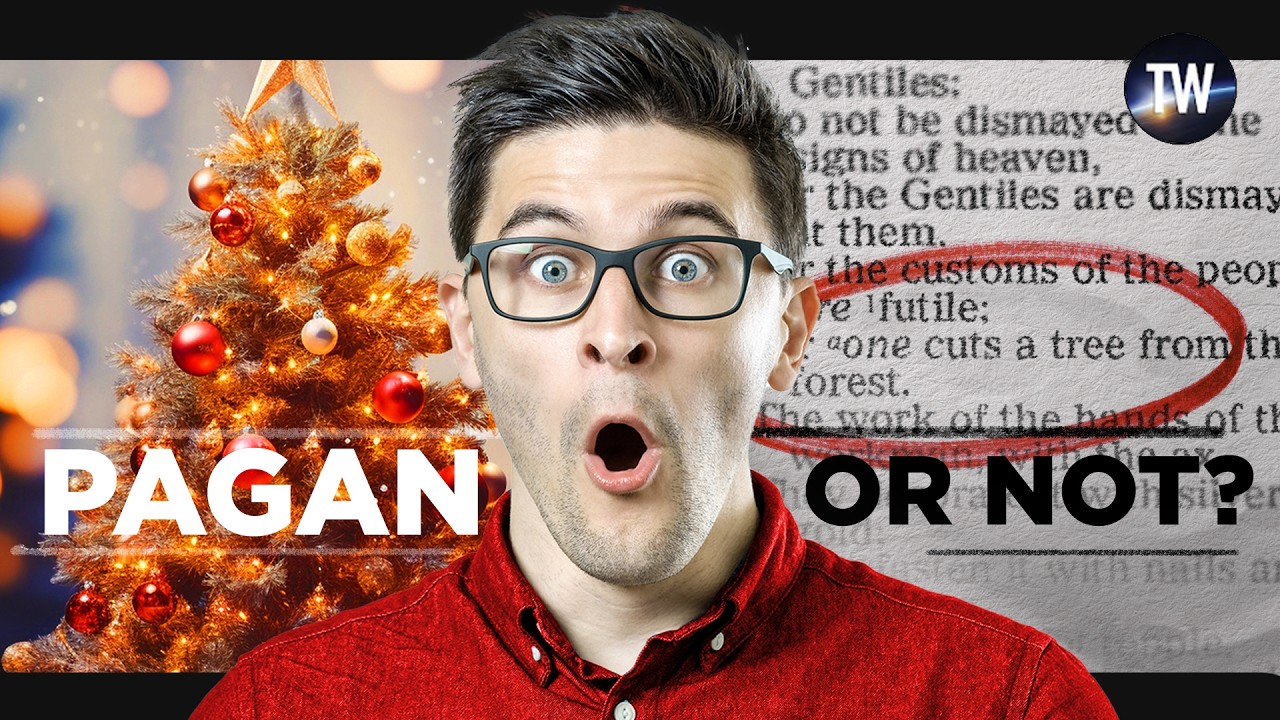
Is Christmas a Pagan Holiday?

Consider whether Christmas is un-Christian. If its origins adopted pagan customs and traditions, does that matter to God? Did Jesus say, "That’s okay—as long as you have good intentions"? Find out the Bible's answers in this episode of Tomorrow's World.

[The text below represents an edited transcript of this Tomorrow’s World program.]

Warm Traditions—But Where Did They Come From?

So many find so much joy in the sights and sounds of December—especially, the arrival of Christmas. Along with green and red decorations, signs and posters featuring a certain jolly, red-robed gentleman, and music you just can not get out of your head, comes the perennial question: Is Christmas a pagan holiday?

Most don’t even care about the answer, but for those who take biblical faith seriously, it is a serious question—and a question in need of an answer. And we will answer that question here on Tomorrow’s World, straight from the pages of your Bible, right now.

Childhood Memories Not Enough

Greetings, and welcome to Tomorrow’s World where we help you make sense of your world through the pages of the Bible! Today we’re going to tackle a question that seems to arise every December: “Is Christmas a pagan holiday?”

We’ll be examining the question honestly and openly, with a desire to orient our hearts and minds according to the advice of Jesus Christ as He taught us in Matthew 6 and verse 33 to 

“seek first the kingdom of God and His righteousness.”

And the question is important. How we choose to honor the Father and His Son matters. As we will see in the inspired words of Scripture, our practices have a profound effect on our relationship with God and on the character we are forming for His use and purposes.

For literally hundreds of thousands of people who consider themselves sincere Christians, the Christmas season is among the most sacred.

It is a time for calling to mind the birth of Jesus Christ, the promised Savior of the world. Many attend religious services in December, devoted to remembering popular narratives of the birth of Jesus, whose birth is ostensibly celebrated on Christmas Day itself.

And many of us have many pleasant memories associated with the Christmas season. In fact, celebrated as it is all over the world, it would be impossible for me to cover in a program such as this one ALL the many customs that individuals across the globe use to make the season special. So, permit me to focus a bit on those customs I, as an American, am more familiar with.

Our cities and even individual homes are often decorated with special reminders of the season—such as nativity scenes, branches or wreaths of holly, and Christmas trees decorated with tinsel of silver and gold. Many will have bought or personally crafted presents for their friends and family members, who will sometimes travel long distances to reunite for a few evenings, enjoy Christmas dinner together, and exchange presents and pleasantries. And many will seek to sneak a kiss from someone while catching them standing under mistletoe.

Of course, some children will be told the night before that their presents are being brought to them from the North Pole by Santa Claus, or “St. Nick,” as the adults wink to each other with a knowing eye.

In the morning, the children enjoy tearing into their presents to see what “Santa” brought them, and some families will head to religious services to hear a message related to the birth of Jesus—especially those who are concerned that commercialism is crowding out what they believe to be the real meaning of Christmas: The message that God sent His Son into the world on Christmas Day, born of the Virgin Mary to be the Savior of mankind.

There’s more that I could say, but hopefully this captures the popular spirit of the Christmas season. Yes, it is a stressful time for many. Sometimes family gatherings are a source of anxiety, and buying gifts for one another can seem a burdensome obligation—especially when the credit card bill begins to reveal the damage of our attempts at merrymaking.

However, I want to acknowledge that many joyous memories tend to be associated with Christmas and the Christmas season. I, myself, as a child and young man participated in these things. I remember the joys of receiving gifts and buying gifts for others. I don’t know if you can see it very well, but these old, blurry pictures are of me as a small child, enjoying his brand new Christmas presents.

You know, I remember seeing once, as a teenager, a small statue depicting Santa kneeling at the cradle of what was, ostensibly, the “Baby Jesus.” And I was moved—I felt at the time that it was a nice way of trying to point out what I thought was the more important aspect of the Christmas season. I’ve even played the part of Joseph once in a Christmas choral performance.

In other words, I’ve been there; I’ve done that.

I mention these things at the beginning of our discussion to highlight a crucial fact. As we tackle our question today—“Is Christmas a pagan holiday?”—we must keep in mind: None of this is relevant.

We may have years’ worth of positive memories associated with Christmas. We may love the music, the atmosphere, the traditions, and the focus on Jesus and the message of His birth.

Yet literally none of that is relevant to the question “Is Christmas a pagan holiday?”

After all, many religions have their joyous festivals, their times of family gathering, their fondly remembered songs, and traditions that warm the hearts of their adherents.

If we are going to address this question head on, we have to be willing to distance ourselves from our emotional responses and our happy memories and seek to answer the question from the perspective of facts, sound mindedness, and God’s revealed truth.

Actually, that is the easy part, as we’ll see. But what we do with that truth—that’s the hard part. Following Jesus Christ isn’t for cowards.

Seeking the Truth About Christmas—And Finding It

We want to understand the truth, and we want to seek that truth with an open mind—because truth is important.

John 4 relates a famous account of Jesus’ discussion with a Samaritan woman. She spoke to Him of the Samaritans’ traditions concerning worshiping the God of the Bible, which differed in many ways from the ways actually discussed in the Bible—even though their traditions were sincerely believed. In a sense, they worshipped God in spirit, meaning that their heart was in it, but they didn’t worship Him in truth, meaning that their sincere acts were based on falsehoods and half-truths. What did Jesus say? Did He say to her, “Well, that’s OK. As long as your intent is good, your worship is acceptable before God”?

No, He didn’t.

We read His response in John 4, beginning in verse 23:

“But the hour is coming, and now is, when the true worshipers will worship the Father in spirit and truth; for the Father is seeking such to worship Him. God is Spirit, and those who worship Him must worship in spirit and truth” (John 4:23–24).

That’s our goal today—to enable ourselves to understand how to worship God not just in spirit and intent, but in truth. Truth matters.

So, let’s look at the question with honest eyes: Is Christmas a pagan holiday?

If we’re answering this question based on the origins of the day, then the answer is very clearly “yes.” Because the origins of Christmas as a holiday—its timing, its traditions, its ancient practices—are very clearly pagan.

Now, what does it mean to be “pagan”? After all, the word is thrown about a bit carelessly these days—in fact, there is a growing movement of “neo-paganism” today, which we have covered in detail in Tomorrow’s World magazine—the very same magazine you will get a free subscription to when you request today’s free resource, Is Christmas Christian?

Let’s make sure we’re clear, then. As Merriam-Webster defines it, “pagan” means: “of, relating to, or having the characteristics of pagans”—which, we are told, are “follower[s] of a polytheistic religion (as in ancient Rome).”

Essentially paganism represents religions and cultic practices that have their origins outside of the religions traditionally associated with the patriarch Abraham: Christianity, Judaism, and Islam.

And if that is the definition of “pagan,” there is no doubt that the Christmas holiday and most of its traditions originated in pagan customs and worship traditions, many of which pre-date Christianity by centuries or even millennia.

Mistletoe is associated with Roman fertility rituals and Frigga, the Norse goddess of love and lust. The timing of Christmas corresponds not to Jesus’ birth—which was likely in the fall—but to the observance of the pagan Roman Saturnalia and sun worship. That is S-U-N. As the Encyclopedia Britannica notes:

In the 3rd century, the Roman Empire, which at the time had not adopted Christianity, celebrated the rebirth of the Unconquered Sun (Sol Invictus) on December 25th. This holiday not only marked the return of longer days after the winter solstice but also followed the popular Roman festival called the Saturnalia (during which people feasted and exchanged gifts). It was also the birthday of the Indo-European deity Mithra, a god of light and loyalty whose cult was at the time growing popular among Roman soldiers (“Why Is Christmas in December?” Britannica.com).

The Christmas tree, too, is a tradition with an ancient pagan precedent. In fact, we can see that precedent condemned in Scripture. Look at Jeremiah 10 and read it with your favorite Christmas tree tradition in mind:

“Thus says the LORD: ‘Do not learn the way of the Gentiles; Do not be dismayed at the signs of heaven, For the Gentiles are dismayed at them. For the customs of the peoples are futile; for one cuts a tree from the forest, the work of the hands of the workman, with the ax. They decorate it with silver and gold; they fasten it with nails and hammers so that it will not topple. They are upright, like a palm tree, and they cannot speak; they must be carried, because they cannot go by themselves. Do not be afraid of them, for they cannot do evil, nor can they do any good’” (Jeremiah 10:1–5).

The list of these ancient, pagan origins to various Christmas practices is long and clear. In fact, many popular, conservative authorities in modern Christianity readily admit that the pagan origin of many of the most common and honored Christmas traditions is a fact of history. Any historical resource of repute will confirm that fact.

For instance, consider this brief summary from the widely respected “Christian” resource Eerdmans’ Handbook to the History of Christianity:

The Christian church took over many pagan ideas and images. From sun-worship, for example, came the celebration of Christ’s birth on the twenty-fifth of December, the birthday of the Sun. Saturnalia, the Roman winter festival of 17–21 of December, provided the merriment, gift-giving and candles typical of later Christmas holidays…. Some pagan customs which were later Christianized, for example the use of candles, incense and garlands, were at first avoided by the church because they symbolized paganism (1977, pp. 131–132).

And in his famous work A Classical Dictionary, scholar John Lemprière summarized some of the ancient, pre-Christian practices of the pagan holiday Saturnalia:

The celebration was remarkable for the liberty which universally prevailed. The slaves were permitted to ridicule their masters… It was usual for friends to make presents one to another, all animosity ceased, no criminals were executed, schools were shut, war was never declared, but all was mirth, riot, and debauchery.

If we are honest, surely we will admit that all of this sounds very familiar.

Christmas and its traditions and customs are deeply rooted in pagan origins. In that sense, yes, Christmas is a pagan holiday.

But still, is it really? Many argue that pagan activities, celebrations, traditions, and symbols have—in a sense—been “baptized” by Christianity. The holly branches and its red berries once had pagan meanings, true, but maybe now they can be used to symbolize Christ’s crown of thorns and the red blood He shed for our sins.

Perhaps the real answer is that Christmas was a pagan holiday, but it is no longer. People can certainly be baptized and have their lives transformed. Can pagan worship practices?

Worshiping God HIS Way

Sinners can repent and change. Can’t ancient pagan practices or traditions be sort of “baptized” and kept? After all, those who keep Christmas don’t believe they are worshiping the sun god or Saturn or Mithras or Baal or Frigga or any of those pagan gods. They are often trying to sincerely worship God and Jesus as they understand Them. Do the pagan origins of Christmas really matter?

The answer is a simple one: If we desire to worship God and Jesus Christ in a manner that is pleasing to them, not just pleasing to us, then yes—they matter very much.

Again, the issue is not one of opinion or feelings. It is a matter of truth. And if we want to know the truth about how God the Father and Jesus Christ think about these things, then we must go to the Bible They have given us to help us learn to think like them. And when we do go to the Scriptures, the answer is absolutely clear.

For instance, speaking of pagan peoples and pagan traditions and customs, God commanded ancient Israel very clearly in Deuteronomy 12:30:

“[D]o not inquire after their gods, saying, ‘How did these nations serve their gods? I also will do likewise.’ You shall not worship the LORD your God in that way…” (Deuteronomy 12:30–31).

This is crucial: Notice, the Bible doesn’t just say, “Don’t worship idols” or “Don’t worship foreign gods.” It says: “You shall not worship the LORD your God in that way.” God makes it plain that He does not want His followers to worship Him in pagan ways. It doesn’t make a difference if we say we’re not worshiping Mithras or Saturn or the sun or whomever—God says plainly to us “do not worship me using pagan traditions.”

We saw a very similar command earlier when we read Jeremiah 10, in which God said clearly, “Do not learn the way of the Gentiles….” And here by “Gentiles,” God means those pagans outside the nation of Israel.

The commands in the Bible simply leave no room at all to conclude that God accepts worship using pagan customs—even if it is directed at Him.

Still, that’s the Old Testament, and some might argue that Jesus came to change all of that.

Yet, once again, if we go to His actual teachings—recorded for all time in our own Bibles—we find that this is not how He thinks at all about these things.

In fact, Jesus addresses this very scenario with His disciples and the Jewish leaders of His day. In Mark chapter 7, Jesus challenges the unbiblical traditions of the first-century Pharisees. They claimed to serve God with those traditions, but Jesus told them that their pious traditions actually violated God’s commands and were to be condemned. We can read His response in Mark 7, beginning in verse 6:

“He answered and said to them, ‘Well did Isaiah prophesy of you hypocrites, as it is written: “This people honors Me with their lips, but their heart is far from Me. And in vain they worship Me, teaching as doctrines the commandments of men.” For LAYING ASIDE THE COMMANDMENT OF GOD, you HOLD THE TRADITION OF MEN… All too well you REJECT THE COMMANDMENT OF GOD, that you may KEEP YOUR TRADITION’” (Mark 7:6–9).

To observe Christmas, you would have to lay aside the commandment of God, who says plainly He does not want to be worshipped using heathen customs, so that you could hold on to your tradition. You would have to reject that commandment of God to keep that tradition. And Jesus Christ, the Son of God and the very founder of Christianity condemns doing that in no uncertain terms.

I can’t speak for you, but the idea of Jesus Christ, the Son of God, calling me a hypocrite sends chills down my spine. Almost 2,000 years ago, Jesus condemned those who would dare to call Him “Lord” while ignoring His commands, asking,

“Why do you call Me ‘Lord, Lord,’ and do not do the things which I say?” (Luke 6:46).

The evidence is clear:

  • Christmas is a pagan holiday.
  • God does not want to be worshiped using pagan traditions.
  • And Jesus Christ condemns as hypocrites those who ignore God’s commands to keep other traditions.

So, with our original question answered, the next question is clear: What do we do now?

A Difficult Choice—Choosing Christ Over Christmas

We have only a brief time left on today’s program, but let me take a moment to say that—for those whose hearts are willing to follow God wherever He and His word lead us, following His lead and obeying His commands never leads us to a worse place. Only a better place.

For instance, I know of thousands of individuals, all over the world, who have left Christmas behind and have embraced, instead, the Holy Days actually revealed in the Bible—designed by God and recorded in His word as days set apart by Him for worship, praise, and instruction.

Those individuals—the members and attendees of the Living Church of God, who sponsor the Tomorrow’s World program—would say to you as plainly as I can now from here in this studio: As Christians and followers of Jesus Christ, they would not trade observing the biblical Holy Days for keeping Christmas for all the money in the world.

Moving past Christmas does not have to mean giving up joy and meaning and warmth and fellowship. Quite the opposite. When one turns away from deceptively attractive traditions and customs that fundamentally contradict the Bible to follow Jesus Christ—the real Jesus Christ—we have the opportunity to discover exactly what Jesus meant when He spoke to the woman by the well, almost 2,000 years ago, and spoke of worshiping God not only in spirit, but in spirit and in truth.

Thank you for watching our program, and we hope that it was helpful. All of us here at Tomorrow’s World produce these videos; people in front of the camera, behind the camera, in the control room, the fellow standing right next to me holding a light. We all work hard to help you understand your world through the pages of the Bible. If you like these videos, please click on the subscribe button as well as the little bell to be notified whenever we make more, and if you want today’s offer, just go down to the description and you’ll find the link.


Letters to 7 Churches of Revelation Explained

Why did Jesus Christ have the Apostle John include seven letters to seven different churches in the book of Revelation? These letters—linked to end-time prophecies in the Bible—reveal warnings, wisdom, and rewards to God's true servants through different eras. Watch this Tomorrow's World episode for more details and in-depth Bible study.

[The text below represents an edited transcript of this Tomorrow’s World program.]

From Mystery to Revelation?

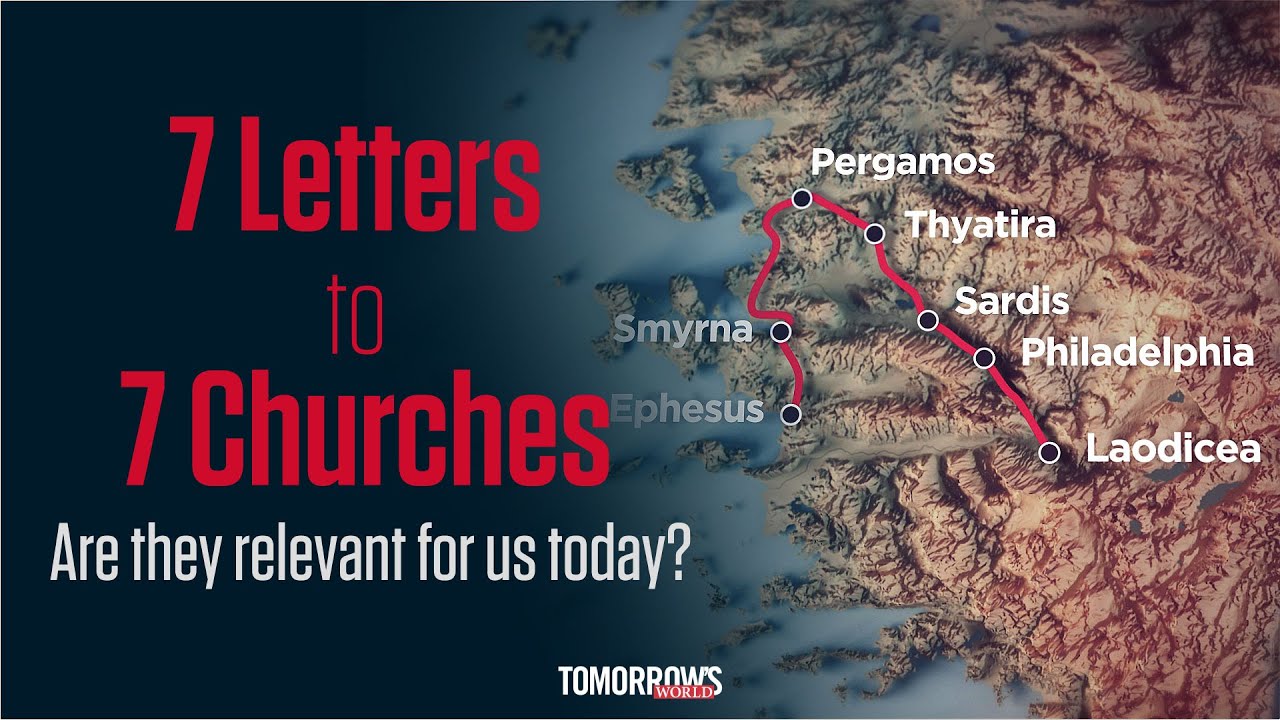
The biblical book of Revelation has puzzled millions. Many consider it a sealed book that is impossible to understand. Others have read into it their own differing and conflicting interpretations. Among the many mysteries found in this remarkable book, are seven letters to seven church congregations in Asia Minor.

Why were these First Century congregations chosen among all the others extant at that time? Why were their messages a part of Revelation? And do they have relevance for us today? These are a few of the many questions people have regarding the letters to the seven churches, recorded in the second and third chapters of Revelation.

These messages have far more relevance for you than you might imagine, and you need to know what that is. So stay with me as I’ll answer these questions from the pages of this very book.

The Key to Understanding—A Gift from God?

A warm welcome to all of you from those of us here at Tomorrow’s World. Today I’m going to explain a great mystery found in that difficult to understand last book of the Bible—Revelation. Scholars have puzzled over the meaning of seven letters written to seven Asia Minor congregations, as recorded in chapters two and three, but you can understand as you will see on today’s program.

The book of Revelation is filled with symbolism: stars, candlesticks, multi-headed beasts with horns, trumpets, and much more. The number seven is significant as we read of seven messengers, seven churches, seven stars, seven golden candlesticks, seven trumpets, and seven last plagues. But there’s no end to the number of interpretations people have about this puzzling book, so how can you understand? And how can you know that your understanding is correct?

The answers to these critical questions are found elsewhere in this collection of writings that we refer to as the Bible. Consider Matthew 11:25;

“At that time Jesus answered and said, ‘I thank You, Father, Lord of heaven and earth, that You have hidden these things from the wise and prudent and have revealed them to babes’” (Matthew 11:25).

And, as the Apostle Paul wrote in 1 Corinthians 1,

“For it is written: ‘I WILL DESTROY THE WISDOM OF THE WISE, AND BRING TO NOTHING THE UNDERSTANDING OF THE PRUDENT.’ Where is the wise? Where is the scribe? Where is the disputer of this age? Has not God made foolish the wisdom of this world?” (1 Corinthians 1:19–20).

Paul then goes on to explain, beginning in verse 26,

“For you see your calling, brethren, that not many wise according to the flesh, not many mighty, not many noble, are called. But God has chosen the foolish things of the world to put to shame the wise…that no flesh should glory in His presence” (1 Corinthians 1:26–27, 29).

So my dear friends, according to the Bible, it’s not a matter of human intellect, but of God choosing to whom He will reveal His message. This is further shown in chapter 2 beginning in verse 7,

“But we speak the wisdom of God in a mystery, the hidden wisdom which God ordained before the ages for our glory, which none of the rulers of this age knew; for had they known, they would not have crucified the Lord of glory. But as it is written: ‘EYE HAS NOT SEEN, NOR EAR HEARD, NOR HAVE ENTERED INTO THE HEART OF MAN THE THINGS WHICH GOD HAS PREPARED FOR THOSE WHO LOVE HIM’” (1 Corinthians 2:7–9).

If this is true, what hope do we have? The answer is found in the next verse:

“But God has revealed them to us through His Spirit” (1 Corinthians 2:10).

If we are to accurately understand the Bible, including the Book of Revelation, it must be revealed to us by God through the power of His spirit. Now, many people think they have the spirit of God, but do they? Do you? How can you know? Will we believe the answer found in the Bible? And if so, turn to Acts 5:32:

“And we are His witnesses to these things, and so also is the Holy Spirit whom God has given to those who obey Him.”

Professor William Ramsay wrote what is considered by many to be the definitive book on the letters to the seven churches. There is no doubt that he was a man of great intellect and knowledge, yet it’s evident that he failed to understand the fundamental reason these letters are in Revelation.

From God, Through Christ, to the Saints

Some people often wrongly assume that Bible scholars believe that the Bible is the word of God. But that is not the case for all. Human reason enters the picture and many begin to pick and choose what they believe to be true.

It is evident from reading The Seven Letters to the Seven Churches of Asia by Professor Ramsay, that he saw the book of Revelation as the work of the Apostle John. This is revealed in his opening sentence in chapter IV where he refers to the book as:

“[T]he Revelation of St. John” (p. 35).

Now, how is it that someone of his intellect could miss the truth revealed in the opening words of the book he is trying to explain? To be fair, he’s not alone, as even some who translated the Bible also missed the point that it is not the revelation of John but the revelation of Jesus Christ. Among them are the translators of the vaunted King James Version, [who] title the book:

The Revelation of St. John the Divine

The New King James Version has it corrected with the title:

The Revelation [not of John, but] of Jesus Christ

Now this is no small point as it reveals the mindset of many translators and scholars. Professor Ramsay clearly sees the book of Revelation as the work of a man, rather than inspired from God. Here’s what I mean with this quote:

In this work, Jewish in origin and general plan…

[T]here is inserted this episode of the Seven Letters….

There must have been therefore some reason which seemed to the author to demand imperatively the insertion of such an episode in a work of diverse character (p. 35).

Ramsay then goes on to explain that these letters were an afterthought, since other than the historical narratives of the Gospels and Acts, the remainder of the New Testament is made up of letters. Therefore:

In the subsequent development of St. John’s thought it is plain that he had recognized the inadequacy and insufficiency of the fashionable Jewish literary forms. It seems highly probable that the perception of that fact came to him during the composition of the Revelation, and that the Seven Letters, though placed near the beginning and fitted carefully into that position, were the last part of the work to be conceived (p. 36).

But far from an afterthought, the letters to the seven churches are central to the theme of the book, which is the Day of the Lord, which culminates in the return of Jesus Christ.

The opening words of Revelation are all important as they tell us where the message comes from, who opens our understanding to it, and who recorded it, and for whom it was recorded. If you have a Bible, I urge you to get it out and follow along. As we often say on this program, don’t believe us just because we say it. Believe us because you read it in your own Bible. So if you have your Bible, turn to the last book, the book of Revelation, chapter one, where we’ll examine the first two verses. There, we read the following:

“The Revelation of Jesus Christ…”

So Jesus, not John, is the one who opens our understanding to the message. He is the one who reveals it to us. But what is the source of that message?

“…which God gave Him…”

The message comes from God the Father and is revealed by Jesus Christ. But who is the message to go to? Is it the world in general? Or is it more limited than that?

“…to show His servants…”

Clearly, the message is for the servants of God. This is why the message is not generally understood, as we shall see. Notice next that it involves

“…things which must shortly take place.”

A careful reading of the book shows that much was written for the times far into the future, but it also records events [that] were soon to take place. We next find that this revealed message was to go to John.

“And He sent and signified it by His angel to His servant John….”

This is all in verse one, chapter one. The next verse explains that John was given three things to record. He was to take

“[T]The word of God…”

“…the testimony of Jesus Christ…”

and

“…all things that he saw.”

to the servants of God, but how does God define those servants in the book? This is the crucial question that is almost universally misunderstood. Yet, the answer is right in front of our eyes.

The True History of the Church of God—Revealed

But first, let’s review what we learned from Revelation 1:1–2. The message of the Revelation originates with God but Jesus Christ must open it to our understanding

The message of the entire book was to be given to the servants of God. And John was to record the word of God, the testimony of Jesus Christ, and all things that he saw.

So who are the servants of God? This may sound like a simple question, but the book of Revelation reveals a surprising answer. John was instructed to take the message to these servants and that is exactly what he did, as recorded immediately after the prologue, Revelation 1:4:

John, to the seven churches which are in Asia.

The seven churches in Asia Minor are synonymous with the servants of God. This is further seen in verse 11where the churches are mentioned by name;

What you see [That is all that he saw, not just the letters, but the whole of Revelation.] write in a book and send it to the seven churches which are in Asia: to Ephesus, to Smyrna, to Pergamos, to Thyatira, to Sardis, to Philadelphia, and to Laodicea (Revelation 1:11).

We next read in verses 12–16 that John recorded a vision of the glorified Christ walking in the midst of seven golden candlesticks with seven stars in His hands. What can these—the candlesticks and the stars—possibly mean? The answer is found in verse 20:

The mystery of the seven stars which you saw in My right hand, and the seven golden lampstands: The seven stars are the angels of the seven churches, and the seven lampstands which you saw are the seven churches (Revelation 1:20).

There were other church congregations in Asia Minor at the time, but there was something special about these seven. For one thing, they were all found on a mail route where the book would be taken from one church to another. Also, Christ is seen walking in the midst of them as they are represented by the candlesticks. Is it not clear by now that the seven churches of Asia Minor represent the servants of God down through time? This is confirmed at the end of the book where it uses “servants” and “the churches” interchangeably:

Then he said to me, “These words are faithful and true.” And the Lord God of the holy prophets sent His angel to show [And notice this] His servants the things which must shortly take place.

That’s Revelation 22:6. Now notice verse 16:

I, Jesus, have sent My angel to testify to you these things in the churches.

Far from being an afterthought, the messages to the seven churches are central to the theme of the whole book, which is the Day of the Lord, which culminates in the return of Jesus Christ.

The construction of Revelation is quite amazing when you take a closer look at it. The servants of God are synonymous with the seven churches, so:

Chapters 2 and 3: Tell us WHO God’s servants are down through
history.

Chapter 4: Describes the throne of God—the source of the
message.

Chapter 5: Shows the message on a sealed scroll is opened by the Lamb of God.

But getting back to the letters themselves there are three ways the letters apply.

#1: The letters describe seven attitudes (or spiritual conditions) found in seven real congregations.

The messages are a mix of positive reinforcement as well as warnings and calls to repent from the dominant attitudes found in each Church. But each of us are individuals and the general warning goes beyond a single congregation to all of God’s servants. So this is why we find this admonition at the end of each letter:

#2: He who has an ear, let him hear what the Spirit says to the
churches (Revelation 2:7).

The messages, while most specifically to one congregation, also contain wisdom and warnings for all others. Then there is a third application for these letters, one that has intrigued scholars and students for centuries.

#3: The churches represent stages, or eras, through which true Christianity travels through the centuries.

That there are historical stages or eras, is seen when comparing the letter to the second Church, Smyrna, and the sixth church, Philadelphia. Let’s first look at Smyrna—Revelation 2:10:

“Do not fear any of those things which you are about to suffer. Indeed, the devil is about to throw some of you into prison, that you may be tested, and you will have tribulation ten days. Be faithful until death, and I will give you the crown of life.”

Many Bible students are familiar with the day for a year principle found in the Bible. History reveals that there was a time of severe tribulation just as the scripture predicted. Notice the day for a year principle as it applied to ten years of persecution explained in Adam Clarke’s Commentary:

As the days in this book are what is commonly called prophetic days, each answering to a year, the ten years of tribulation may denote “ten years of persecution”; and this was precisely the duration of the persecution under Diocletian, during which all the Asiatic churches were grievously afflicted. (Adam Clarke’s Commentary [on Revelation 2:10], 1967, p. 1335).

That took place between 303 and 313 AD—over 200 years after John recorded these messages. Further, that persecution came on all the churches of Asia Minor, not just Smyrna. This message then cannot apply only to a single congregation during John’s lifetime, but also to an era in the Christian Church.

Now let’s look at the sixth church—Philadelphia. Here we find a clear reference to the time of the end as found in Revelation 3:10:

“Because you have kept My command to persevere, I also will keep you from the hour of trial which shall come upon the whole world, to test those who dwell on the earth.”

So the second church—Smyrna—saw a time of persecution, during the fourth century A.D. and the sixth church—Philadelphia—is in existence at the end of the age when there will be a time of trial upon the whole world. But there’s a problem. Where the evidence clearly shows a progression down through time, not all pieces of the puzzle appear to fit. So what might we be missing?

Eminent scholars are unable to connect the dots of the Christian church through all seven of the Churches of Asia Minor. Why?

A Warning for Believers in Our Time

We earlier referred to the introduction of this mysterious book in Revelation 1:1:

The Revelation of Jesus Christ, which God gave Him to show His servants—

things which must shortly take place. And He sent and signified it by His angel to His servant John (Revelation 1:1).

The next few chapters give further clarification:

Chapter 4: Gives us the source of the message—God the Father on His throne.

Chapter 5: The message is found on a scroll with seven seals that
only the Lamb of God can open.

So we have the source and the one who reveals the message. But what about the servants of God that the message was to go to? That’s found in chapters 2 and 3.

Chapters 2–3: The servants of God down through the ages.

Now, why is this knowledge so little understood? The answer can be discerned from two other chapters in the book. Chapter 12 describes the Church of God as a small persecuted Church that had to flee from the large metropolitan cities of the Roman Empire through much of the last 2,000 years. Because this chapter begins with the physical nation of Israel, some assume it has nothing to do with the Church, but that it refers to the Church is clearly seen from the progression of the chapter from the birth, death, and resurrection of Christ all the way to the end.

We learn from verse 9 that Satan the Devil deceives the whole world. How can that be if the largest religion in the world is professing Christianity? We then learn that Satan will try once again to knock God off His throne, but he’ll be cast back down to this earth where he immediately goes out to destroy and to persecute the Church.

“Now when the dragon saw that he had been cast to the earth, he persecuted the woman who gave birth to the male Child” (Revelation 12:13).

The woman, that is the Church, must then flee into the wilderness to be protected from the serpent who tries to destroy her, but not all members flee.

“So the serpent spewed water out of his mouth like a flood after the woman, that he might cause her to be carried away by the flood. But the earth helped the woman, and the earth opened its mouth and swallowed up the flood which the dragon had spewed out of his mouth” (Revelation 12:15–16).

Notice carefully. This is not talking about physical Israel, but to true believers in Jesus the Messiah.

“And the dragon was enraged with the woman, and he went to make war with the rest of her offspring, who keep the commandments of God and have the testimony of Jesus Christ” (Revelation 12:17).

Chapters 2, 3, and 12 refer to the true Church of God, but chapter 17 speaks of another woman, a fallen woman—an apostate church. Some think they know who that is. She is called a mother of apostate women. Here it is in Revelation 17:5:

And on her forehead a name was written: MYSTERY, BABYLON THE GREAT, THE MOTHER OF HARLOTS AND OF THE ABOMINATIONS OF THE EARTH (Revelation 17:5).

Now here is one of the most important questions you’ll ever be asked: If you can identify the “Mother of Harlots,” who are those harlot daughter churches? The reason so few can match the progress of the Church as shown in the seven letters to the seven churches of Asia is that they are looking for the Church in the wrong place.

But if one looks at the right place, there is a serious message for us. While the sixth era of the Church zealously proclaims the true gospel around the world and warns the world where it is headed, the very last era is marked by a lukewarm spirit, thinking they are okay. As a result, Christ will spew them out of His mouth into the great tribulation to wake them up. Now, I’ll leave you with one last question. Which attitude best describes you, my dear friends? Think about it.

Thank you for watching! To learn more about what happened to the church that Jesus Christ built, order your free copy of God’s Church Through the Ages by clicking the link in the description. And remember to subscribe to our channel so you can continue to learn the truth as given in the Bible. See you next time!


A Sabbath Rest for an Anxious World

God knows you need a break—every week—from the work and stress of this fast-paced world. That's why He commanded the Sabbath rest from the very beginning. Find out how the Sabbath is much more than just a mandatory day off—it pictures the hope of a better, peaceful world coming soon.

[The text below represents an edited transcript of this Tomorrow’s World program.]

Suffering Without Rest

Do you need a break? Are you feeling stressed, worn out, and overwhelmed? Let’s face it; we’re living in a world filled with ever-increasing demands on our time and attention. Children need to be fed, clothes washed, and bills paid. Commuting is stressful. And there’s on-the-job pressure, deadlines, and conflict. Many are working harder than ever, only to find it more difficult to make ends meet. And when they try to unwind, escapism often leads to addictions, anxiety, and more conflict. Our relationships suffer. Our health suffers. Real solutions seem beyond our reach.

If you’re suffering from the anxiety of living in the modern world, you’re not alone. According to the Anxiety and Depression Association of America, 18.1% of the population 18 or older suffers from some type of anxiety disorder every year. That’s 40 million adults (“Facts and Statistics,” ADAA.org, accessed June 29, 2021).

But it’s not just in America. According to the “Our World In Data” website, “Globally an estimated 284 million people experienced an anxiety disorder in 2017” (“Mental Health,” OurWorldInData.org, April, 2018).

Clearly, many of us are feeling overwhelmed.

Is this how our Creator designed our life to be? If we’re anxious and depressed, how can we get out of that discouraging and even dangerous cycle?

There is an answer. And people around the world are discovering it. Would you like to know a secret that can turn your life around?

There is a way to find peace in a troubled world. And today on Tomorrow’s World, we’re going to dive into that topic, to find the source of that peace.

Do You Need Rest Days?

Welcome to Tomorrow’s World, where we help you make sense of your world through the pages of the Bible. Many of us today are exhausted and overwhelmed. We need a break. But where can you find the real solution to the frenetic lifestyle of our world? Let’s talk about that today.

In a recent online article, speaker and writer Jim Burns asked the following questions:

Have you stopped enjoying life because you are too busy?

Are you exhausted most of the time?

Have you stopped developing new relationships?

Are your children showing signs of stress?

Mr. Burns then added, “If you answered ‘yes’ to most of these questions, you are experiencing overload” (“Are You Experiencing the Overload Syndrome?” HomeWord.com, June 21, 2021).

Does that describe your life right now? It does for many of us. But more and more people are turning to what might seem to be an unlikely solution. They are turning to the idea of a “sabbath.”

Do an Internet search and you’ll find out what I mean. Type in “Sabbath rest” or “Sabbath lifestyle” and you’ll discover pages of articles with advice for gaining peace and perspective, through this idea of “sabbath.” Here are some of the article titles I found in one Internet search:

“The gift of sabbath rest in an anxious age”

“How to Unleash the Power of Sabbath-Rest in your Life”

“Creating a Sabbath Lifestyle”

“How to Create a Sabbath-Simplicity Lifestyle”

And…

“The Case for the Sabbath, Even if You’re Not Religious”

What all these articles have in common are a deep yearning to pause from the busyness of the modern world. More and more people are finding this idea of a sabbath intriguing.

Once again, writer and speaker Jim Burns puts it this way:

“In the beautiful Hebrew language, the word for rest is sabbath. Sabbath is more of a lifestyle choice than taking a nap or a day off to get some things done around the house. Sabbath living is the constant choice to live with margin in our lives. Margin is the space between our load and our limits. Margin is our mental, emotional, and spiritual strength. It’s our reserves, our breathing room, our energy, our vitality. Unfortunately, few of us have much margin in our lives” (“Are You Experiencing the Overload Syndrome?” HomeWord.com, June 21, 2021).

This concept of “margin” is powerful, and very important. We do need “margin” in our lives. It’s the so-called white space on the edge of the pages of our lives. It means that not every moment is busy and accounted for.

So do you need a “sabbath” rest in your life? Do you need to cultivate a “sabbath lifestyle”? I think we can all see the benefit of down-shifting. We need time to slow down, instead of always working hard and playing hard. Wouldn’t it be nice to power-down occasionally, to a lower and slower gear?

One of the prime culprits of our stressed-out society is the pervasiveness of tech devices. Our devices can be helpful, but they can also become the source of great stress. A group back in 2003 started something called the “sabbath project.” One of the things they do each year is determine a “National Day of Unplugging.” The idea is, one of the things we must do is occasionally take a break from technology. They recommend having a “tech sabbath,” so to speak. And it’s true—we’ve got to unplug, from time to time. It’s good for our minds, our relationships, and our health. Consider the testimony of one family, an article that appeared on the Wired.com website:

“My family and I started going completely screen-free one day a week for what we called our Technology Shabbat. We read, journaled, cooked, had friends over, went for bike rides, played music, made art, and sometimes we just did nothing. A decade later, we’re still doing it every week… and it’s still our favorite day. It’s made the whole family happier and more balanced” (“Everything You Need to Enjoy One Tech-Free Day a Week,” Wired.com, October 10, 2019).

If we don’t have control of our devices, we’re headed for trouble. And this affects everyone. Here’s how one woman described her experience fighting against the tyranny of endless tasks, and how she began to find solutions:

“So many of us are tired. Between meeting the needs of those around us, running our homes, working, or waking up with children throughout the night, we find ourselves depleted mentally, physically and emotionally. This exhaustion leads us to turn our focus from the things that matter most to survival. If that’s you, God has prepared a very practical balm for your weariness. It’s called Sabbath…. If we want to experience all the fulness of living and being that God has for us, I believe we need an element of Sabbath rest in our week! Whether mothers, homemakers or working women—Sabbath was created to meet a deep-seated need in us” (“How to Unleash the Power of Sabbath Rest in Your Life as a Homemaker,” EmbracingASimplerLife.com, Accessed June 29, 2021).

We all need to see the value of resting, of having a sort of pause in our lives. We need a regular, weekly time to pause, just to keep a balanced mental perspective.

But you might say, “that all sounds well and good, but I’m too busy to stop. I have too much to do. This sabbath thing won’t work for me.” Think about that. It’s when you are overwhelmed when you need this help the most. And if you don’t get control of your life now, when will you?

What is the Original Day of Sabbath?

We all need to find some space in our lives. And people all over the world are discovering the benefits from having some downtime every week. Maybe you’ve taken this step and are experiencing new-found peace in your life.

The idea of a sabbath didn’t just appear out of thin air. It comes from the Hebrew word “shabbat,” in the Hebrew Scriptures, in our Bible. It means “to stop, pause, or cease.” It’s a rest from activity and labor.

If you have a Bible, turn with me to the very first chapter of Genesis. In Genesis 1, we find the account of God creating all the living creatures on earth, including the first man and woman. And then in Genesis 2:1, it says,

“Thus the heavens and the earth, and all the host of them, were finished. And on the seventh day God ended His work which He had done, and He rested on the seventh day from all His work which He had done. Then God blessed the seventh day and sanctified it, because in it He rested from all His work which God had created and made” (Genesis 2:1–3).

Where did this idea of taking some time to rest after a period of work come from? Straight from the Creator God. He modeled that behavior right here in the beginning of the Bible. It happened at the dawn of civilization. In other words, the idea of “sabbath” has been around a long time.

But what about the word “sabbath”? The first time that word appears in the Bible is Exodus 20:8:

“Remember the Sabbath day, to keep it holy.”

“Sabbath” just means “cessation” or “rest.” So, “remember the sabbath day” just means “remember the rest day.” This is something God wrote into the Ten Commandments. Let’s read the rest of it, back in Exodus 20:

Six days you shall labor and do all your work, but the seventh day is the Sabbath of the Lord your God. In it you shall do no work…. For in six days the Lord made the heavens and the earth, the sea, and all that is in them, and rested the seventh day. Therefore the Lord blessed the Sabbath day and hallowed it” (Exodus 20:8–11).

So, God actually created a rest day at the beginning of Creation. He rested and His intention was that His children—that’s us—would also benefit from a weekly rest our whole lives. God wants us to work hard. And when the work is done, He wants us to take a well-deserved rest.

“Sabbath” is not just a vague idea. It springs from a specific event in history. It was created by God, at the beginning. And it applies to a specific day each week. We all need to be restored and rejuvenated. But why don’t we give ourselves permission to take a break?

Consider what one Internet author said about this question:

For some reason, though, we naturally interpret the Bible’s statements about Sabbath rest as more of a suggestion than a divine command. We think, “That’s a great idea, but I’m too busy.” This is true. I am busy. You are busy. Our culture is busy and it’s only speeding up… Our gas tanks are always on empty, and when we stop we are hardly ever able to put more than a few dollars in the tank. We are never full (“Ritchie: The gift of Sabbath rest in an anxious age,” Amarillo.com, June 2, 2016).

Think about that. We’re too busy to stop. We’re forever locked into a loop of exhaustion, never catching up. Are you tired of that cycle?

The writer continues:

But could it be that our lack of observance of the Sabbath is contributing to our weariness? Could our lack of Sabbath rest and worship potentially explain why we are an exhausted people? Could it be the ways we try to find rest never restore us because we were created to find our rest in God?… What better gift could we possibly receive than this Sabbath rest in our anxious age?

How many of us go from one frenetic task to another, until we collapse? Why don’t we just rest on a regular basis, on the schedule God set for us?

All too often, we don’t stop until we have to stop. And maybe that’s why God tells us, “This is mandatory—you have to take a break each week.” Because there’s always another load of wash to do, another space to clean, another report to submit. 

Have you noticed, all too often, we only do things that are good for us when we have to? Maybe we don’t exercise or take care of our health, until something causes us pain. We notice the effects of neglecting our health, and we decide, “Okay, I have to do this because it’s good for me.”

So, what about you? Wouldn’t it make sense for God to say, “Look, this is so important for you. I want you to have a healthy mental state. So, I’m telling you, you must take a break at the end of every week.”

The Sabbath Was Made for Our Good!

God in His mercy created and even scheduled that time for us. And since we often don’t do things unless we absolutely have to, He made it mandatory. And that’s good for us.

In the remaining time of this program, we’ll find there’s an even greater picture in regard to a sabbath rest.

Turn in your Bible to Colossians 2:16. In this verse, Paul wrote the following:

“So let no one judge you in food or in drink, or regarding a festival or a new moon or sabbaths, which are a shadow of things to come” (Colossians 2:16).

There’s much misunderstanding about this verse. Let’s just focus on one phrase. That is, “Sabbaths, which are a shadow of things to come.”

What the Apostle Paul is saying is that as good as sabbaths are for giving us a weekly rest now, they’re also symbolic of something greater to come. Many students of the Bible recognize there have been roughly 6,000 years of human history, and that the Bible predicts a coming 1,000-year millennial reign of Jesus Christ. If we apply the “day for a year” principle found in 2 Peter 3:8, the weekly seventh-day sabbath is a type of the coming millennium. In that sense, the seventh millennium corresponds to the seventh day of the week.

We find Scriptures that support this idea elsewhere in the New Testament. Let’s look at Hebrews 4:1:

“Therefore, since a promise remains of entering His rest, let us fear lest any of you seem to have come short of it.”

He’s saying, the Israelites did not enter the Promised Land because of their disobedience. But we can enter God’s Kingdom, at Christ’s Second Coming, if we’re faithful and obedient.

Going on,

“For He has spoken in a certain place of the seventh day in this way: ‘And God rested on the seventh day from all His works’” (Hebrews 4:4).

He’s discussing the seventh-day sabbath established at the Creation when God rested.

“Since, then, it remains for some to enter His rest, and since those who formerly heard the good news did not enter because of their disobedience, God again designated a certain day as ‘Today,’ when a long time later He spoke through David as was just stated: ‘Today, if you hear His voice, do not harden your hearts. For if Joshua had given them rest, God would not have spoken later about another day. There remains, then, a Sabbath rest for the people of God’” (Hebrews 4:6–9, Berean Study Bible).

What does this mean? If we’re the people of God, the sabbath rest means something very important. It means we observe that weekly rest in our lives NOW. The Greek word here translated “sabbath” is “sabbatizmos.” It comes directly from the Hebrew word “shabbat,” which means the weekly Sabbath. Christians are to observe the weekly sabbath.

But it goes far beyond that. If the Sabbaths are a shadow of things to come, every seventh-day that comes around in the calendar is also a prophecy of a coming millennial Sabbath. That’s when God’s Kingdom will reign on this earth, at Christ’s second coming.

Notice what the writer warns us to do:

“For whoever enters God’s rest also rests from his own work, just as God did from His. Let us, therefore, make every effort to enter that rest, so that no one will fall by following the same pattern of disobedience” (Hebrews 4:10–11, Berean Study Bible).

We’re reminded to live our lives in such a way that we may enter the rest of God’s Kingdom, at Christ’s return.

In other words, there’s hope for this tired and worn-out world. There’s a new world coming. And that new world, in contrast to this age, will be peaceful and full of hope. The violence and tension of this age will be no more. Notice how that coming world is described in Isaiah 32:16–18:

“Then justice will dwell in the wilderness, and righteousness remain in the fruitful field. The work of righteousness will be peace, And the effect of righteousness, quietness and assurance forever. My people will dwell in a peaceful habitation, in secure dwellings, and in quiet resting places….”

The weekly seventh-day sabbath is symbolic of a coming millennial age of peace and prosperity.

There’s much more to say about the Sabbath. You can find many articles and programs about the Sabbath on our Tomorrow’s World website. What we’re focusing on today is the necessity of a break for people in this world. There is a better way. But in truth, we need not just a general idea of a pause in our life; we need the regular and mandatory rest designed by our Creator.

The True Purpose of the Sabbath—In This Life and Beyond

When Jesus was on this earth, He taught His disciples a lifestyle of peace and tranquility that did not depend on outside circumstances. Notice what He said in Matthew 11:28:

“Come to Me, all you who labor and are heavy laden, and I will give you rest. Take My yoke upon you and learn from Me, for I am gentle and lowly in heart, and you will find rest for your souls. For My yoke is easy and My burden is light” (Matthew 11:28–30).

If you long for relief from the burdens of life, learn from Jesus Christ. He has the answers. He’ll give you peace, if you’re obedient to His will and respond to His love.

In this world, there are many things to worry about. But Jesus tells us in Matthew 6:25:

“Therefore I say to you, do not worry about your life, what you will eat or what you will drink; nor about your body, what you will put on. Is not life more than food and the body more than clothing? Look at the birds of the air, for they neither sow nor reap nor gather into barns; yet your heavenly Father feeds them. Are you not of more value than they? Which of you by worrying can add one cubit to his stature?” (Matthew 6:25–27).

He knows we’re working hard, because we have to. We’ve got to feed ourselves. We’ve got to take care of our family. And He says, “I’ll help you, if you look to Me.”

And notice what else He says, in Matthew 6:33–34:

“But seek first the kingdom of God and His righteousness, and all these things shall be added to you. Therefore do not worry about tomorrow, for tomorrow will worry about its own things. Sufficient for the day is its own trouble.”

We can have peace of mind. God knows the anxiety this world produces. But He’s offering you a weekly sabbath. It’s a total break from work for a 24-hour period, week in and week out. Doesn’t that sound nice? Just imagine if every Friday at sundown you could leave your work behind. You could spend extra time with your family. You could read the Bible and meditate on God’s plan for you. You could go to church the next day with others of like mind, and fellowship with them. You could spend the remaining hours of the Sabbath not mowing the lawn or doing chores, but going for walks and reflecting on what you’ve learned.

That’s the way God designed the Sabbath. Not the way the Pharisees kept it, making it a burden. Jesus corrected the Pharisees on how they were keeping the Sabbath, as we see in Mark 2:23:

“Now it happened that He went through the grainfields on the Sabbath; and as they went His disciples began to pluck the heads of grain. And the Pharisees said to Him, ‘Look, why do they do what is not lawful on the Sabbath?’” (Mark 2:23–24).

The Pharisees were trying to accuse Jesus and his disciples on how they were keeping the sabbath, but Jesus turned it around and explained the true perspective about the sabbath in verse 25.

“But He said to them, ‘Have you never read what David did when he was in need and hungry, he and those with him: how he went into the house of God in the days of Abiathar the high priest, and ate the showbread, which is not lawful to eat, except for the priests, and also gave some to those who were with him?’ And He said to them, ‘The Sabbath was made for man, and not man for the Sabbath. Therefore the Son of Man is also Lord of the Sabbath’” (Mark 2:25–28).

The Pharisees had accused Jesus Christ and his disciples of keeping the Sabbath in the wrong way, but Jesus described the true perspective about the Sabbath. He is the Lord of the Sabbath, He created the Sabbath. He designed the Sabbath as a 24-hour period to throttle back and think about your life. The gift is yours for the taking.

So, do you need a break? Do you need some rest? The Sabbath isn’t just an idea of snatching some down time now and then. It’s a weekly gift from God, to refresh us and give us peace. And it’s a promise of a better world to come. The Sabbath is a gift God has given to an anxious world. Experience that gift for yourself.

Thank you for watching! Remember to subscribe so you don’t miss another Tomorrow’s World video, and if you’d like a copy of our free booklet Which Day Is the Christian Sabbath, click the link in the description! See you next time. 


Pages