


To use our advanced search functionality (to search for terms in specific content), please use syntax such as the following examples:
- Armageddon Magazine Article
- Apology Commentary
- Europe News & Prophecy
- Christmas Telecast
- Baptism Booklet
- Sabbath Roderick C. Meredith
- Abortion Gerald Weston
Spiritual Warfare
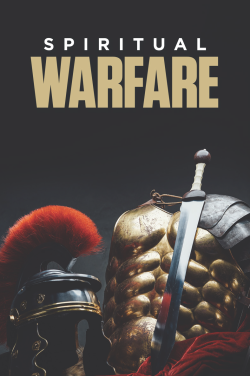
In your relationships, attitudes, motivation—how often are you influenced by an unseen but very real enemy? Here’s how you’re under attack.
You Are at War
Many people make New Year’s resolutions each year—perhaps to lose weight, get more exercise, or spend more time with family. Such resolutions are often a source of humor, because they are not taken very seriously. A year later, few look back on a resolution they made and find that they kept it. They simply go on to make the same resolutions year after year—lose weight, get more exercise, spend more time with family—always hopeful, but rarely changing to the degree they desire.
Sometimes the changes we seek are more serious. Many struggle to break cycles of self-destructive behavior—binge eating, substance abuse, or pornography consumption. Others see their marriage falling apart and long to change and grow to become the spouse they long to be, yet fall repeatedly into the same old pattern of angry conflict or resigned withdrawal, accelerating their slide into bitterness. We wrestle to rise above our basest urges, sometimes finding success, but often falling back into old habits—too often descending even further than before. Even the Apostle Paul wrote, “I know that in me (that is, in my flesh) nothing good dwells; for to will is present with me, but how to perform what is good I do not find. For the good that I will to do, I do not do; but the evil I will not to do, that I practice” (Romans 7:18–19).
However, Paul understood in his struggles what so many today do not. He knew that he was involved in a war. He wasn’t simply seeking a better life or healthier habits—his life had a God-ordained purpose, and he wrote about those unseen enemies fighting against any changes he sought to make. “For we do not wrestle against flesh and blood, but against principalities, against powers, against the rulers of the darkness of this age, against spiritual hosts of wickedness in the heavenly places” (Ephesians 6:12).
Paul understood that he was engaged in spiritual warfare.
Most of the world around us has no idea of this reality. People continue striving and struggling against pulls and temptations in complete ignorance of the spiritual dimension of the battle they are waging. The self-help industry makes billions of dollars selling tricks and techniques—some helpful, some not so much—without acknowledging the spiritual aspect of the conflict we face.
But if we seek real change and real growth, we must embrace the truth that we are not simply fighting against bad habits and destructive patterns. We are engaging in spiritual warfare against a real enemy who seeks our destruction—not just in this life, but for eternity.
The resource you hold in your hands has been designed to help you come to terms with that reality and to help you engage in that battle.
In the first chapters, we part the veil to reveal the hidden spiritual world that few acknowledge—and fewer understand. Understanding the nature of the enemy and how he came to be is crucial if we are to comprehend the environment in which our battle takes place. Once we recognize the enemy, we shift our focus to the fundamental actions we must take to achieve real victory. They aren’t the dramatic actions that many televangelists would sell you, but they are the true weapons of spiritual warfare that every soldier needs. Finally, we reveal how the war will end—as declared by God, who will ultimately bring the victory—and how each of us can be a part of that victorious outcome.
So, if you are ready to understand the truth about the real struggle taking place here on earth—and what you must do to make a difference—read on.
There Is a Real Devil
The existence of a very real spirit being—variously called Lucifer, Satan, the Adversary, or the Devil—is verified throughout the pages of the Bible, from beginning to end. Our introduction to him is found in the book of Genesis. We read there that from the dust of the ground God created the first man, Adam, and afterward created Eve to be Adam’s helper and wife and the mother of us all.
It did not take long for spiritual warfare to begin—and our first parents lost their first battle. In Chapter 5, we will read more about the weapons of that war. For now, suffice it to say that this was a battle over whom to obey. It is easy to dismiss the Genesis account as too fantastic to believe, as no more than a metaphorical story for children. After all, who among us has ever encountered a talking snake? Remember, however, that neither Adam nor Eve had been around very long at that time. How would they know that a snake could not talk? Of course, it was not the snake, but a powerful spirit speaking through the creature.
Back to the Beginning
But where did that spirit come from? Who was this being who claimed God had lied to Adam? We must go back to the beginning for the answer. The beginning of history, according to the Bible, is not found in Genesis, but found in the opening verses of the gospel of John. There we find two Beings who are described as God. “In the beginning was the Word [Greek: logos or Spokesman], and the Word was with God, and the Word was God. He was in the beginning with God” (John 1:1–2). Later, John writes that “the Word became flesh and dwelt among us, and we beheld His glory, the glory as of the only begotten of the Father, full of grace and truth” (v. 14).
Some people find this straightforward passage confusing due to pagan traditions handed down to them about the God of the Bible. But if we simply read it for what it says, and not through the lens of corrupt traditions, John’s meaning becomes undeniably clear. There was God, who later became known as the Father; and there was the Word or Spokesman—also God—who later became known as the Son, Jesus Christ.
John 1:3 reveals another truth that many churchgoers are unaware of, though it lays out that truth in easy-to-understand terms: “All things were made through Him [that is, the Word—Christ], and without Him nothing was made that was made.” But what is included in all things? The Apostle Paul explained this in detail to the early Church:
He [Christ] is the image of the invisible God, the firstborn over all creation. For by Him all things were created that are in heaven and that are on earth, visible and invisible, whether thrones or dominions or principalities or powers. All things were created through Him and for Him. And He is before all things, and in Him all things consist. And He is the head of the body, the church, who is the beginning, the firstborn from the dead, that in all things He may have the preeminence (Colossians 1:15–18).
Why do so few understand that the One we know as the God of the Old Testament, with whom the patriarchs spoke and interacted, is none other than the Word—the One who became Jesus Christ? Lest there be any doubt, Paul also explained: “Moreover, brethren, I do not want you to be unaware that all our fathers were under the cloud, all passed through the sea, all were baptized into Moses in the cloud and in the sea, all ate the same spiritual food, and all drank the same spiritual drink. For they drank of that spiritual Rock that followed them, and that Rock was Christ” (1 Corinthians 10:1–4).
The Angelic Realm
We saw that it was through the One we know as Jesus Christ that God (the Father) created those things “that are in heaven and that are on earth, visible and invisible, whether thrones or dominions or principalities or powers” (Colossians 1:16). That is all-inclusive! Christ created the sun, moon, stars, and galaxies—as well as things that are invisible, including thrones, dominions, principalities, and powers.
Scripture at times uses stars to symbolize angels (Revelation 1:20), and we read of a time “when the morning stars sang together, and all the sons of God shouted for joy” (Job 38:7). Why were the angels of God so happy? The context of Job 38 is the very creation of the earth itself. God asked Job, “Where were you when I laid the foundations of the earth? Tell Me, if you have understanding” (v. 4). If the angels shouted for joy at the creation of the earth, they were already in existence at its creation. Therefore, the angels were created prior to the earth and the physical universe. When Genesis 1:1 tells us, “In the beginning God created the heavens and the earth,” the angels were already in existence.
Having seen that the Bible reveals to us two Spirit beings known as God and the Word, and that both are God, we next see that God created the angelic realm, and—sometime later, though we do not know how much later—the heavens and the earth.
And why did the angels shout for joy when the earth was created? In all the universe, our planet is a place of special importance to God and to the angels He created. Why was that?
To understand, we must remember that the Bible is not as any other book. Isaiah 28 tells us that it must be understood as a collective whole: “Whom will he teach knowledge? And whom will he make to understand the message?” (v. 9). How are we to understand? “For precept must be upon precept, precept upon precept, line upon line, line upon line, here a little, there a little” (v. 10). In other words, we must put together all the scriptures on a particular subject. So, what does the rest of the Bible say about the angels and their relationship to planet Earth?
Ezekiel 28 records a portion of the story. The chapter begins with God rebuking the prince of Tyre—a prominent city along the coast of what is today known as Lebanon. The prince of Tyre was the human leader of the city, but later in the chapter God addresses the king of Tyre and makes it plain He is speaking to someone who is clearly not human. We learn that this being was not born but created, and he was in the Garden of Eden. He is described as a cherub—a powerful angelic being:
Moreover the word of the Lord came to me, saying, “Son of man, take up a lamentation for the king of Tyre, and say to him, ‘Thus says the Lord God: “You were the seal of perfection, full of wisdom and perfect in beauty. You were in Eden, the garden of God; every precious stone was your covering: the sardius, topaz, and diamond, beryl, onyx, and jasper, sapphire, turquoise, and emerald with gold. The workmanship of your timbrels and pipes was prepared for you on the day you were created. You were the anointed cherub who covers; I established you; you were on the holy mountain [government] of God; you walked back and forth in the midst of fiery stones”’” (Ezekiel 28:11–14).
The reference to timbrels and pipes suggests that he had great musical ability—something we will discuss in Chapter 3. Notice also that he is called “the anointed cherub who covers.” What does that mean?
God instructed Moses to erect a tabernacle in the wilderness, giving him specific instructions to follow, as it represented heavenly things (Hebrews 8:5). The Ark of the Covenant was to reside in the most holy part of the tabernacle and represented God’s throne covered by the wings of two cherubs (9:5). It must have been a highly exalted position to be one of those cherubs, and that is the sense of what we read in Ezekiel. Continuing:
You were perfect in your ways from the day you were created, till iniquity was found in you. By the abundance of your trading you became filled with violence within, and you sinned; therefore I cast you as a profane thing out of the mountain of God; and I destroyed you, O covering cherub, from the midst of the fiery stones. Your heart was lifted up because of your beauty; you corrupted your wisdom for the sake of your splendor; I cast you to the ground (Ezekiel 28:15–17).
Scripture often blends ideas, as it does here, where it now quickly shifts the discussion back to the prince, the human leader of Tyre. But this digression to address the spiritual power behind the throne is very revealing. This corrupted spirit entity was a beautiful creature who allowed his heart to become filled with vanity and self-importance. But that is not all. Isaiah reveals more about him—even his name—and explains more of the motivation behind his rebellion against God’s rule. In a digression similar to Ezekiel’s, the prophet briefly addresses the corrupted spirit behind the human ruler of Babylon:
How you are fallen from heaven, O Lucifer, son of the morning! How you are cut down to the ground, you who weakened the nations! For you have said in your heart: “I will ascend into heaven, I will exalt my throne above the stars [angels] of God; I will also sit on the mount of the congregation on the farthest sides of the north; I will ascend above the heights of the clouds, I will be like the Most High” (Isaiah 14:12–14).
Note that this cherub Lucifer, who became Satan the Devil, was not satisfied with ruling only on planet Earth. He became so filled with his own importance that he started believing he knew better than his Creator how to run the universe, and he eventually tried to knock God off His throne. Lucifer was the first narcissist, as we see from the number of uses of the word “I”—climaxing in his grand claim, “I will be like the Most High.”
But we must turn to the book of Revelation to understand just how crafty and persuasive this cherub was—and is.
The Invisible God of This World
In the last chapter, we saw that one of God’s high-ranking angels—the anointed cherub who had at first been at God’s very throne—rebelled against his Creator and tried to knock Him off His throne. Why would a perfectly created being rebel in this manner?
When God created the angelic realm, He did not create robots—He created angels as free moral agents. As we saw previously, Lucifer—a name that means Light-Bringer—allowed his mind to be filled with pride, vanity, and self-importance. He became filled with anger and hatred, thinking he knew better than his Creator how to rule creation.
How could Lucifer imagine it possible to overthrow the One who brought him into existence? The Apostle John gives us a clue: “he who hates his brother is in darkness and walks in darkness, and does not know where he is going, because the darkness has blinded his eyes” (1 John 2:11). You likely know people who are so filled with hatred and rage that they do not act rationally. Such was the case with Lucifer. God created him as a beautiful archangel, but he became blinded by his ambitions, resenting the One who stood in his way. Following his failed coup, he became the Adversary, Satan.
Satan was not alone when he revolted against God. He sought others to join him and, as any politician would, he likely exalted himself in the eyes of his “constituents” and accused his opponent of wrongdoing. It probably started small, placing doubts in the minds of those angels closest to him. Perhaps he presented his case of grievances—questioning God’s fairness or truthfulness—or spread generalizations, like “God doesn’t love us” or “God is a bully.” Jesus said that the Devil “is a liar and the father of it” (John 8:44), and—whatever spiritual poison he employed—he was effective. He eventually convinced many of the angels, perhaps as many as a third (Revelation 12:3–4), to rise with him in resentment and rebellion against the One who gave them existence. When the Bible mentions “devils” or “demons,” it is referring to these rebellious angels.
Lucifer’s Fall
Lucifer’s rebellion took place prior to the reshaping of planet Earth described in Genesis 1—by the time Scripture introduces him in the Garden of Eden, he is already the Adversary, the wicked deceiver. Notice that Genesis 1:1 tells us that God created the heavens and the earth, but does not mention the timing of this first act of creation. However, we can discern that something catastrophic happened at some point following that original creation, when the angels shouted for joy, because the account in Genesis says, “The earth was without form, and void” (v. 2).
What caused the earth to be the way it is described here? What does “without form, and void” mean? Was it simply incomplete, or was there more to it than that?
The Hebrew words translated “without form” and “void” are used together only two other times in Scripture. In both instances, we find them associated with destruction and devastation as a consequence of sin (Isaiah 34:8–11, Jeremiah 4:19, 23).
In Isaiah 45 we read, regarding the earth, that God “did not create it in vain” (v. 18). So, the earth was not incomplete at creation. The cumulative evidence points to another explanation. This is a large subject, so for a more thorough explanation of the Genesis creation account, see our insightful resource Evolution and Creation: What Both Sides Miss.
So, if God did not create the earth in vain, then how and why did it become that way? We saw in the previous chapter that the powerful cherub Lucifer rebelled against God, but what were the consequences of his rebellion? Jude mentions three notable historical instances of rebellion that brought severe negative consequences for those who revolted against God:
But I want to remind you, though you once knew this, that the Lord, [1] having saved the people out of the land of Egypt, afterward destroyed those who did not believe. [2] And the angels who did not keep their proper domain, but left their own abode, He has reserved in everlasting chains under darkness for the judgment of the great day; [3] as Sodom and Gomorrah, and the cities around them in a similar manner to these, having given themselves over to sexual immorality and gone after strange flesh, are set forth as an example, suffering the vengeance of eternal fire” (Jude 5–7).
The Apostle Peter also gives us three examples of God’s wrath upon unbridled rebellion, including two from Jude’s list:
[1] For if God did not spare the angels who sinned, but cast them down to hell [tartaroó, a place of restraint] and delivered them into chains of darkness, to be reserved for judgment; [2] and did not spare the ancient world, but saved Noah, one of eight people, a preacher of righteousness, bringing in the flood on the world of the ungodly; [3] and turning the cities of Sodom and Gomorrah into ashes, condemned them to destruction, making them an example to those who afterward would live ungodly (2 Peter 2:4–6).
We see that God did not allow the sinful and rebellious world of Noah’s day to continue, but instead destroyed it with a global flood. Neither did He tolerate gross sexual immorality in Sodom and Gomorrah, but rained down fire and destroyed their cities. Nor did He spare the Israelites who rebelled against Him after He mercifully brought them out of Egyptian bondage. Rampant sin brings rampant destruction. Would we not expect a similar disaster to accompany the rebellion by Lucifer and a host of angels who also revolted against God? Indeed, both Jude and Peter mention just such punishment on the angels. As already noted, Jesus was the God of the Old Testament as well as our Savior. Therefore, prior to His human birth, He was there when Satan rebelled, as He clearly tells us: “He said to them, ‘I saw Satan fall like lightning from heaven’” (Luke 10:18).
When we combine all the scriptures on the subject, we see that God has always existed. Next, we see that the angelic host was created, followed by the universe. And among the incredible numbers of galaxies, stars, and planets in the cosmos, the place we call Earth has been given special attention. Long ago, it was home for Lucifer and many angels, and when they left “their proper domain” and “their own abode” to attempt to overthrow God, they were cast back down to earth. Devastation was the result.
The “creation week” we see in Genesis 1 and 2 is the work of God refashioning the world and beautifying it for mankind—the pinnacle of His creation and the focus of His plan. As Psalm 104:30 explains, “You send forth Your Spirit, they are created; and you renew the face of the earth.”
A War Against Mankind
On the night when Christ was betrayed, He left no doubt as to who is in control of this world. “Now is the judgment of this world; now the ruler of this world will be cast out” (John 12:31). “I will no longer talk much with you, for the ruler of this world is coming, and he has nothing in Me” (14:30; see also 16:8, 11). As Paul wrote, Satan is the “god of this age” (2 Corinthians 4:4) or the “god of this world” (King James Version).
The Devil is waging a war against mankind. While the cartoonish picture of the pitchforked fellow on one shoulder and an angel on the other hints at his intent, the real Devil is far craftier. As we will see in Chapter 4, Satan’s deceptions go far beyond the temptations we experience when we struggle with something we know we should or should not do.
Lucifer and the angels were originally placed here to administer God’s government on earth. There is much that we do not understand about the time prior to the creation of man, but we can see in the rocks of the earth that many very different creatures lived here long ago. What we do know, as explained earlier, is this: Lucifer and a multitude of angels rebelled. They no longer carried out God’s government on earth, but instead ruled by their own way of competition, selfishness, self-exaltation, and survival of the fittest.
God gave our first parents an opportunity to replace Satan’s rule, placing them in a beautiful garden and expecting them to work and to exercise proper rulership over their environment and over every living thing on earth:
Then God said, “Let Us make man in Our image, according to Our likeness; let them have dominion [control, authority, power, rulership] over the fish of the sea, over the birds of the air, and over the cattle, over all the earth and over every creeping thing that creeps on the earth.” So God created man in His own image; in the image of God He created him; male and female He created them (Genesis 1:26–27).
How many read over these verses but fail to see the profound truths they contain? Do we truly understand that God made man in His own image and likeness? This should cause us to sit up and take notice!
And consider the responsibility man was given: dominion over everything on earth, to exercise loving care for this planet and its inhabitants. “Then the Lord God took the man and put him in the garden of Eden to tend and keep it” (Genesis 2:15). For instance, God contrasts the righteous man and the wicked in the way each treats his animals: “A righteous man regards the life of his animal, but the tender mercies of the wicked are cruel” (Proverbs 12:10).
This all becomes understandable when we come to know God’s ultimate plan for mankind. The Devil has convinced people to believe all the wrong things about man’s purpose. Many mainstream “Christians” believe they were created to enjoy this physical existence, have as much fun and success as possible, and then go to heaven for retirement or to stare into the face of God forever in some kind of celestial joy. That, dear friends, is an absolute lie from the unseen ruler of this world! His war against humanity does not stop with immoral behavior. It dips into religion, including the one bearing the name “Christianity,” as we will see in Chapter 4.
This resource will not go into detail regarding God’s ultimate, inspiring purpose for mankind, but we have another study guide that does. As with all our material, What Is the Meaning of Life? can be yours absolutely free of charge, just for the asking.
Beware the Occult
God created the angels for the purpose of serving mankind, the true focus of His plans (Hebrews 1:14), but many of them chose instead to become God’s adversaries. We see in the book of Daniel just how persistent these corrupt spirit beings are in their failed attempts to defeat their Creator’s will. After the prophet Daniel had spent three weeks earnestly seeking God, a powerful angel came to him in a vision, giving insight into warfare in the spirit realm taking place on an astonishing scale:
Then he said to me, “Do not fear, Daniel, for from the first day that you set your heart to understand, and to humble yourself before your God, your words were heard; and I have come because of your words. But the prince of the kingdom of Persia [a high-ranking demon] withstood me twenty-one days; and behold, Michael, one of the chief princes [an angel of God], came to help me, for I had been left alone there with the kings of Persia. Now I have come to make you understand what will happen to your people in the latter days, for the vision refers to many days yet to come” (Daniel 10:12–14).
Daniel’s descriptions reveal even more about what goes on in the unseen world of wars fought between angels and demons of high rank:
Then he said, “Do you know why I have come to you? And now I must return to fight with the prince of Persia; and when I have gone forth, indeed the prince of Greece will come. But I will tell you what is noted in the Scripture of Truth. (No one upholds me against these, except Michael your prince. Also in the first year of Darius the Mede, I, even I, stood up to confirm and strengthen him)” (Daniel 10:20–11:1).
The above passages expose the reality of unseen forces at work in our world. Satan is real. His fellow fallen angels are real, and their goal is to destroy mankind. But they are no match for the One who created them. And there is no doubt concerning the final outcome, as even these rebels understand: “You believe that there is one God. You do well. Even the demons believe—and tremble” (James 2:19).
Nevertheless, God gives us many warnings—actually, commands—to steer clear of experimenting with unseen forces: soothsayers, sorcerers, diviners, mystics, palm readers, channelers, necromancers, astrologers, and others who seek “spirit” guidance outside the bounds of Scripture. Those who dabble with the occult, even through seemingly innocuous “toys”—such as Ouija boards, demonic video games, or tarot cards—are unwise. Those who consult mediums and psychics have no idea what they are potentially dealing with. Similarly, those who foolishly indulge in mind-altering recreational drugs are playing with spiritual fire. It is not that every encounter with these things causes one to be demon-possessed, but demon possession is real, and only ignorant fools open their minds to that potential nightmare.
The Apostle John counsels, “Beloved, do not believe every spirit, but test the spirits, whether they are of God; because many false prophets have gone out into the world” (1 John 4:1). He warns us not to follow a prophet just because his prophecy comes to pass (Deuteronomy 13:1–4), and He gives us a test to determine whom to follow. “And when they say to you, ‘Seek those who are mediums and wizards, who whisper and mutter,’ should not a people seek their God? Should they seek the dead on behalf of the living? To the law and to the testimony! If they do not speak according to this word, it is because there is no light in them” (Isaiah 8:19–20).
As we will examine later in more detail, Satan directs the course of this world: its entertainment, music, politics, commerce, and culture (Ephesians 2:1–3). He promotes an alternate reality claiming that the means to happiness is found in the lusts of the flesh and the mind—a deception that brings nothing but suffering in the end. We will see in the next chapter that even when we are confident in our own thinking, we may in fact be responding according to that liar and murderer. This is why we must put on the whole armor of God, as described in Ephesians 6:10–18.
God made us free moral agents rather than robots, so we must make choices regarding right and wrong. Adam and Eve could have chosen to trust and obey God, but they chose rather to listen to a stranger. The same choice is before every one of us—will we listen to the god of this world, or will we resist him and grow into the people God created us to be? In our next chapter we will reveal how you are engaged in spiritual warfare on a daily basis—whether you realize it or not!
Three Battlefronts
The Devil is trying to do with you and me the same as he did with the angels and our first parents: convince us to turn away from God and throw off His authority over our lives. In the long run, he will fail in his attempt to destroy God’s plan to bring sons and daughters into His Kingdom—but for now he is bringing unspeakable pain and suffering on earth, as the vast majority of humanity is under his sway. He is the ultimate source of evil, but we are willing participants far too often. In this chapter, we will look at the three different battlefronts on which Satan wages spiritual warfare against you and the rest of humanity, and we will see how we must resist his efforts in each case.
One of the most significant passages of Scripture discussing spiritual warfare is in Paul’s letter to the Church of God at Ephesus. He explained that sin results in death, and he then explained the unseen force who stirs up sin in our lives:
And you He made alive, who were dead in trespasses and sins, in which you once walked according to the course of this world, according to the prince of the power of the air, the spirit who now works in the sons of disobedience, among whom also we all once conducted ourselves in the lusts of our flesh, fulfilling the desires of the flesh and of the mind, and were by nature children of wrath, just as the others (Ephesians 2:1–3).
We will focus on three phrases in this passage: the course of this world, the prince of the power of the air, and the spirit who now works in the sons of disobedience. These represent the three main battlefronts on which we must all wage spiritual warfare—society, Satan, and the self.
First Battlefront: Society
God is all-powerful and directs events to fulfill His overall plan for mankind—but, as we read earlier, it is Satan who is the immediate god of this age. He directs this world’s morality through its governments, politics, academia, entertainment, commerce, and media. Knowing how Satan works upon society is vitally important in waging war against his deceptive devices (2 Corinthians 2:11).
One of the greatest tools of Satan’s trade is that of lies. When Jewish leaders falsely accused Jesus of being conceived in fornication, He responded, “You are of your father the devil, and the desires of your father you want to do. He was a murderer from the beginning, and does not stand in the truth, because there is no truth in him. When he speaks a lie, he speaks from his own resources, for he is a liar and the father of it” (John 8:44).
Cigarette smoking was very popular 75 years ago, though vaping and marijuana have supplanted that habit. Parents advised their children against smoking, so why did they do it? Was it because cigarettes were good for their health? Some ads and “studies” back in the 1950s promoted that idea, but this was a hard sell and did not go very far. Smoking was advertised and sold on image—just as Lucifer became vain in his thinking, so he stirs up vanity in humanity. For men it was the rugged Marlboro cowboy or the debonair ladies’ man. For women it was the sophisticated Virginia Slim. Tobacco companies knowingly fought against the facts of science, raking in billions of dollars with no regard for the suffering they caused. Is it any different today with vaping and marijuana?
Music and entertainment are among the most powerful tools that direct the course of this world—and Satan has great musical ability. As we read of Lucifer, “The workmanship of your timbrels and pipes was prepared for you on the day you were created” (Ezekiel 28:13). Satan is powerful and deceptive, and he uses music in his war against us. Music powerfully affects emotions. It can lift us up or send us into a moody state of depression. Some music—though certainly not all—even loosens sexual inhibitions. This was the case in the golden calf incident when ancient Israel came out of Egypt (Exodus 32:19, 25).
Music is a powerful tool for good or for evil. Consider how many songs are filled with lyrics that normalize and effectively glorify adultery, fornication, drunkenness, addiction, and other self-destructive behaviors. Satan wages part of his war against mankind by using music to pump anti-biblical themes into the brains of adults and children. Katy Perry sang “I kissed a girl, and I liked it” with a fan club of tween girls singing and dancing right along with her. And consider the screeching and wailing hard rock genre performed by drugged-out performers. Less obvious are the “patriotic” marches that accompany soldiers going off to war. Then there are syrupy hymns found in many older church denominations, which contrast with the pounding beat of modern “Christian Rock.”
Beyond music, consider how we entertain ourselves with movies, television, and video games that promote violence, mayhem, and illicit sex. Is there any doubt who the god of this age is? But do you simply lap up what is offered? Or is your path guided by God’s word? In our spiritual warfare against the influences of society, we must all monitor what we allow into our minds (Psalm 119:37; Proverbs 4:25–27).
Second Battlefront: Satan
We have discussed the Devil’s influence in detail, but let us reflect again on what Paul wrote in Ephesians 2 about Satan’s influence on us: He is “the prince of the power of the air” (v. 2). What does this mean? Satan works in the hearts and minds of human beings, influencing us in ways we may not recognize. As we will see, Paul tells us that we need a shield of faith to quench the fiery darts thrown at us by the wicked one. But how exactly does this work?
Prior to the last century this might have been harder to understand, but it is easier for us to grasp this mystery today. We take for granted that wherever we are—inside or outside—there are many unseen, unheard, and unfelt voices and pictures traveling all around us via invisible electromagnetic waves. They are coming from some form of transmitter, such as a cell tower or satellite, but are only deciphered by a receiver—a radio, television, smartphone, or computer.
Satan is a spirit being, and he transmits or broadcasts spiritually. God does this as well, but His messaging is very different from that of this fallen prince. We are able to receive these spiritual influences—either from God or the Devil—because there is a spirit in man that empowers the human brain. However, Satan does not normally transmit in words, but in moods and attitudes, such as vanity, lust, greed, anger, depression, and resentment of others. This spirit influence has been with us from so early in our lives that we are as accustomed to it as we are to the air we breathe.
Evil thoughts and attitudes enter our minds constantly as Satan broadcasts them. This is why it is imperative that we understand that there is an evil being waging spiritual warfare on us night and day, nonstop. The Devil broadcasts his attitudes of resentment and hatred, of jealousy and greed. We must not be oblivious to this reality. There is a war going on for the control of our moods and thoughts. When lustful, greedy, or resentful thoughts enter our minds, we must do what we can, calling on God, to thrust them out, lest they become part of an ungodly approach in life and our very character.
And that influence can be subtle! Consider the example of the Apostle Peter. For three-and-a-half years Jesus preached the good news of the coming Kingdom of God, but near the end of His ministry He began to let the twelve know that He would be betrayed and put to death by the religious leaders in Jerusalem. Here is one account:
From that time Jesus began to show to His disciples that He must go to Jerusalem, and suffer many things from the elders and chief priests and scribes, and be killed, and be raised the third day. Then Peter took Him aside and began to rebuke Him, saying, “Far be it from You, Lord; this shall not happen to You!” But He turned and said to Peter, “Get behind Me, Satan! You are an offense to Me, for you are not mindful of the things of God, but the things of men” (Matthew 16:21–23).
Few of us would see through what was happening here if it were not for this rebuke by our Savior. Peter was standing up for Christ. He was effectively saying that he would die to prevent Christ from being taken—something he also professed later (Matthew 26:35). What loyalty on Peter’s part! Yet it was against God’s plan, and Jesus recognized the unseen source of Peter’s haughty attitude—Satan the Devil!
So, we battle not just against the faceless, impersonal influence of society, but also against the very real and very personal influence of the Devil.
Third Battlefront: Self
In that earlier passage, we also saw that Paul wrote of how “we all once conducted ourselves in the lusts of our flesh, fulfilling the desires of the flesh and of the mind, and were by nature children of wrath, just as the others” (Ephesians 2:3). Yes, “each one is tempted when he is drawn away by his own desires and enticed” (James 1:14).
The third battlefront of every spiritual warrior is the self.
Since the days of Adam and Eve, Satan has promoted the lust of the flesh, the lust of the eyes, and the pride of life (1 John 2:15–17), and by now it is not just second nature for us—it’s our first nature. Having soaked up the broadcast of the “prince of the power of the air” from our earliest days, our natural, carnal minds inherently think as Satan does. Indeed, Paul warns us that “the carnal mind is enmity against God; for it is not subject to the law of God, nor indeed can be. So then, those who are in the flesh cannot please God” (Romans 8:7–8).
So, if not in the direction of God’s laws, in what directions do our carnal, fleshly minds pull us? Paul answers in Galatians 5:19–20:
Now the works of the flesh are evident, which are: adultery, fornication, uncleanness, lewdness, idolatry, sorcery, hatred, contentions, jealousies, outbursts of wrath, selfish ambitions, dissensions, heresies, envy, murders, drunkenness, revelries, and the like; of which I tell you beforehand, just as I also told you in time past, that those who practice such things will not inherit the kingdom of God.
In a way, we are all at least mildly narcissistic. Human nature, which is made up of vanity, lust, greed and selfish ambition, is the common shortcoming of people everywhere. As cartoonist Walt Kelly famously wrote in his 1970s comic strip Pogo, “We have met the enemy, and he is us.”
How similar we can be in our own nature to that of the “god of this world,” even when we do not recognize it, is revealed by the examples of James and John, two other apostles of Christ.
At one point in His ministry, Jesus and the disciples were traveling through Samaria. The Jews and Samaritans did not get along very well, and when the local Samaritans saw that Jesus and His disciples were on their way to Jerusalem, they refused to give them lodging. Luke 9:54: “And when His disciples James and John saw this, they said, ‘Lord, do You want us to command fire to come down from heaven and consume them, just as Elijah did?’”
In this case, James and John thought they were on good scriptural grounds regarding their request, pointing to the example of Elijah, but the context of each situation was different and Jesus reprimanded them soundly. “He turned and rebuked them, and said, ‘You do not know what manner of spirit you are of’” (v. 55). Though seemingly filled with righteous indignation and offense on their Savior’s behalf, they were, instead, revealing that their own natures were far closer to Satan’s than to God’s.
In any quest to better reflect in our lives the mind, love, and self-control of Jesus Christ, we are struggling against spiritual influences from three different directions: society, Satan, and the self. Ignoring any one of them in our efforts means giving the enemy an opening to take all the ground he desires.
And he is ravenous in his desire to take ground. In fact, one of the greatest victories Satan has achieved in the world is also one of the most shocking. And anyone who seeks to wage spiritual warfare must come to terms with that victory, lest the Devil use our ignorance to count us as another of his victims.
We cover that surprising satanic victory in our next chapter.
Satan’s Greatest Deception
It has often been said that Satan’s “greatest trick” has been convincing people that he does not exist. Indeed, this is an impressive and widespread con—but it is not his greatest deception. Which is a greater feat of falsehood—convincing people that the Devil does not exist, or convincing the masses of mainstream “Christianity” that they are following God when in reality they are following the Devil?
As we will see, that is exactly what he has done. As we read in the book of Revelation, “the great dragon was cast out, that serpent of old, called the Devil and Satan, who deceives the whole world; he was cast to the earth, and his angels were cast out with him” (12:9). Consider the magnitude of that claim: “who deceives the whole world.” That widespread deception represents Satan’s greatest advantage in his ongoing efforts to destroy mankind, including you and me—as this chapter will now reveal.
How Can Everyone Be Right?
It is our nature to believe that we are right, especially when it comes to religion. Yet, sheer logic tells us that all religions cannot be correct, unless we believe that God bows to us and lets us decide for ourselves how to worship Him. Consider the vast array of religious beliefs in our world, including Hinduism, Buddhism, Taoism, Satanism, Islam, Judaism, and Christianity. The last of these—the one claiming Christ’s own name—is divided into Roman Catholicism, Eastern Orthodox, and Protestantism, along with other smaller sects. Ignoring the other divisions we find in Protestantism alone a tremendous number of different strains: Lutheran, Anglican, Presbyterian, Methodist, Baptist, Evangelical, Pentecostal, and other charismatic varieties, just to name a few.
The list of different ideas about how to worship God is almost endless! Some believe in infant baptism, while others only baptize teens or adults. Some use icons or images in their worship, while others see this as a violation of the Second Commandment—or the First Commandment, since different denominations number them differently. Most observe the day that the Roman emperor Constantine set aside as the day of worship, Sunday. Others observe the seventh-day Sabbath on Saturday. Most believe in an immortal soul that goes to heaven or hell upon death, but not everyone agrees. And many claim that all that salvation requires is a “decision”—a raised hand during an emotional altar call—while others notice a conflict between that idea and Jesus’ own cautions about a “narrow” and “difficult” way (Matthew 7:13–14), involving instruction and discipline.
These differences only scratch the surface. “Christianity” in all its strains is currently the largest category of religion on earth. But how can it be in line with God if Satan has deceived the whole world? Think about that!
When His disciples asked Him about His return and the end of the age, the very first warning Jesus gave was about false Christianity: “Now as He sat on the Mount of Olives, the disciples came to Him privately, saying, ‘Tell us, when will these things be? And what will be the sign of Your coming, and of the end of the age?’ And Jesus answered and said to them: ‘Take heed that no one deceives you. For many will come in My name, saying, “I am the Christ,” and will deceive many’” (Matthew 24:3–5).
There was no punctuation in the original Greek of the New Testament. Translators added the quotation marks surrounding “I am the Christ.” It is not essential to remove them to understand the meaning of this passage, but it is helpful. Jesus first warns us not to be deceived. He next says that many will come in His name—claiming to speak on His authority, proclaiming (or admitting) that He is the Christ, the coming anointed One. They will deceive the many with this approach.
Whether these deceivers are themselves deceived (see 2 Timothy 3:13) matters little to the rest of us. What matters is that doctrines conflicting with the Bible cannot be right—and the list of doctrines taught by various denominations that fit such a description is extensive.
Warnings
The New Testament is filled with warnings against deception in the name of Christ. By the end of the first century, Jude warned that “certain men have crept in unnoticed, who long ago were marked out for this condemnation, ungodly men, who turn the grace of our God into lewdness and deny the only Lord God and our Lord Jesus Christ” (v. 4). That is why he said he “found it necessary to write to you exhorting you to contend earnestly for the faith which was once for all delivered to the saints” (v. 3). Deception and corruption entered early in the development of the “Christian” movement.
Paul chided brethren in Corinth for accepting a false Jesus, receiving a different spirit, and holding to a different gospel (2 Corinthians 11:4). This was a remarkable reproof for people taught by Paul himself! How could this be? Why were they worshipping a false Jesus? Why did they accept a gospel different from Christ’s? Who introduced a different spirit into the Corinthian congregation? The answer is found in later verses: “For such are false apostles, deceitful workers, transforming themselves into apostles of Christ. And no wonder! For Satan himself transforms himself into an angel of light. Therefore it is no great thing if his ministers also transform themselves into ministers of righteousness, whose end will be according to their works” (vv. 13–15).
Imagine—Satan has his ministers, and they do not come with red jumpsuits, horns, and pitchforks. They do not come advertising that they are ministers of Satan. No, they appear as ministers of righteousness. Is this not deception and spiritual warfare of the highest level?
Think about this: a deceived person does not know that he is deceived. Could that be you? If Satan has deceived the whole world, as we read in Revelation 12:9, the vast majority of those we think of as “Christian” must be part of that deception. You cannot “come just as you are”—not according to Christ. His command is to repent, to change from what you are (Mark 1:14–15).
Spiritual Adultery
The extent of Satan’s deception is found in a prophecy for our time. Revelation 17 describes a woman riding the end-time beast:
Then one of the seven angels who had the seven bowls came and talked with me, saying to me, “Come, I will show you the judgment of the great harlot who sits on many waters, with whom the kings of the earth committed fornication, and the inhabitants of the earth were made drunk with the wine of her fornication.” So he carried me away in the Spirit into the wilderness. And I saw a woman sitting on a scarlet beast which was full of names of blasphemy, having seven heads and ten horns. The woman was arrayed in purple and scarlet, and adorned with gold and precious stones and pearls, having in her hand a golden cup full of abominations and the filthiness of her fornication. And on her forehead a name was written: MYSTERY, BABYLON THE GREAT, THE MOTHER OF HARLOTS AND OF THE ABOMINATIONS OF THE EARTH (Revelation 17:1–5).
Scripture often uses a woman to symbolize a church or religion (e.g., Ephesians 5:31–33; Revelation 19:7–8). But in Revelation 17, the woman is a fallen woman, described as “the great harlot.” Who is considered the “Mother Church” today? And here is an important question for the Protestant world: Who are the “harlot daughters” of that “Mother Church,” mentioned in verse 5?
There is a kind of adultery other than physical (including, as Jesus said, looking with lust after someone to whom you are not married). Notice how God connects idolatry and harlotry in Ezekiel 16. Placing another God before the true God is considered spiritual adultery (Ezekiel 6:9). Those who claim to be Christ’s but worship a false God, even in ignorance, are committing spiritual adultery.
Satan’s greatest deception truly is false Christianity. Whether we realize it or not, the Devil is waging his war of deception against us, and there are no neutral corners in this war. And many of the places of refuge we might seek in our spiritual struggles—the very places that bear our Savior’s name—are actually camps of the enemy. There is no refuge there, no support—only further corruption, however subtle and beguiling.
The Little Army
But does God have no true Church in the world? In light of Revelation’s declaration that Satan has deceived the whole world, we must ask the question, “Is bigger always better?” There is a human tendency to think that it is—but the Bible records how God purposefully limited Gideon’s famous army to 300 to go against an army far greater in size (Judges 7:2–7). Numbers are not important if God is with us. This is something He wants to embed in our minds. God also reveals that there can be other dynamics involved. For instance, to narrow to 300 men the number in Gideon’s army, God saw how each man drank from a pool of water. Perhaps their choice indicated how alert they were and how they might react in battle. And God demonstrated such attention to details elsewhere.
He told the Israelites not to be afraid when they were on the verge of going against a larger enemy, because He would be with them (Deuteronomy 20:1–4). He then commanded the officers to pare down the army to those most fit for the task. Any who were distracted or fearful were to be dismissed (vv. 5–9). Such soldiers would damage the morale of others. It is evident here that quality trumps quantity.
So, what does this mean for you and me? The true Church of God is a Gideon’s army—a little flock, as Jesus indicated: “Do not fear, little flock, for it is your Father’s good pleasure to give you the kingdom” (Luke 12:32). Our Savior promised that the Church He founded would exist all the way to His return, never dying out, however small it might be (Matthew 16:18). But it is no place for soldiers of fortune or those who are not ready to fight against the influences of society, Satan, and the self—nor for those who prefer the comfort of a faith that bears Christ’s name but actually represents a deceptive camp of the enemy. It is a place for those willing to truly serve Jesus Christ as spiritual warriors—ready to put on our armor and join in the struggle.
If this is you, then read on in the next chapters to discover what it takes to be a soldier engaged in true spiritual warfare under the Commander of the Army of the Lord (Joshua 5:13–15).
The Weapons of Our Warfare
We have seen that there is a conflict taking place in the spirit realm—and that we are profoundly affected by that conflict. Most recognize a tug and pull between right and wrong, sometimes pictured by the red cartoon fellow with horns and a pitchfork sitting on one shoulder and a halo-topped angel in white garb sitting on the other. This caricature tragically trivializes the real source of evil and the extent of Satan’s deceptions.
A favorite hymn of many is “Onward, Christian Soldiers,” but do those singing it understand what they are singing? After all, if it has all been done for us, as many claim, and we need to do nothing more than offer the “sinner’s prayer,” where is the struggle? Is there a battle to be fought or not?
The Apostle Paul recognized that we are in a life-and-death struggle, that there is a spiritual war we must fight. He explained to the evangelist Timothy that this battle would require genuine hardship and sacrifice. “You therefore must endure hardship as a good soldier of Jesus Christ. No one engaged in warfare entangles himself with the affairs of this life, that he may please him who enlisted him as a soldier” (2 Timothy 2:3–4). Paul also called Epaphroditus and Archippus his fellow soldiers (Philippians 2:25; Philemon 1:2). This does not square with “there is nothing to do because Christ has done it all for you.”
The Armor of God
God, through His faithful servant Paul, reveals that in your battle against an unseen, crafty enemy, you need armor—not a physical coat of mail and an iron helmet, but spiritual armor. Paul was often a prisoner in chains (Ephesians 3:1; 4:1; 6:20) and his armor metaphor may have come from observing a fully armed Roman soldier standing watch over him, but he clearly borrows from Isaiah 59:17. It is in this context that he writes, “Finally, my brethren, be strong in the Lord and in the power of His might. Put on the whole armor of God, that you may be able to stand against the wiles of the devil” (Ephesians 6:10–11).
The Devil is no cartoon figure. He is ruthless and goes around “like a roaring lion, seeking whom he may devour” (1 Peter 5:8). A true servant of Christ should not walk fearfully, yet you must never underestimate the enemy. “For we do not wrestle against flesh and blood, but against principalities, against powers, against the rulers of the darkness of this age, against spiritual hosts of wickedness in the heavenly places” (Ephesians 6:12). We also read that “though we walk in the flesh, we do not war according to the flesh. For the weapons of our warfare are not carnal but mighty in God for pulling down strongholds” (2 Corinthians 10:3–4).
What are those strongholds that must be pulled down? What must you fight against? You are to be “casting down arguments and every high thing that exalts itself against the knowledge of God, bringing every thought into captivity to the obedience of Christ” (v. 5). Clearly, according to Paul, it has not all been done for you. You must bring your innermost thoughts into captive obedience to Christ.
Does this mean that any of us can earn salvation by our efforts and leave Christ out of our battles? Absolutely not! He paid the penalty for our sins with His shed blood, for “you were not redeemed with corruptible things, like silver or gold, from your aimless conduct received by tradition from your fathers, but with the precious blood of Christ, as of a lamb without blemish and without spot” (1 Peter 1:18–19). Yes, He has redeemed us by His death (Romans 5:8).
It is His death that justifies us—brings us into line with God—but justification is not salvation. Justification is the forgiveness of past sins. Rather, it is the life of Christ in us, by the power of the Holy Spirit, that ultimately saves us: “Much more then, having now been justified by His blood, we shall be saved from wrath through Him. For if when we were enemies we were reconciled to God through the death of His Son, much more, having been reconciled, we shall be saved by His life” (vv. 9–10). Those baptized and forgiven of the sins they’ve committed now battle to yield to Jesus Christ—to allow Him to live His life more fully in them, day by day. This is a large subject and is covered in greater detail in our free resource John 3:16: Hidden Truths of the Golden Verse.
The battle first takes place in your mind, as Paul describes to the Colossians:
Set your mind on things above, not on things on the earth. For you died, and your life is hidden with Christ in God…. Therefore put to death your members which are on the earth: fornication, uncleanness, passion, evil desire, and covetousness, which is idolatry. Because of these things the wrath of God is coming upon the sons of disobedience, in which you yourselves once walked when you lived in them (Colossians 3:2–3, 5–7).
Peter explains that the Devil walks about like a roaring lion, seeking someone to devour (1 Peter 5:5–9). But James adds that if you resist him, he will retreat: “Therefore submit to God. Resist the devil and he will flee from you. Draw near to God and He will draw near to you” (James 4:7–8). Both Peter and James give this advice in the context of humbling yourself rather than being puffed up with pride—the root of Lucifer’s downfall. Pride brings destruction to many. This is why Paul instructed Timothy not to ordain “a novice, lest being puffed up with pride he fall into the same condemnation as the devil” (1 Timothy 3:6).
So, in humility, your task is to “armor up,” stand against the Devil, and wage your war—striving to bring more and more of your life under the reign of Jesus Christ. As Paul writes, “Therefore take up the whole armor of God, that you may be able to withstand in the evil day, and having done all, to stand” (Ephesians 6:13). The apostle then reviews that armor, piece by piece, explaining the significance of each element in the conflict.
Girded with Truth
First, Paul directs our attention to the importance of truth. “Stand therefore, having girded your waist with truth” (Ephesians 6:14). People who pray and attend weekly worship services are likely sincere about their worship of God, but is sincerity enough? Are they worshipping in truth?
Jesus was returning home to Galilee and stopped to rest in a city of Samaria, where a woman came to draw water from Jacob’s well. He asked her to draw water for Him, and an interesting conversation ensued:
“Our fathers worshiped on this mountain, and you Jews say that in Jerusalem is the place where one ought to worship.” Jesus said to her, “Woman, believe Me, the hour is coming when you will neither on this mountain, nor in Jerusalem, worship the Father…. But the hour is coming, and now is, when the true worshipers will worship the Father in spirit and truth; for the Father is seeking such to worship Him. God is Spirit, and those who worship Him must worship in spirit and truth” (John 4:20–24).
Similarly, Paul admonished the Corinthians to partake of the “unleavened bread of sincerity and truth” (1 Corinthians 5:8). Sincerity is not enough. You must also worship God in truth. You must never forget who the author of lies is (John 8:44). Satan has corrupted with lies the worship of the true God. He has replaced God’s commandments with false doctrines and traditions. You can study this subject further by reading our free publication Satan’s Counterfeit Christianity.
An ancient soldier’s belt kept all things in place and where they should be, just as truth does. Are you willing to cast aside comfortable but empty falsehoods and secure your armor with the belt of truth to fight the good fight of faith? Or do you go with the flow of Satan’s deceptions and lies?
Righteousness Matters
We are next instructed to “put on the breastplate of righteousness” (Ephesians 6:14). The breastplate guards the life-sustaining heart and lungs. Satan tells you to “follow your heart,” but God tells you through the prophet Jeremiah, “The heart is deceitful above all things, and desperately wicked; who can know it?” (Jeremiah 17:9). Satan says, “Trust yourself.” God says, “Trust in the Lord with all your heart, and lean not on your own understanding” (Proverbs 3:5).
Satan’s ministers say, “There is no need to keep the law, since Christ has done it all for you.” But God reveals that it is He who determines righteousness. “For all Your commandments are righteousness” (Psalm 119:172). And Jesus told the young man who wanted to know what he must do to inherit eternal life that “if you want to enter into life, keep the commandments” (Matthew 19:17). Satan’s ministers tell you that keeping the commandments is burdensome and that all you need is love. God says, “For this is the love of God, that we keep His commandments. And His commandments are not burdensome” (1 John 5:3).
In Chapter 7 we will discuss the vital subject of obedience to God in more detail. But for our purposes now, you must embrace the fact that righteousness is simply not something for you or any other individual to define or decide. God is righteous (Deuteronomy 32:4), and those who seek eternity with Him will seek to work the works of righteousness, with Jesus Christ living by His Spirit within them. As Paul admonished Timothy, “But you, O man of God, flee these things [greed and selfish practices] and pursue righteousness, godliness, faith, love, patience, gentleness” (1 Timothy 6:11).
The True Gospel
Your direction and purpose in life are crucial. Satan is the master of counterfeit and subtle deception, which is why a soldier’s feet need protection. In fact, some historians consider the Roman legionary’s sandal or boot—the caliga—to be a vital element in the empire’s military successes. Thus, Paul tells us to have our feet “shod… with the preparation of the gospel of peace” (Ephesians 6:15). He means here the true Gospel—false gospels were promoted as early as the first century (Galatians 1:6–9; 2 Corinthians 11:4).
Yet this advice reveals that you must do far more than merely know the Gospel of the Kingdom of God that Jesus proclaimed for three and a half years—it is not good enough to simply sit around waiting for the Kingdom. God calls His true servants to carry the true Gospel—not a false gospel—forward into the world! Supporting the mission that Christ gave to His little flock (Matthew 28:18–20; Mark 16:15) gives you focus and changes your perspective on life, the world, and the billions of people in desperate need of the truth of God.
You can find further information on this subject in our resource Do You Believe the True Gospel?
Shielded by Faith
Paul next tells you to “above all, [take] the shield of faith with which you will be able to quench all the fiery darts of the wicked one” (Ephesians 6:16). Throughout His ministry, Jesus often spoke of how little faith His disciples possessed. When He told Peter to come to Him walking on the water, Peter did so successfully until he looked at the waves around him and began to sink. Jesus saved him from drowning and then asked, “O you of little faith, why did you doubt?” (Matthew 14:28–31). And James tells us that if we lack wisdom, we should ask for it from God, but we must ask in faith and without doubting (James 1:2–8).
The Adversary put doubts into Eve’s mind, convincing her that God was not telling the truth. And he fires darts of doubt at us: Is the Bible really the word of God? Why did God let the person I love die? Will God take care of me if I lose my job for keeping His Sabbath? Is God fair? Does God even exist? No wonder we read that “without faith it is impossible to please Him, for he who comes to God must believe that He is, and that He is a rewarder of those who diligently seek Him” (Hebrews 11:6).
Your defense against the doubts cast at you from the hand of the Devil is the shield of faith.
The Helmet of Salvation
Satan’s ministers proclaim that the New Covenant does away with the law of God—but, on the contrary, the New Covenant writes God’s laws in the human heart and mind. “This is the covenant that I will make with them after those days, says the Lord: I will put My laws into their hearts, and in their minds I will write them” (Hebrews 10:16; see also 8:10). The mind is where we make decisions about conduct and doctrine. The Holy Spirit works with our conscience to clarify sound doctrine and right decisions (1 Peter 4:1–2; 3:15–16). No wonder Paul instructed you to “take the helmet of salvation” (Ephesians 6:17) to protect the mind from deceptive doctrines.
Elsewhere, Paul calls this piece of armor the “helmet of the hope of salvation” (1 Thessalonians 5:8). The hope of what salvation truly means also helps to protect our mind and our thinking. We can get a glimpse of it, and of the benefit it brings, in the words of the Apostle John: “Beloved, now we are children of God; and it has not yet been revealed what we shall be, but we know that when He is revealed, we shall be like Him, for we shall see Him as He is. And everyone who has this hope in Him purifies himself, just as He is pure” (1 John 3:2–3).
When you are driven by the hope of salvation and all that God is accomplishing in your life, building toward your birth into the family of God as His child at Christ’s return, you become moved to purify yourself—to seek His ways, and to cast aside the false hopes that fill your mind in this world and lure you into sin. The hope of salvation is a helmet indeed.
Our Offensive Weapon
How can you know truth from error? Paul’s answer is to take up “the sword of the Spirit, which is the word of God” (v. 17). The sword of God’s Spirit cuts through the clutter of confused ideas. “For the word of God is living and powerful, and sharper than any two-edged sword, piercing even to the division of soul and spirit, and of joints and marrow, and is a discerner of the thoughts and intents of the heart” (Hebrews 4:12). It is the Bible—not human tradition and philosophy—that can faithfully guide you in truth. “Your word [the Bible] is a lamp to my feet and a light to my path” (Psalm 119:105).
It is instructive to examine the example of Jesus Christ, soon after the beginning of His earthly ministry, when He was tempted by the Devil after fasting for 40 days in the wilderness. Recorded in both Matthew 4 and Luke 4, we see that every time Jesus pushed back against Satan’s temptations, He wielded the sword of the Spirit, the word of God, as His weapon. Ultimately, in a final blow, the Devil was dispatched, as Jesus told him, “Away with you, Satan! For it is written, ‘You shall worship the Lord your God, and Him only you shall serve’” (Matthew 4:10).
But an effective soldier needs not only weapons and armor, but also training and discipline. Read on to see how this applies to spiritual warfare—and how you must diligently submit to God’s training throughout your life.
The Warrior’s Four Disciplines
Every warrior needs a training regimen, and those struggling to grow and overcome against the wiles of the Devil must discipline themselves daily—but not in the same ways as the physical warriors of the world’s armies. “For bodily exercise profits a little, but godliness is profitable for all things, having promise of the life that now is and of that which is to come” (1 Timothy 4:8). Thankfully, you are not expected to guess at how best to discipline yourself for spiritual warfare—God has given you four primary ways to exercise your mind toward submitting to His Holy Spirit.
Daily Prayer
Many are familiar with “The Lord’s Prayer”—but how many who repeat it understand what they are praying? This prayer is found in two different New Testament passages, and the two accounts need to be compared to have a proper understanding of it.
Jesus never intended for people to mindlessly repeat this prayer over and over, as so many do. More than a specific prayer to be repeated word for word, Jesus responded to a disciple’s request by giving the so-called “Lord’s Prayer” as an outline. “Now it came to pass, as He was praying in a certain place, when He ceased, that one of His disciples said to Him, ‘Lord, teach us to pray, as John also taught his disciples’” (Luke 11:1).
What followed was Jesus’ response to that request. “He said to them, ‘When you pray, say…’” (Luke 11:2). If you only had this one account, you might understandably assume that He wants you to memorize and repeat those exact words, as in the popular children’s prayer that begins, “Now I lay me down to sleep….” My sister and I also memorized a prayer of thanks that we, as children, mindlessly recited before eating dinner. But is this how Jesus meant for you to pray?
Matthew’s account adds a slightly different nuance, recounting His instruction, “In this manner, therefore, pray” (Matthew 6:9). And He preceded this with an important caution: “And when you pray, do not use vain repetitions as the heathen do” (v. 7). Memorization is good, and it has an important purpose. But the problem with memorization is that, once you learn the words, you may fail to consider what they mean, and they may turn into what Jesus warned against: vain repetition. But when you realize that Jesus was providing a model to teach us how to pray and what things to take to God in prayer, His instruction comes alive.
To build a discipline of daily prayer, you should read and study the model prayer Jesus provided. Read His instructions in both Luke 11:1–4 and Matthew 6:5–13. Meditate on each part and how it informs your approach to God, what to ask for, and what to focus on. And if you are truly interested in prayer that gets results in your spiritual warfare, consider requesting our free resource Twelve Keys to Answered Prayer.
Daily Bible Study
The Bible remains the world’s best-selling book—as it has been since the beginning of modern printing. No other book comes even close to its popularity and scope. As we mentioned in Chapter 5, the Bible is “the sword of the Spirit”—the word of God is an essential tool for anyone waging spiritual warfare.
One key reason why you should study and practice what the Bible teaches is to gain wisdom. One entire book in the Old Testament, known as Proverbs, is devoted to imparting wisdom. Notice how the beginning of Proverbs explains its purpose: “The proverbs of Solomon the son of David, king of Israel… a wise man will hear and increase learning, and a man of understanding will attain wise counsel” (Proverbs 1:1, 5). Solomon later points out that wisdom can be found all around if you actively look for it—and that the consequences can be severe if you refuse to hear wisdom. In spiritual warfare, wisdom can mean the difference between victory and defeat, and the Bible is the only source of wisdom that you can trust in its entirety.
Another reason to study the Bible is to learn and be reminded of the meaning of life. What benefit is it if you live for 100 years, amass great wealth, and have a wonderful family if you are never aware of the purpose for your existence? The Bible tells us that there is a purpose beyond the short time we spend in this life—and it reveals something far more exciting than we can even imagine.
The Bible addresses our future in a vast multitude of passages, but as one example, the Apostle Paul wrote that “as many as are led by the Spirit of God, these are sons of God…. The Spirit Himself bears witness with our spirit that we are children of God, and if children, then heirs—heirs of God and joint heirs with Christ” (Romans 8:14–17). And we are told, “I will be a Father to you, and you shall be My sons and daughters, says the Lord Almighty” (2 Corinthians 6:18). Yes, God intends that you become one of His very own children—a joint heir with Jesus Christ, inheriting the entire universe. Scripture reveals much more about this subject—and keeping the purpose of life firmly in mind is key to overcoming Satan’s spiritual attacks.
A third reason to read and study the Bible is to learn the spiritual laws that govern life and every harmonious society. There are natural laws that govern the physical things of this universe, and there are spiritual laws that govern human behavior. If you try to live your life without regard for God’s great spiritual laws, you are headed for trouble. God’s spiritual law, the Ten Commandments, teaches that it is never right to murder, commit adultery, or dishonor your parents—though there will be times in your life when you are tempted to do those very things. That is why God gave His law—to help you make right decisions that are in line with His own character. If you rely only on how you feel about something, you may very well break one of God’s invisible laws and suffer various automatic penalties, such as broken marriages, guilt, sickness, or violent retribution, just to name a few. But if you determine in advance that you are going to live by a standard higher than whatever seems good at the moment, you can avoid those painful consequences and be a useful soldier in God’s army.
An often-ignored reason to read and study the Bible is to learn about the future. Do you realize that more than a quarter of the Bible is prophecy, and most of those prophecies are for our time today? Yes, the Bible reveals history in advance—and only those who study this amazing book are going to know what is coming in the very near future. In effect, the Bible contains God’s battle plan—and every soldier in His army needs to know it. You can learn much more about this vital topic from our free resource Understanding Bible Prophecy.
Truly, you cannot be an effective Christian soldier without daily taking up your sword—God’s inspired word, the Bible!
Daily Meditation
Even if you engage with the Bible daily, it is too easy to read something without taking the time to think and deeply consider how it applies to you. You can read God’s instruction, but what can you do to understand how to benefit from it in your own life? The answer is found in a simple but too-often-neglected tool for spiritual growth: meditation.
Regrettably, meditation is a greatly misunderstood spiritual discipline today, often confused with pagan or occult practices. If you turn to the A.I. chatbot or “smart device” in your home to ask it to explain meditation, you will probably get an answer like, “Slow breathing is yoga practice that increases oxygen levels in your brain and expels toxins, reduces stress, boosts the immune system, and strengthens the lungs and heart.” That may sound innocuous enough, but associating this with meditation opens one to Eastern religious ideas and obscures understanding of biblical meditation, which brings far more profound benefits than mere stress relief.
When Joshua succeeded Moses as the Israelites’ leader, God told him, “This Book of the Law shall not depart from your mouth, but you shall meditate in it day and night, that you may observe to do according to all that is written in it. For then you will make your way prosperous, and then you will have good success” (Joshua 1:8). So, biblical meditation involves taking into your mind scriptures, godly values, biblical examples, and righteous principles, and turning them over in your thoughts—spending time reflecting on their application in your life, examining your own thoughts and deeds, and envisioning how you might seek to grow and live God’s way more fully.
Sadly, too many neglect meditation as a vital tool for overcoming. So, each day, consider what you are trying to overcome, remind yourself that you can do so with God’s help, and always remember that it is the overcomers to whom God will grant victory in their spiritual warfare (Revelation 2–3). For example, if you have a problem of complaining, consider spending a few minutes at the beginning of each day thinking about why you complain, when you are most likely to complain, what it is you are likely to complain about, and what you need to do to overcome that habit. Focus on overcoming the problem, ask for and accept God’s forgiveness, and talk to Him candidly about that sin.
Of course, meditation requires quiet time in your life (see Genesis 24:63), and today’s world is designed to rob you of such moments—remember, one of our battlefronts is society! One way it does this is through social media, the addictive nature of which is no secret. If technology is stealing away the precious, quiet moments you need to meditate on God’s word and way of life, sapping you of a needed resource in your effort to wage spiritual warfare, perhaps it is time to take stock and ask yourself: What is social media and all its related technologies doing to me—and to my family? The road may be beautiful, but where is it taking me?
Any time you can reclaim from the algorithm-driven flood of nonstop photos, news, and empty commentary streaming from your smartphone, reinvesting it in the spiritual discipline of biblical meditation, will be well worth the effort.
Occasional Fasting
As a good soldier, Paul tells us, “I discipline my body and bring it into subjection, lest, when I have preached to others, I myself should become disqualified” (1 Corinthians 9:27). Prayer, Bible study, and meditation are primary ways to draw closer to your Creator, but there is one more spiritual exercise—fasting. What is it?
There are many unbiblical approaches to fasting that will do nothing for you spiritually. Biblical fasting is not for health, though it might have health benefits. It is not giving up coffee, meat, or candy for 40 days as penance. It is not a means of impressing or twisting God’s arm to get your way. And it is not to exercise political pressure to force others to give in to your demands. Fasting for the wrong reasons will get you nowhere, as Scripture shows in Isaiah 58:1–6.
Biblical fasting is going without both food and drink for a period of time—usually for 24 hours—but it is more than just that. It is a time for extra prayer, Bible study, and reflection. It is a time to humble yourself, to search your heart and mind, to beseech God to reveal to you what you need to change. It is a time to come to God for help in overcoming sin or some great obstacle you are facing.
Anyone addicted to drunkenness, smoking, pornography, gossip, uncontrolled anger, or any other sin would do well to fast, confess his sins, and draw near to God. Sometimes it takes more than one fast, but sin can be overcome. There is something about going hungry and thirsty that reminds us of how weak we really are and how much we need God in our lives.
Search the Scriptures and you will see that some of the most important events in history were associated with fasting. God gave Moses the Ten Commandments during a fast (Exodus 34:27–28). King Jehoshaphat called a fast for the people of Judah when threatened by Moab, Ammon, and the inhabitants of Mount Seir—God intervened and caused those nations to turn on themselves (2 Chronicles 20:1–4, 10, 22–23). Esther requested that the Jews join her in fasting for three days—neither eating nor drinking when it looked as though all the Jews in the Persian Empire would be destroyed (Esther 4:16). Important prophecies were given to Daniel while he was fasting (Daniel 9:3, 20–27). Ezra and a group of Jews fasted before making a dangerous trip from Babylon to Jerusalem (Ezra 8:21–23). Christ defeated Satan following a long fast (Matthew 4:1–11).
Some think fasting is unnecessary because when the disciples of John questioned why Jesus’ disciples did not fast as they themselves did, “Jesus said to them, ‘Can the friends [disciples] of the bridegroom [Christ] mourn as long as the bridegroom is with them?’” But He further explained that “the days will come when the bridegroom will be taken away from them, and then they will fast” (Matthew 9:15). Since fasting is a means of drawing close to God, there was no need for Christ’s disciples to fast while He was physically in their presence—but Peter, James, John, and all the disciples practiced fasting after the resurrection.
Fasting is to humble ourselves, and that is fundamental to the only fast specifically commanded by God, the annual fast on what is called the Day of Atonement. Humility is the opposite of arrogance and self-importance—the very attitude of Satan that he tries to stir up in us all. Acts 27:9 refers to the Day of Atonement, as virtually all Bible scholars recognize. If servants of God in both the Old Testament and the New Testament practiced fasting, why would a true servant of God not do so today?
And what is the ultimate goal of exercising these four disciplines in your life? Read on to discover the importance of a vital tool that Satan’s counterfeit “Christianity” would rather have you ignore—submission and obedience to God’s commands.
A Good Soldier Follows Orders
No discipline exists only for its own sake—it furthers our pursuit of a goal. The four disciplines we discussed in our last chapter are no different. We pray, study, meditate, and fast not simply to check these disciplines off a list, but to deepen and expand our obedience to God’s commands, as obedience is essential for every disciple of Christ. As we have read already from the Apostle James, “Therefore submit to God. Resist the devil and he will flee from you” (James 4:7). Seeking to submit to God and obey Him in all things is what separates the “weekend warriors” from those who are truly engaging in spiritual warfare to win.
What Does God Want of Us?
Many see God as One who is impossible to please. They see Him as a harsh, demanding Being who enjoys punishing people and seems to hate His very creation. But is that so? Others go to the opposite extreme of thinking that God requires virtually nothing of us. Neither of those concepts is correct.
So, what does God require of us? Do you realize that the Bible asks and answers that exact question? “He has shown you, O man, what is good; and what does the Lord require of you but to do justly, to love mercy, and to walk humbly with your God?” (Micah 6:8). King David expressed a similar sentiment, asking in Psalm 15:1, “Lord, who may abide in Your tabernacle? Who may dwell in Your holy hill?”
These questions reflect what God requires of anyone who hopes to be in His Kingdom. Now notice the answer as given in the Psalms:
He who walks uprightly, and works righteousness, and speaks the truth in his heart; he who does not backbite with his tongue, nor does evil to his neighbor, nor does he take up a reproach against his friend; in whose eyes a vile person is despised, but he honors those who fear the Lord; he who swears to his own hurt and does not change; he who does not put out his money at usury, nor does he take a bribe against the innocent. He who does these things shall never be moved (Psalm 15:2–5).
Those don’t sound like the words of someone living under the thumb of the stereotypical “Old Covenant God.” Maybe He is not quite as harsh as some believe.
And what about those Ten Commandments? Are they as oppressive as some think? Are they burdensome and impossible to keep? Some think so, and I’ve personally been told this. I’ve also heard it said that there is nothing you can do to be saved—it’s all been done for you. But is that what God’s word reveals?
Notice what John, considered the Apostle of love, says about God’s commandments: “For this is the love of God, that we keep His commandments. And His commandments are not burdensome” (1 John 5:3).
But didn’t Jesus come to nail those commandments to the stake? Didn’t He do away with them? Let’s read what Jesus said when a young ruler came to Him and asked the following question in Matthew 19:16: “Good Teacher, what good thing shall I do that I may have eternal life?”
That’s a fair enough question. So, what did Jesus answer? “But if you want to enter into life, keep the commandments” (v. 17).
Now, if keeping the commandments is a requirement for eternal life—which is what Jesus clearly said—wouldn’t you want to know what those commandments are? Perhaps you can already recite all ten in abbreviated form, but do you truly understand the spiritual intent behind them? Our free resource The Ten Commandments is one of the most important pieces of literature we have ever published, and it can be yours free for the asking.
The Law Is a Blessing
How sad that people, young and old alike, often see God as stern, harsh, and eager to punish when He is in fact just the opposite. As we have already seen, the God of the Old Testament is none other than the One who became Jesus Christ: “For by Him all things were created that are in heaven and that are on earth, visible and invisible, whether thrones or dominions or principalities or powers. All things were created through Him and for Him” (Colossians 1:16).
Perhaps you were told, as I was, that the law of God is burdensome—impossible to keep, no longer required—and that Christ did it all for us. Is that what the Bible says? No—these ideas are wrong in all aspects. As we read earlier, the Apostle John wrote that “this is the love of God, that we keep His commandments. And His commandments are not burdensome” (1 John 5:3).
So, who are you going to believe? Your neighbor? Your minister? Or the Apostle John?
And what about Jesus’ own words in the Sermon on the Mount? “Do not think that I came to destroy the Law or the Prophets. I did not come to destroy but to fulfill. For assuredly, I say to you, till heaven and earth pass away, one jot or one tittle will by no means pass from the law till all is fulfilled” (Matthew 5:17–18).
Jesus then explains that we must keep not only the letter of the law, but also the spirit or intent of the law. Here is one example: “You have heard that it was said to those of old, ‘You shall not commit adultery.’ But I say to you that whoever looks at a woman to lust for her has already committed adultery with her in his heart” (vv. 27–28).
That is about as direct a statement as can be made explaining what Christ requires of us, but why do we have the law of God? Is it to keep us from every good thing, or is it to keep us from every act that brings heartache and suffering? Notice God’s reaction to the children of Israel: “Oh, that they had such a heart in them that they would fear Me and always keep all My commandments, that it might be well with them and with their children forever” (Deuteronomy 5:29).
God knows that keeping His law keeps us out of trouble. It protects us against needless pain and suffering. Consider the very first of the Ten Commandments: “I am the Lord your God, who brought you out of the land of Egypt, out of the house of bondage. You shall have no other gods before Me” (Exodus 20:2–3).
Maybe you’re thinking that you were never in Egypt, never in bondage. But that’s the same reaction the Jews had when Jesus declared that “you shall know the truth, and the truth shall make you free” (John 8:32). They were stunned by this, and they answered, “We are Abraham’s descendants, and have never been in bondage to anyone. How can You say, ‘You will be made free’?” (v. 33). But Jesus responded, “Most assuredly, I say to you, whoever commits sin is a slave of sin” (v. 34).
The Apostle Paul put it this way: “Do you not know that to whom you present yourselves slaves to obey, you are that one’s slaves whom you obey, whether of sin leading to death, or of obedience leading to righteousness?” (Romans 6:16).
No, dear reader—contrary to popular misconceptions, the law of God is not a burden, but a guideline and a teacher that sets us free from the burdens that result from violating that law. That is why the Apostle James called it the law of liberty, writing that “he who looks into the perfect law of liberty and continues in it, and is not a forgetful hearer but a doer of the work, this one will be blessed in what he does” (James 1:25).
Doers of the Word
We read, “I am the Alpha and the Omega, the Beginning and the End…. He who overcomes shall inherit all things…. But the cowardly, unbelieving, abominable, murderers, sexually immoral, sorcerers, idolaters, and all liars shall have their part in the lake which burns with fire and brimstone, which is the second death” (Revelation 21:6–8). Yes, according to the Alpha and Omega—Jesus Christ (Revelation 1:11)—we must overcome sin.
Fundamentally, that is what spiritual warfare is all about.
This is the lesson Jesus emphasized in His vision given to the Apostle John in Revelation 2–3, in which every message admonishes us to be overcomers. And it is really more than an admonition—it is a requirement. Not that any of us will overcome every shortcoming in this life, but we must be overcoming our carnal nature as a daily way of life. There ought to be evidence in our lives for God to see.
Consider the Parable of the Minas. The man who hid his mina and failed to multiply it had that mina taken away from him (Luke 19:22–24). It would appear, from the loss of his mina and the appellation of “wicked servant,” that he will not be in the Kingdom of God.
Though different in some respects, the Parable of the Talents has the same lesson for the fearful, lazy, and wicked. Note all three characteristics in this parable: “‘And I was afraid….’ But his lord answered and said to him, ‘You wicked and lazy servant….’ ‘Cast the unprofitable servant into the outer darkness. There will be weeping and gnashing of teeth’” (Matthew 25:25–26, 30). Those too fearful to step out in faith to obey, the wicked who refuse to repent of sin, and those too lazy to put in the effort—who are thus unprofitable servants—will be cast into the Lake of Fire and will not be in the Kingdom of God.
Each of these parables indicates that God understands our different backgrounds and abilities but does not countenance gross laziness and lack of progress. We cannot sit back and expect that it is all done for us. This is seen where James admonishes us to be doers of the word, not hearers only. If we are the latter, we deceive ourselves. “For if anyone is a hearer of the word and not a doer, he is like a man observing his natural face in a mirror; for he observes himself, goes away, and immediately forgets what kind of man he was” (James 1:23–24).
We may object, Why would people want to deceive themselves? As human beings, we are all guilty of this in one way or another. We do not see ourselves as others see us—and certainly not as God sees us. We are often blind to our shortcomings that others can easily see. And sadly, more often than not, it is not a matter of our being blind, but simply our rationalizing around a problem, postponing our attention to it, or refusing to face it. Changing bad habits is not easy, and Satan-influenced human nature often seeks to take the easy course. This is the same message the Apostle Paul gave to the Romans when he wrote that “not the hearers of the law are just in the sight of God, but the doers of the law will be justified” (Romans 2:13).
Some Practical Advice for Overcoming
I used to hunt geese in my younger years. Blue and snow geese come in giant flocks of hundreds and thousands in southern Louisiana. When they fly low enough, it looks easy to hit one by shooting in amongst them—just aim in their general direction and you will be enjoying a goose dinner that evening. But that is a deception, as there is actually a lot of space around each goose. It is all too easy to miss entirely, and a less-than-direct hit may send you on a literal wild goose chase to retrieve a wounded bird. An experienced hunter realizes that aiming at a specific bird brings greater success.
Similarly, taking a less-than-focused approach toward overcoming sin brings less success than directing your attention to one sin at a time. Not that we forget all our other sins when confronted by one, but sins, bad habits, and weaknesses need our focus if we are to overcome and learn to obey. You likely can see a few of your weaknesses flying like geese overhead. Will you carelessly shoot upward amongst them, or will you give special attention to one at a time? Will you shoot randomly, or will you take aim at one weakness before focusing on another? While you can work on more than one at a time—and no doubt you should, as you should not forget about any sin that confronts you—focusing your greatest effort on the biggest “goose” is a good start.
Are you guilty of adultery by consuming pornography? This is sadly a problem for both men and women, young and old, and the Internet makes it easy. Perhaps as a first step you need to cut the cord, so to speak, and remove the media sources of temptation (Matthew 5:27–30). Do you smoke or vape? Do you get drunk or self-deceptively justify marijuana use? Do you profane God’s seventh-day Sabbath? These are big “geese” on which we need to focus our sights—and, with God’s help, overcome. It is not good enough to sit back and expect God to do it all for us. He wants to do it with us and in us as we participate with Him in working out our salvation (Philippians 2:12). That requires that we be willing to do what we can. These problems do not go away on their own.
We understand that we are saved by God’s loving grace, and that we will never in this life overcome every shortcoming—but we have our part. And, as we see in Scripture, there are sinful practices that will keep us out of the Kingdom (1 Corinthians 6:9–10; Revelation 21:8). For those who do not take seriously our need to submit to God, obey His commands, and overcome sin, this is the time to get serious.
Change produces good fruit, and good fruit tastes good. As James reminds us, “He who looks into the perfect law of liberty and continues in it, and is not a forgetful hearer but a doer of the work, this one will be blessed in what he does” (James 1:25).
So, which goose will you set your eyes on first? Pick one. Pick the biggest one. Draw a bead on it. Then consider how wonderful you will feel when you can look back with joy at having conquered—taken ground back from the enemy and brought it under God’s banner.
How the War Will End
We’ve seen that the fallen cherub Lucifer is waging war against mankind in general and against you as an individual. He and his helpers—known as demons—continually stir up evil in our world. But what will the end of these things be? What will be the outcome of our struggling—our striving, our ongoing spiritual battle to bring our lives under the One who died and now lives for us—versus the one who would bring us nothing but pain, suffering, and eternal destruction? And, beyond our own lives, what will be the end of these things for the rest of the world?
That, my friend, has already been decided. And your willingness to engage more fully in spiritual warfare in your life today will decide the role you play in that ending tomorrow.
Satan Removed
Revelation 19 describes the return of Christ as King of kings and Lord of lords—which is symbolized by the annual biblical Holy Day known as the Feast of Trumpets. Revelation 20:4 describes God’s servants ruling with Christ for a thousand years—symbolized by the biblical Feast of Tabernacles. Right between these two Festivals is the Day of Atonement, and right between Revelation 19 and 20:4 we read of Satan being bound for a thousand years so he cannot deceive mankind during Christ’s reign:
Then I saw an angel coming down from heaven, having the key to the bottomless pit and a great chain in his hand. He laid hold of the dragon, that serpent of old, who is the Devil and Satan, and bound him for a thousand years; and he cast him into the bottomless pit, and shut him up, and set a seal on him, so that he should deceive the nations no more till the thousand years were finished. But after these things he must be released for a little while (Revelation 20:1–3).
Yes, the Devil will be removed for one thousand years. When he is removed upon Christ’s return, positions of rulership will be taken away from him and his fallen angels and given to the saints (Revelation 20:1–4; 5:10). This will be the reward of today’s Christians who come up in the first resurrection!
Do we comprehend the magnitude of this reward? Do we understand the enormous responsibility and trust that Christ will put in us at that time? That trust will have been established by the spiritual warfare we waged in this life now, before His return. Those willing to overcome now, while Satan remains in this world, will witness his removal and their coronation as the new leaders of the world under their Savior. They will work by His side to take the truth they have applied to their own lives and teach it to others—until it covers the world as thoroughly “as the waters cover the sea” (Isaiah 11:9).
But this is not the end of the story, for we read that “after these things he must be released for a little while” (Revelation 20:3). And what happens next? “Now when the thousand years have expired, Satan will be released from his prison and will go out to deceive the nations which are in the four corners of the earth” (vv. 7–8).
That will be one last test for mankind. Those who follow Satan will have taken God’s loving kindness for granted—the released Satan will convince them that God is unfair and that they ought to choose for themselves right and wrong. But after the dust settles from that final battle, Satan will be banished forever (vv. 8–10). For details about the period between Satan’s binding for a thousand years and his ultimate removal forever, consider requesting our free resource Revelation: The Mystery Unveiled!
Eternity Awaits
With Satan removed and all of humanity brought into the family of God—except for the incorrigibly wicked who refuse to repent, who will be burned up in the Lake of Fire and become ashes under the feet of the righteous (Malachi 4:3)—what more is left? What is the reward of the warrior who can finally lay down his weapons at the end of the conflict?
John 3:16 reveals that “God so loved the world that He gave His only begotten Son, that whoever believes in Him should not perish but have everlasting life.” But that eternal existence does not mean that we will become angels or some kind of “super-humans,” as so many professing Christians mistakenly believe. The Bible reveals that all who have been called to follow Christ have been called to become sons and daughters of God, the very children of the living God—brothers, sisters, and joint heirs with Christ (Romans 8:14–21; Hebrews 2:10–18; 2 Corinthians 6:18). As we read earlier in 1 John 3, we will then become like the glorified Jesus Christ is now (vv. 1–3) and enjoy eternity with Him in that state, in His family, forever. Can there be a more glorious future for such flawed beings as we now truly are? This could indeed become your ultimate destiny and mine.
To those who overcome in this life, the reward is very simply everything. As John was inspired by God to write in the last book of the Bible, “He who overcomes shall inherit all things, and I will be his God and he shall be My son” (Revelation 21:7).
Our spiritual warfare is a battle with the highest of stakes—with the greatest of rewards awaiting us at its end!
And we must never forget who is on our side in our daily battle against the one who directs the course of this world. We are not “redeemed with corruptible things, like silver or gold, from your aimless conduct received by tradition from your fathers, but with the precious blood of Christ, as of a lamb without blemish and without spot” (1 Peter 1:18–19). On the night when He was betrayed, Jesus encouraged His disciples—including those who are His disciples today—with these comforting words: “These things I have spoken to you, that in Me you may have peace. In the world you will have tribulation; but be of good cheer, I have overcome the world” (John 16:33).
Indeed, our Savior overcame the temptations of the sinful society in which He lived. He overcame Satan in the wilderness, qualifying to replace him in the near future as the ruler of this world. He overcame the pulls of the self, the sinful nature that comes with being in the flesh, as He lived the only sinless human life. And with Him as our Commander and our Brother in arms, we, too, can overcome society, Satan, and the self, emerging victorious from our spiritual warfare.